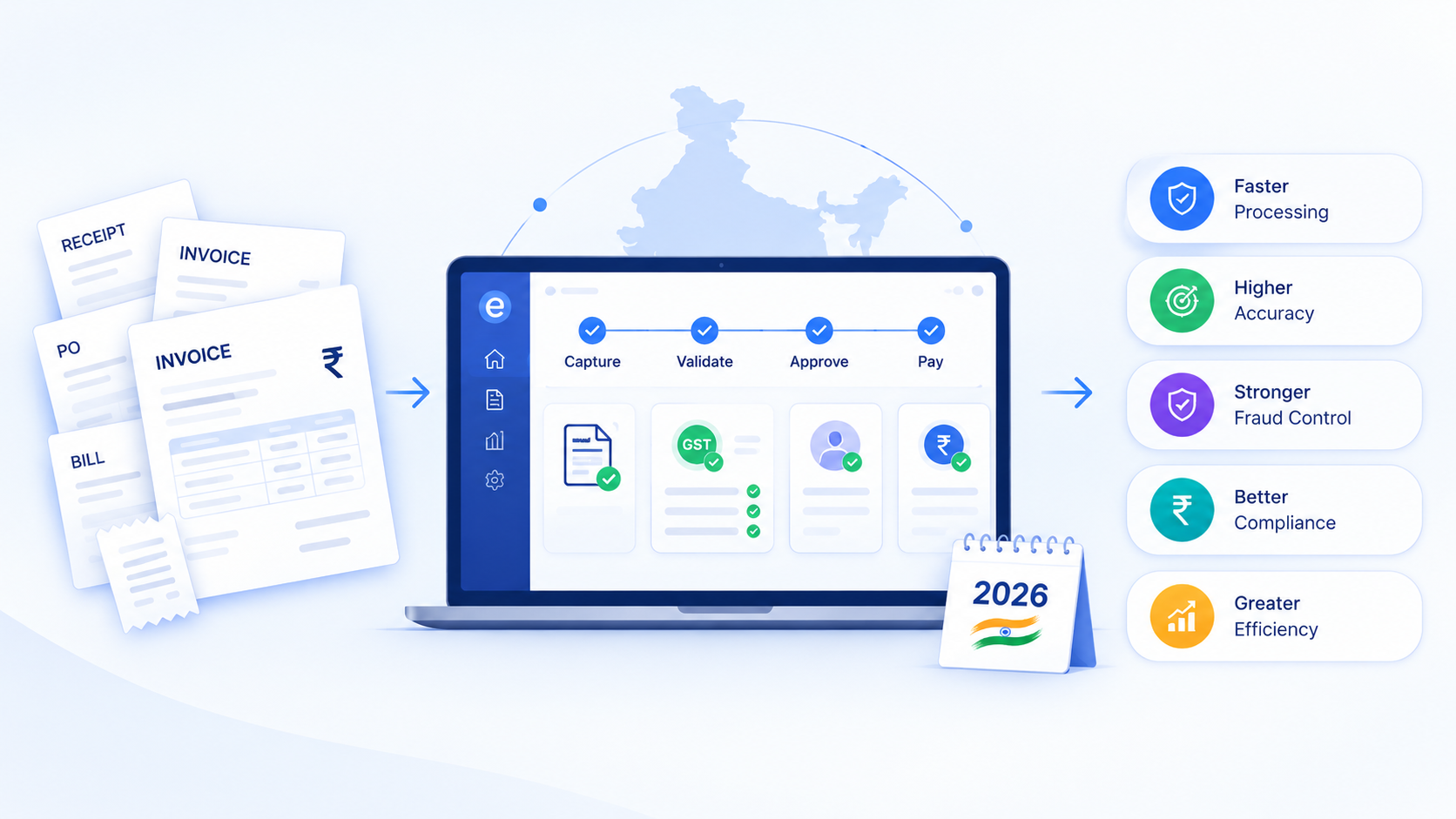
Accounts Payable has evolved far beyond invoice processing. Today’s finance teams are expected to process invoices faster, maintain complete compliance, prevent fraud, optimize working capital, and deliver real-time visibility into organizational spend.
However, these goals cannot be achieved by simply adding OCR or digitizing invoices. Successful organizations adopt a structured Accounts Payable Automation (APA) framework that combines intelligent automation, AI, financial controls, compliance, accounting best practices, and continuous monitoring into one integrated process.
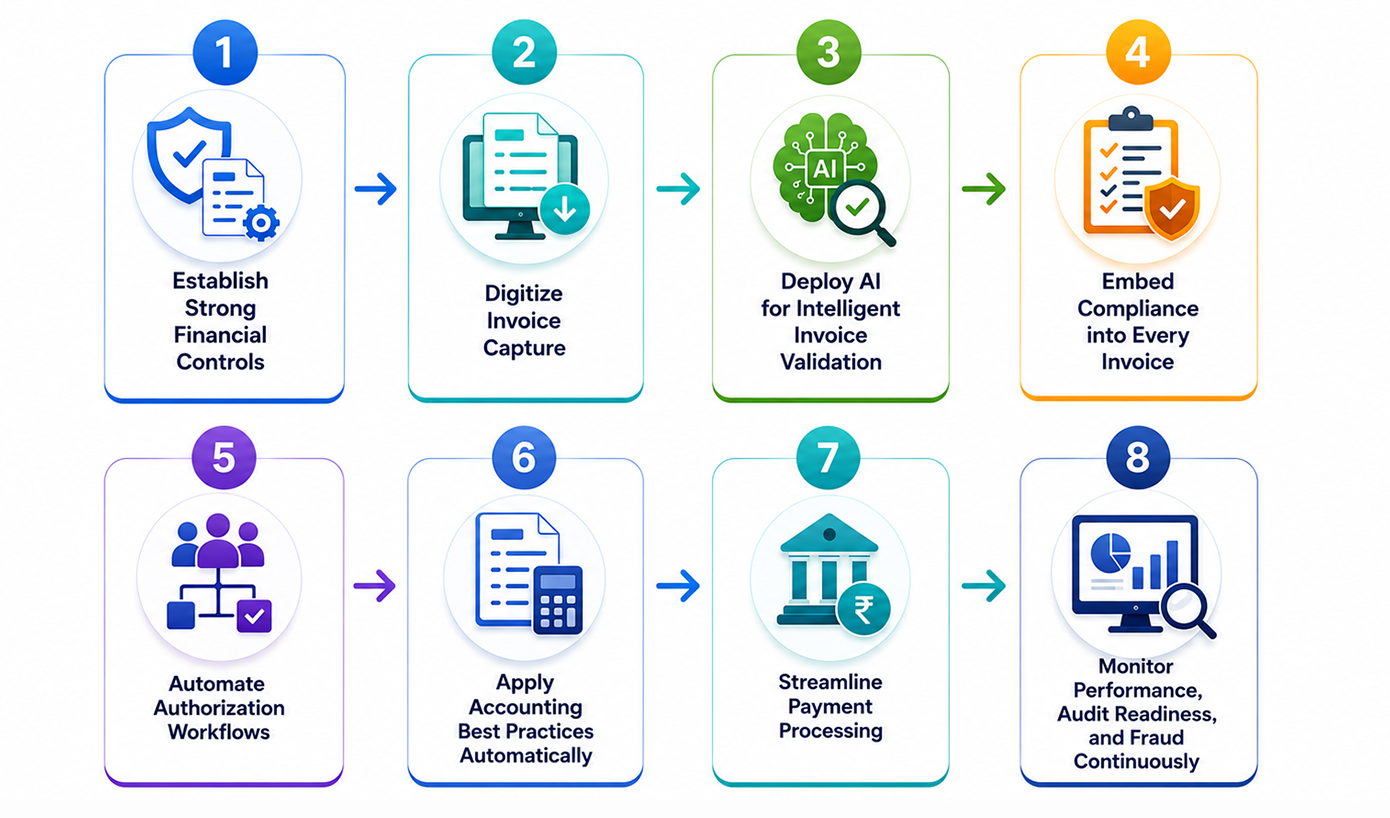
Here's an 8-step framework that helps organizations build a future-ready Accounts Payable function.
1. Establish Strong Financial Controls
Every successful AP automation journey begins with strong foundational controls. Before invoices enter the system, organizations should ensure vendor master data is accurate, budget controls are established, GL mappings are defined, and procurement policies such as No-PO-No-Pay are enforced. These controls ensure that automation operates on reliable data and standardized processes rather than accelerating existing inefficiencies.
2. Digitize Invoice Capture
The next step is creating a centralized process for receiving invoices from multiple channels. Whether invoices arrive through vendors, email, portals, or Excel uploads, they should be captured digitally using AI-powered document recognition. Modern AP solutions allow businesses to upload invoices in bulk, convert purchase orders into invoices, and use intelligent Smart Scan technology to extract invoice data automatically, eliminating manual entry and reducing processing time.
3. Deploy AI for Intelligent Invoice Validation
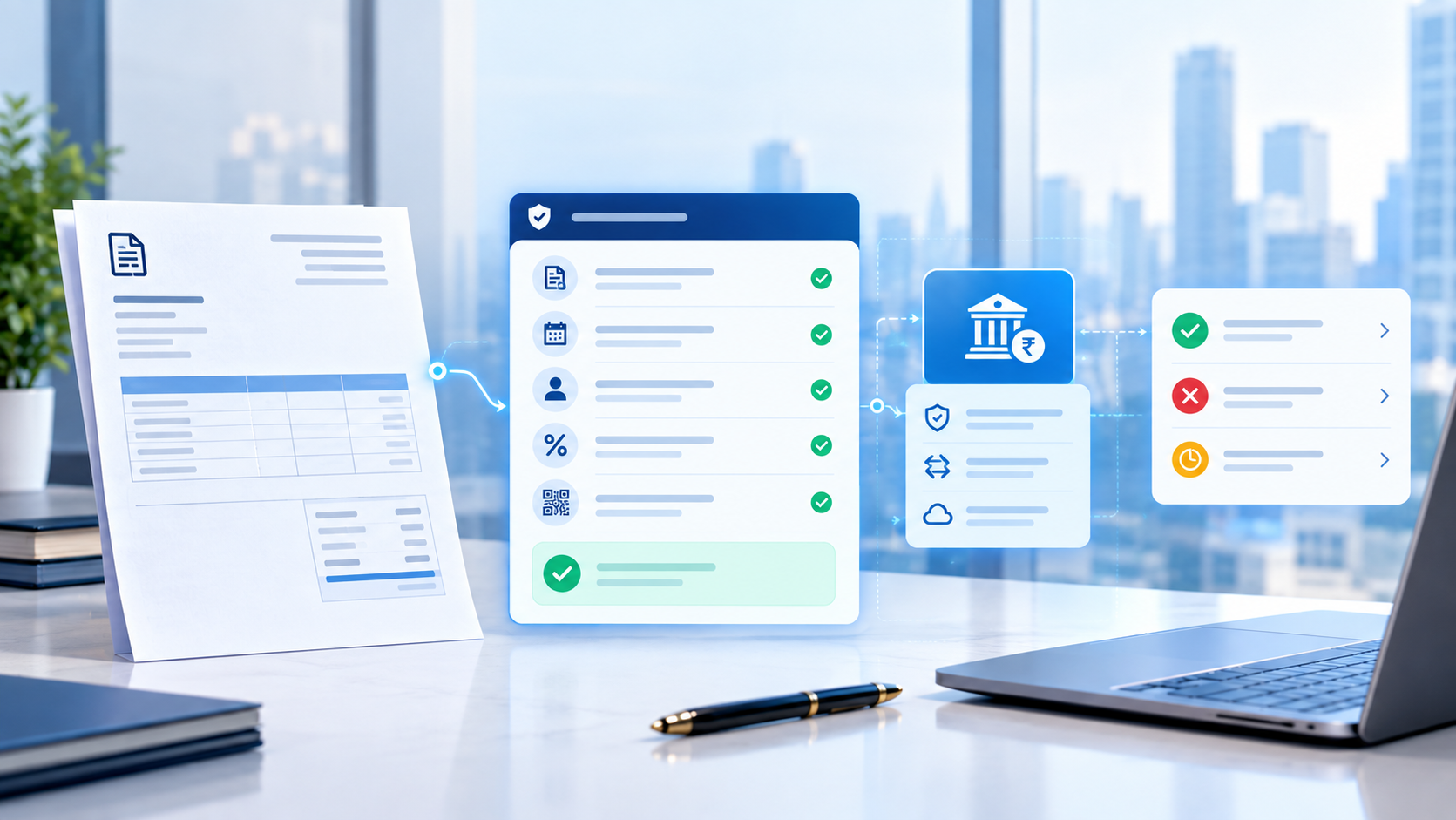
AI becomes truly valuable when it starts validating invoices rather than simply reading them. Multiple AI agents can work together to scan invoices, identify anomalies, verify document accuracy, assess invoice risks, and determine whether invoices should move forward for processing. This intelligent validation helps detect duplicate invoices, suspicious transactions, and missing information long before they become financial issues.
4. Embed Compliance into Every Invoice
Compliance should never be a separate activity performed after invoice processing. Instead, it should be integrated directly into the workflow. Automated controls can validate GST, calculate TDS, monitor budgets, manage prepaid expenses, generate provisions, and allocate costs accurately. By embedding compliance into every transaction, finance teams significantly reduce manual effort while strengthening governance and regulatory adherence.
5. Automate Authorization Workflows
Invoice approvals are often one of the biggest bottlenecks in the Accounts Payable process. Intelligent workflow automation ensures invoices are routed to the right approvers based on predefined Delegation of Authority (DoA) rules. Approvals can be completed through dashboards, mobile devices, or email, enabling faster decision-making without compromising internal controls. Automated routing also improves transparency and creates a complete approval audit trail.
6. Apply Accounting Best Practices Automatically
Once approvals are complete, accounting entries should flow seamlessly into the ERP. A mature Accounts Payable Automation solution automatically handles expenses, prepaid accounting, GST, TDS, provisions, advances, credit notes, and IND AS 116 reporting. This eliminates repetitive accounting activities, improves consistency, and accelerates month-end financial close.
7. Streamline Payment Processing
Approved invoices should transition smoothly into payment without requiring additional manual intervention. Payments can be processed directly through the ERP or an integrated payment engine while maintaining complete traceability from invoice receipt to payment confirmation. Automated payment execution improves vendor relationships, reduces delays, and helps organizations optimize working capital
.
8. Monitor Performance, Audit Readiness, and Fraud Continuously
Automation doesn’t end after payment. Continuous monitoring enables finance leaders to track invoice processing performance, approval timelines, compliance status, audit trails, and fraud indicators in real time. Interactive dashboards and analytics provide complete visibility into AP operations, allowing organizations to identify bottlenecks, strengthen controls, and continuously improve financial processes.
Bringing the Framework Together
The most effective Accounts Payable transformation is not about implementing individual features, it is about creating an integrated framework where every stage supports the next. Strong financial controls establish the foundation, AI accelerates invoice processing, compliance is enforced automatically, approvals become faster, accounting becomes more accurate, payments become seamless, and continuous monitoring provides complete visibility across the AP lifecycle.
Organizations that adopt this structured approach benefit from faster invoice processing, improved compliance, reduced fraud, stronger financial governance, and significantly better operational efficiency. As AI continues to advance, Accounts Payable is evolving from process automation to intelligent finance operations, where technology not only executes tasks but also helps finance teams make smarter, faster, and more informed decisions.