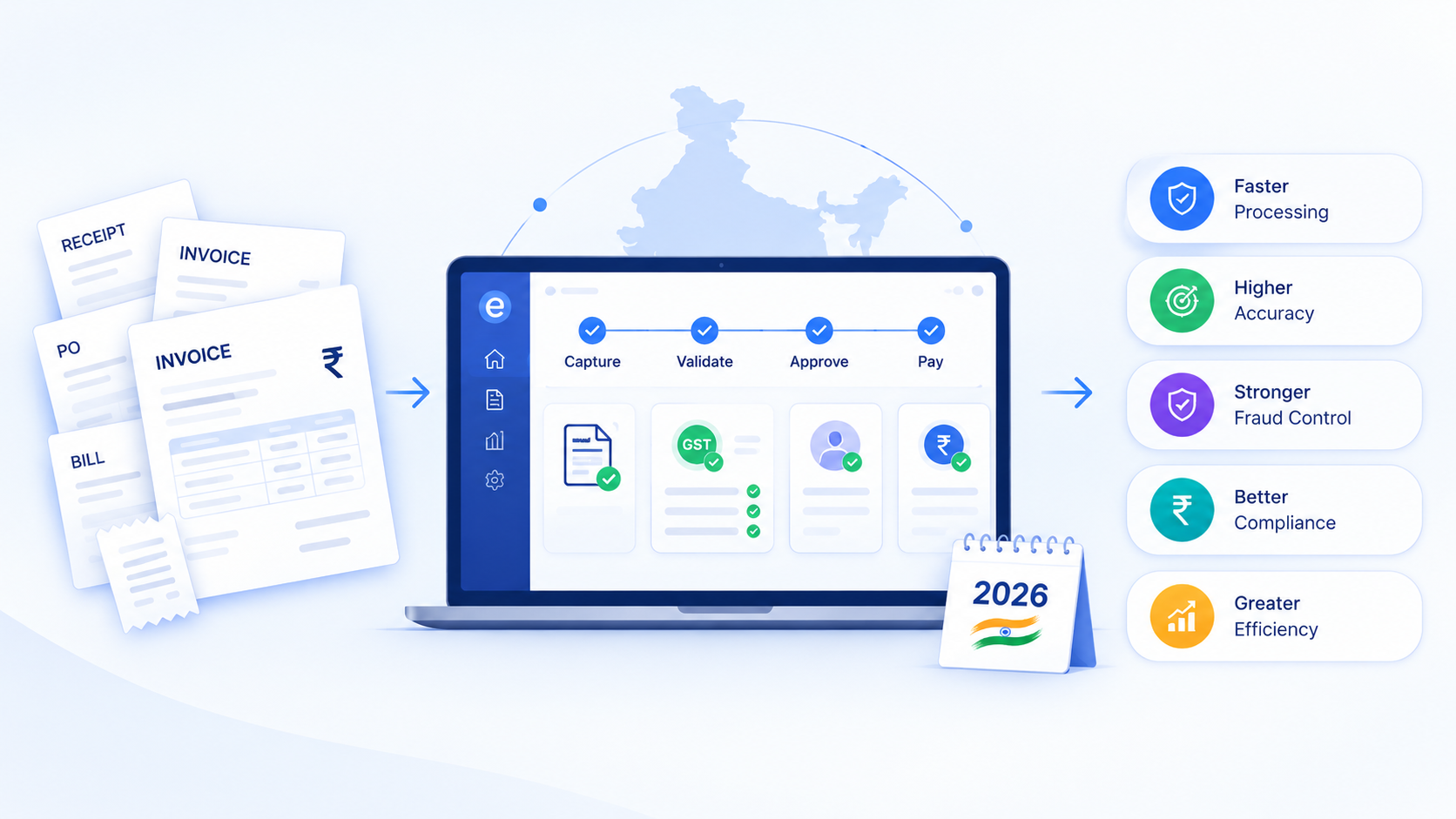

The biggest AP headaches rarely come from major regulatory overhauls, they come from small shifts in invoice validation that slip through the cracks. GST IMS is exactly that kind of shift.
From 1 April 2026, IMS became mandatory for every regular GSTR-3B filer in India. If your AP team hasn’t adjusted how it reviews, accepts, and rejects supplier invoices on the GST portal, you’re running a risk your dashboard won’t show you.
Key Takeaways
- GST IMS requires recipients to actively accept, reject, or pend every supplier invoice before GSTR-2B is generated.
- Inaction triggers deemed acceptance, untouched invoices auto-flow into your ITC claims, correct or not.
- The February 2026 Rejected Records tab now surfaces liability-increasing credit note rejections for suppliers.
- Expenzing’s Accounts Payable Automation performs automated GST, TDS, and IRN validations built into the workflow.
- Section 38 of the CGST Act now legally ties your Input Tax Credit to accepted IMS records, raising the stakes.
What Is the GST Invoice Management System?
IMS is a recipient-side dashboard on the GST portal. Every invoice, debit note, and credit note your supplier files in GSTR-1, GSTR-1A, or IFF lands here for you to act on: Accept, Reject, or Pending.
Accepted records flow into your GSTR-2B as available ITC. Rejected records get excluded, and the supplier is notified. Pending records stay parked until you decide in a future period.
IMS went live in October 2024 and became mandatory from 1 April 2026 under the substituted Section 38 of the CGST Act (Notification 16/2025-CT, 17 September 2025).
Why Deemed Acceptance Matters
If your AP team takes no action on an invoice before filing GSTR-3B, the system treats it as accepted, it auto-populates your GSTR-2B as available ITC. Harmless, until a supplier files a wrong invoice, or a compromised account pushes a fabricated document onto your dashboard. That phantom invoice becomes your claimed credit, and the reversal, interest under Section 50, and penalty under Section 122 fall on you.
IMS Actions and Their Downstream Impact
IMS Action | Impact on GSTR-2B (ITC) | Impact on GSTR-3B |
|---|---|---|
Accept | Flows to GSTR-2B as available ITC | Auto-populates eligible ITC in Section 4A |
Reject | Excluded from GSTR-2B | No ITC, supplier notified to amend |
Pending | Carried forward, not in current 2B | No ITC until accepted in a future period |
Draft GSTR-2B generates on the 14th of the following month, based on actions taken until then. Act after the 14th, and you must recompute GSTR-2B before filing 3B. If last month’s 3B is unfiled, the draft 2B won’t generate at all.
The February 2026 Rejected Records Tab
Before this update, suppliers had no consolidated way to track buyer-rejected credit notes. The new Rejected Records tab in IMS Outward now surfaces all credit notes rejected by buyers. Under Rule 67B (Notification 18/2025-CT, 31 October 2025), a rejected credit note increases the supplier’s output liability in their next GSTR-3B, so reject only when a document is genuinely wrong.
Vendor Filing Behaviour Is Now an AP Problem
Section 16(2)(c) ties your ITC to your supplier’s actual filing. An invoice a supplier saves but doesn’t file in GSTR-1 never reaches your GSTR-2B, and under the hard-block regime, what isn’t in your 2B can’t be claimed in 3B. Monitoring supplier filing is now credit protection, not just procurement oversight.
A Sound Monthly IMS Routine
- Pull the IMS dashboard shortly after the 14th, not the night the return is due.
- Match every invoice to your purchase register before taking action.
- Verify each invoice carries the correct post-GST 2.0 rate for its HSN code.
- Reject only genuinely wrong invoices, not minor typos a credit note can fix.
- Use Pending sparingly and track Section 16(4) deadlines.
- Confirm suppliers have filed GSTR-1, not merely saved it.
- Recompute GSTR-2B if you act after the 14th.
How Automation Helps
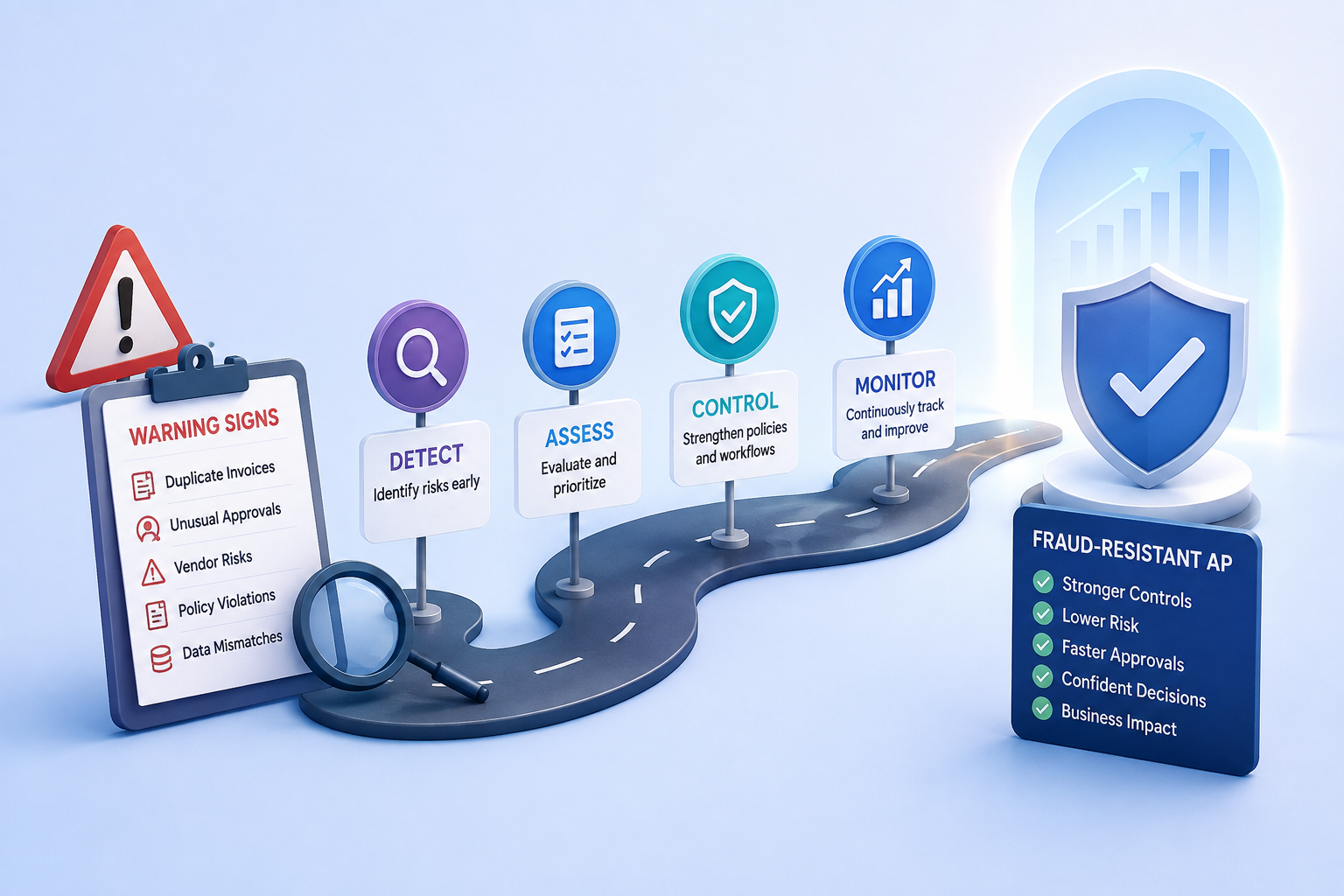
Manual IMS review across hundreds of invoices is slow and error-prone. Expenzing’s Accounts Payable Automation module runs automated GST, TDS, and IRN validations on every inward invoice, fetching and validating Invoice Reference Numbers against the government portal, flagging inactive or non-filing GSTINs, and running five-way matching across PO, GRN, invoice, contract rate, and vendor advance.
Business Standard reported that ITC fraud detections jumped to ₹74,782 crore in FY26, with cases more than doubling year-on-year, a scale that makes the case for automated validation on its own.
Build IMS Validation Into Your AP Controls Now
GST IMS is live, mandatory, and deemed acceptance means silence is approval. Build IMS review into your monthly AP cycle, let automation handle GST and IRN validation, and track vendor filing behaviour as part of source-to-pay. Expenzing keeps your finance team audit-ready without adding hours to the monthly close.
Frequently Asked Questions (FAQs)
What happens if my AP team doesn't review invoices in IMS?
The invoice is deemed accepted and flows into GSTR-2B as available ITC. If it’s wrong or fabricated, the claimed credit, plus interest and penalties, becomes your liability during scrutiny.
Is GST IMS mandatory for all businesses in India?
Mandatory from 1 April 2026 for every regular GST-registered GSTR-3B filer. Composition-scheme taxpayers are exempt.
How does Expenzing help with GST IMS invoice validation?
Automated GST, TDS, and IRN validations on every invoice, GSTIN checks, and five-way matching to catch discrepancies before they reach your ITC claim.
How long can invoices stay in Pending status?
Most types can stay pending indefinitely, but credit notes and downward amendments can only remain pending for one tax period before being deemed accepted. Expenzing tracks these deadlines to prevent ITC loss.