Knowing that fraud controls exist is one thing. Knowing what they’re actually looking for, and how to roll them out without disrupting your payment cycle, is another. This piece covers the red flags automated systems are built to catch, a five-step implementation path, the internal controls that make automation work harder, and what results finance teams can realistically expect.
Key Takeaways
- Round numbers, sudden shifts in vendor submission patterns, and gaps in sequential invoice numbering are red flags that manual review routinely misses.
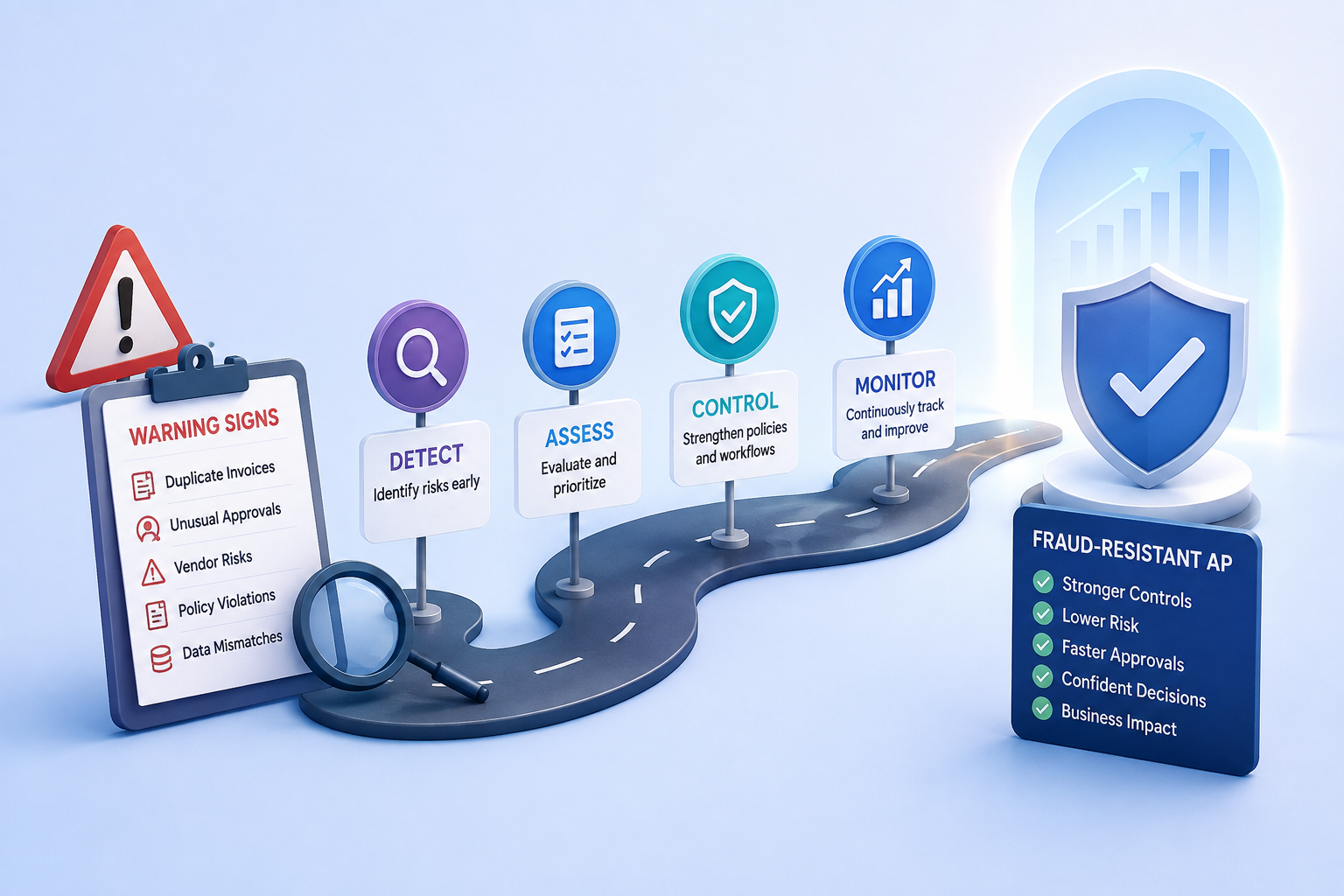
- Rolling out AP automation works best as a five-step process: map vulnerabilities, clean vendor data, configure validation rules, build exception workflows, and train the team.
- Automation works best alongside segregation of duties, regular reconciliation, and out-of-band vendor verification, no software replaces these entirely.
- Teams typically identify 2-5% of historical payments that shouldn’t have been made once automated validation goes live.
What Are the Warning Signs of AP Fraud That Automation Catches?
Recognizing fraud patterns helps you understand what automated detection systems are actually looking for. These red flags often go unnoticed in manual processes but surface quickly under automated monitoring.
Unusual vendor behavior patterns. For Example a vendor who previously submitted monthly invoices suddenly sends weekly submissions. Invoice amounts that were consistent for years begin varying significantly. These shifts don’t prove fraud, but they warrant attention that manual review rarely provides.
Round number submissions. Fraudulent invoices often feature suspiciously round numbers, ₹1,00,000 exactly, ₹50,000 precisely — amounts that real transactions rarely produce. Automated analysis flags statistical anomalies in invoice amounts for review.
Missing or altered documentation. Invoices submitted without supporting purchase orders, goods receipts with signatures that don’t match authorized personnel, credit notes that lack corresponding original invoices, these documentation gaps often indicate fraud attempts.
Sequential invoice number gaps. Legitimate vendors typically issue invoices with sequential numbering. Missing numbers in the sequence, or suddenly reset sequences, sometimes indicate duplicate submissions elsewhere or attempts to obscure invoice history.
How Do You Implement AP Automation for Fraud Prevention?
Moving from manual AP processes to automated fraud controls requires careful planning. These five steps capture the fraud prevention benefits without disrupting legitimate payment workflows.
Step 1: Map your current fraud vulnerabilities. Before implementing automation, document where your current processes create fraud opportunities. Where do invoices bypass purchase orders? Which vendors have outdated bank details on file? What approval thresholds exist in policy but not in practice?
Step 2: Clean your vendor master data. Automated validation only works against accurate baseline data. Verify current bank details with each vendor through independent confirmation. Validate GSTIN status and update inactive vendor records. Remove dormant vendors that haven’t transacted in 18+ months.
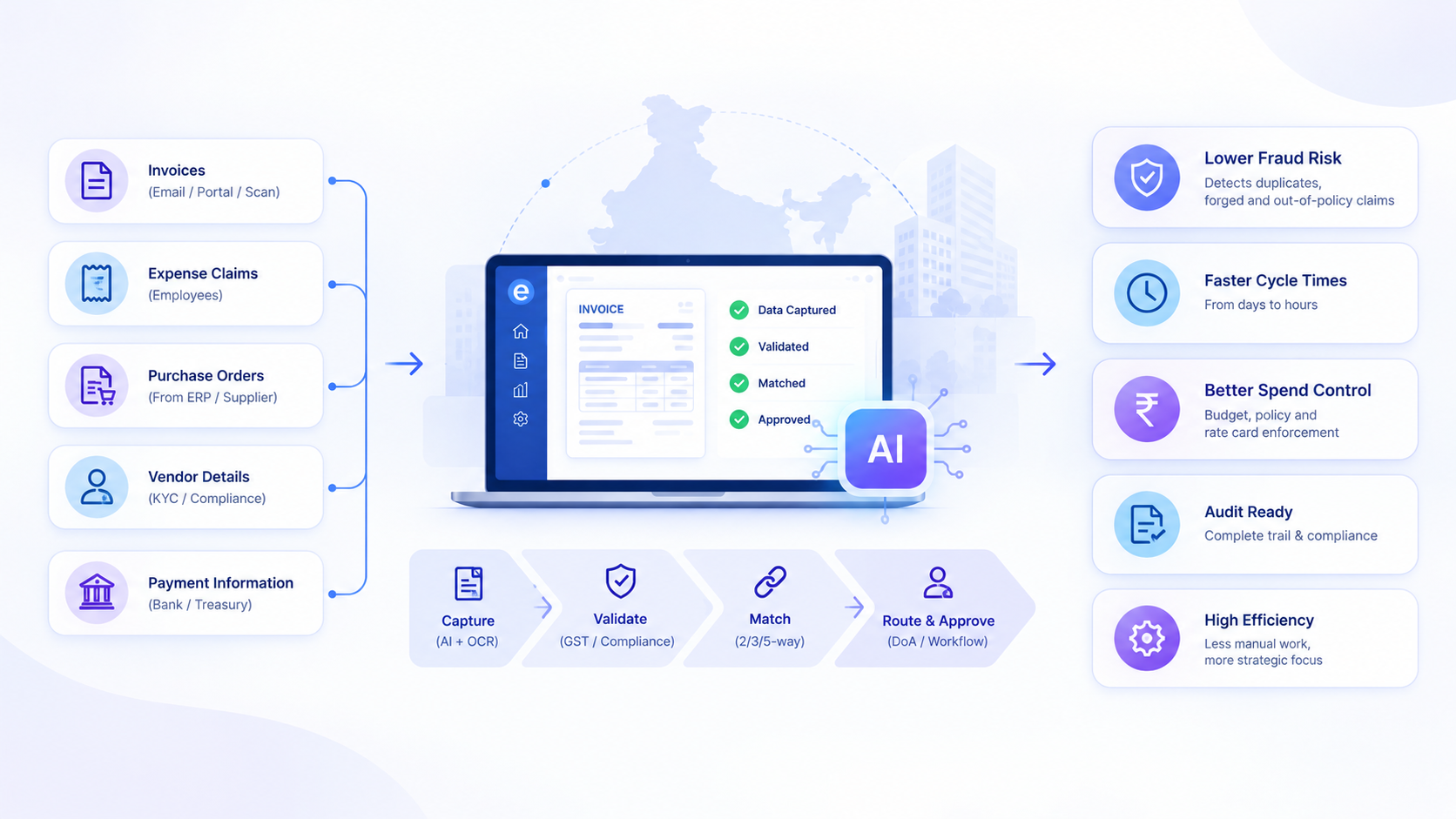
Step 3: Configure validation rules. Define which checks must pass before an invoice becomes payment-eligible. At minimum, this includes GSTIN validation, bank detail verification, duplicate detection, and matching against purchase documentation. Configure tolerance thresholds for minor variances that shouldn’t block payment.
Step 4: Establish exception handling workflows. Not every flagged invoice represents fraud. Legitimate invoices sometimes trigger validation failures due to timing issues, data entry errors, or unusual but authorized transactions. Define clear escalation paths for flagged invoices that require human judgment.
Step 5: Train your team on new workflows. Automation changes how your AP team works. Instead of reviewing every invoice, they focus on exceptions the system flags. This shift requires new skills: investigating flagged patterns, verifying suspicious details, and documenting resolution decisions.
What Internal Controls Complement AP Automation?
Automation strengthens fraud prevention significantly, but it works best alongside organizational controls that address vulnerabilities no software can eliminate on its own.
Segregation of duties. The person who creates a vendor record shouldn’t approve payments to that vendor. The person who receives goods shouldn’t also approve the invoice for those goods. Automated workflows enforce these separations, but the organizational design must support them.
Regular reconciliation reviews. Even with automated detection, periodic reconciliation catches anomalies that slip through. Monthly vendor statement reconciliation, quarterly audit sampling, and annual vendor re-verification add layers of protection.
Vendor communication protocols. Establish out-of-band verification procedures for sensitive changes. Bank detail updates require phone confirmation to a number already on file, not one provided in the update request. Payment timing changes need documented approval.
Fraud awareness training. Your AP team and approvers need to recognize social engineering tactics. Business email compromise, fake urgency claims, and relationship exploitation all target human judgment, not system gaps, so training has to stay current
How Does AI Continuously Improve Fraud Detection?
At Expenzing, our AI team is developing fraud detection tools that keep learning, because the tactics keep evolving. Static rule-based detection misses emerging schemes; adaptive AI catches patterns that rules weren’t written to find.
- Behavioral pattern analysis. AI models learn what normal looks like for each vendor, each expense category, each approver. Deviations from established patterns surface for review even when they don’t violate any specific rule.
- Cross-invoice correlation. Individual invoices might look fine in isolation. AI analyzes relationships across invoices, vendors, and time periods, catching coordinated schemes that manual review would miss entirely.
- Anomaly scoring. Not every flag deserves equal attention. AI assigns risk scores based on how many indicators appear together and how significantly they deviate from normal patterns, so high-risk flags get priority review.
- Feedback-driven refinement. The system keeps learning because fraudsters keep inventing new ways to sneak things through. When investigators mark flagged items as legitimate or confirmed fraud, those decisions refine future detection accuracy.
What Results Can Enterprise Finance Teams Expect?
Organizations implementing AP automation for fraud prevention consistently report measurable improvements across several dimensions.
- Reduced payment leakage. Duplicate payments, overpayments, and fraudulent invoices that previously slipped through manual review get caught before payment. Teams typically identify 2-5% of historical payments that shouldn’t have been made.
- Faster invoice processing. Automated validation runs in seconds. Invoices that pass all checks move directly to approval without manual review. Processing time drops from days to hours for clean invoices.
- Improved audit readiness. Every validation check, approval decision, and exception resolution creates an audit trail. When auditors arrive, the documentation already exists rather than requiring reconstruction from memory and email archives.
- Stronger vendor relationships. Faster processing means faster payments. Vendors gain visibility into invoice status through self-service portals, reducing payment inquiries and follow-up calls that consume both teams’ time.
Building Fraud-Resistant AP Operations
Big fraud makes headlines, but the small, repeated fudges can drain your numbers just as effectively. The invoices that slip through the cracks month after month, the bank detail changes that pass without verification, the duplicate submissions that manual review misses, this is where real money vanishes.
Build the controls into your workflows. Let AI handle the checking that humans can’t sustain at scale. Verify before you pay, not after. Configure your Delegation of Authority rules so exceptions require documentation rather than just verbal approval.
The goal isn’t to catch people. It’s to give honest teams a fighting chance against fraud tactics that keep getting more creative. AP automation with built-in detection, validation, and compliance monitoring isn’t just a cost-saving measure anymore, it’s how you protect your business for everyone who counts on the numbers being real.
Frequently Asked Questions (FAQs)
How does AI improve fraud detection over time?
AI models learn normal patterns for each vendor, expense category, and approval workflow. When investigators confirm or dismiss flagged items, those decisions train the system. Expenzing’s AI adapts to new fraud tactics rather than relying solely on static rules that fraudsters eventually circumvent.
What internal controls should accompany AP automation?
Segregation of duties, regular reconciliation reviews, out-of-band vendor verification for sensitive changes, and ongoing fraud awareness training all address vulnerabilities that software alone can’t close. Automation catches what humans miss at scale; these controls catch what automation can’t see.
How long does it take to see results from AP fraud automation?
Validation checks run in real time from day one, but the fuller picture, reduced payment leakage, faster processing, stronger audit readiness, typically emerges over the first few months as vendor data gets cleaned up and the team adjusts to exception-based review.