Accounts payable automation only pays off in India if it fits your ERP, handles GST and TDS the way Indian auditors expect, and gives you control over every invoice before money leaves the account. Most evaluations focus on demos. The better test is how the tool behaves on your messiest vendor invoice, in your SAP or Oracle environment, in the week before quarter close.
Key takeaways:
- Check integration depth with your SAP or Oracle ERP, not just whether a connector exists.
- Confirm the platform validates GST, e-invoice and TDS data before posting, not after.
- Look for configurable matching (two-way, three-way and beyond) and approval rules that mirror your Delegation of Authority.
- Insist on a complete audit trail that stands up to statutory and internal audit.
- Ask how exceptions are handled, because exceptions are where finance teams spend their time.
- For NBFCs and regulated entities, check data residency, access controls and RBI-aligned governance.
- Judge the vendor on implementation support, not only the product.
I have sat across the table from many finance heads who were shown a polished demo and later found that the tool broke the moment it met a real vendor invoice. So here is the checklist I would use myself.
1. How deep is the ERP integration?
Almost every vendor will tell you they integrate with SAP and Oracle. Ask what that means in practice. Does the tool read purchase orders, goods receipts and vendor master data in near real time, or does it depend on file uploads? Does it post approved invoices back to the ERP as parked or posted documents, with the right GL, cost centre and tax codes?
Good AP software integration is two-way and sits on your existing master data. If your team has to maintain a second vendor list, you have added work instead of removing it. Ask to see the integration running against a client environment like yours, including a failed posting and how it is resolved.
2. Does it understand Indian tax and compliance?
A tool built for a global market often treats GST as a line item. In India it is a validation problem. Before an invoice is approved, the system should check the supplier’s GSTIN, confirm the e-invoice details where e-invoicing applies, and flag mismatches that could put your input tax credit at risk. It should also apply the correct TDS section and rate based on the vendor and the nature of the expense.
Catching these at the point of entry is far cheaper than finding them during reconciliation or a notice. Ask whether these checks are built in or whether they depend on custom work.
3. How good is the invoice processing itself?
Invoice processing is the visible part of AP automation, so test it hard. Use your own invoices: scanned copies, multi-page PDFs, handwritten corrections, invoices with several tax rates, and formats from small vendors who will never change how they bill you.
Measure what matters. How many invoices pass through without a human touching them? How are line items captured? What happens when the system is unsure? Accuracy on clean, sample invoices tells you very little.
4. Can you configure matching and approvals to your own policy?
Every finance team has its own rules. Some need two-way matching for services, three-way for goods, and stricter checks for high-value or high-risk spend. Your approval chain probably follows a Delegation of Authority that differs by entity, department and amount.
The platform should let you set these rules without a developer. Also check how it handles tolerance limits, partial deliveries and advance payments, because these come up constantly in Indian procurement.
5. Is the audit trail complete?
Under the Companies Act, accounting software must maintain an audit trail of changes, and this has applied since April 2023. Your automation tool is part of that picture. You should be able to see who touched an invoice, what changed, when it changed and why it was approved, without stitching together emails and spreadsheets.
Ask for a sample audit report. If it takes effort to produce, it will take more effort during an audit.
6. What happens to exceptions and duplicates?
Straight-through invoices are easy. Exceptions are the real job: a missing PO, a rate mismatch, a duplicate submitted under a slightly different invoice number, a vendor whose bank details suddenly changed.
Ask how the platform detects duplicates, how it flags changes to vendor bank details, and how exceptions are routed to the right person with context. Good invoice control means problems are stopped before payment, not discovered after it.
7. Does it meet the standards of a regulated finance environment?
For NBFC finance tools and other regulated entities, the questions go beyond features. Where is the data stored? Who can access it? How are user roles separated, and how is access logged? Does the vendor’s security and governance posture fit your own IT and outsourcing obligations under RBI expectations?
Bring your information security and compliance teams into the evaluation early. Finding a gap in the final week of procurement is a costly way to learn about it.
A note on payment timelines
One more India-specific point. Under Section 43B(h) of the Income Tax Act, payments to micro and small enterprises must be made within the statutory timeline, or the related expense can be disallowed as a deduction. Your AP process should flag MSME vendors and due dates automatically. This is a good example of why a generic tool, even a capable one, can leave a gap.
How to run the evaluation
Do not rely on a demo. Pick a representative batch of your own invoices, including the difficult ones, and run them through each shortlisted platform in a proof of concept. Involve AP, procurement, tax, IT and internal audit. Score each tool against the seven points above and weigh the results by what matters most in your business.
The right choice for financial technology in India is rarely the one with the longest feature list. It is the one that fits your ERP, respects Indian compliance from the first step, and gives your team clear control over every rupee going out.
Frequently Asked Questions (FAQs)
What is accounts payable automation?
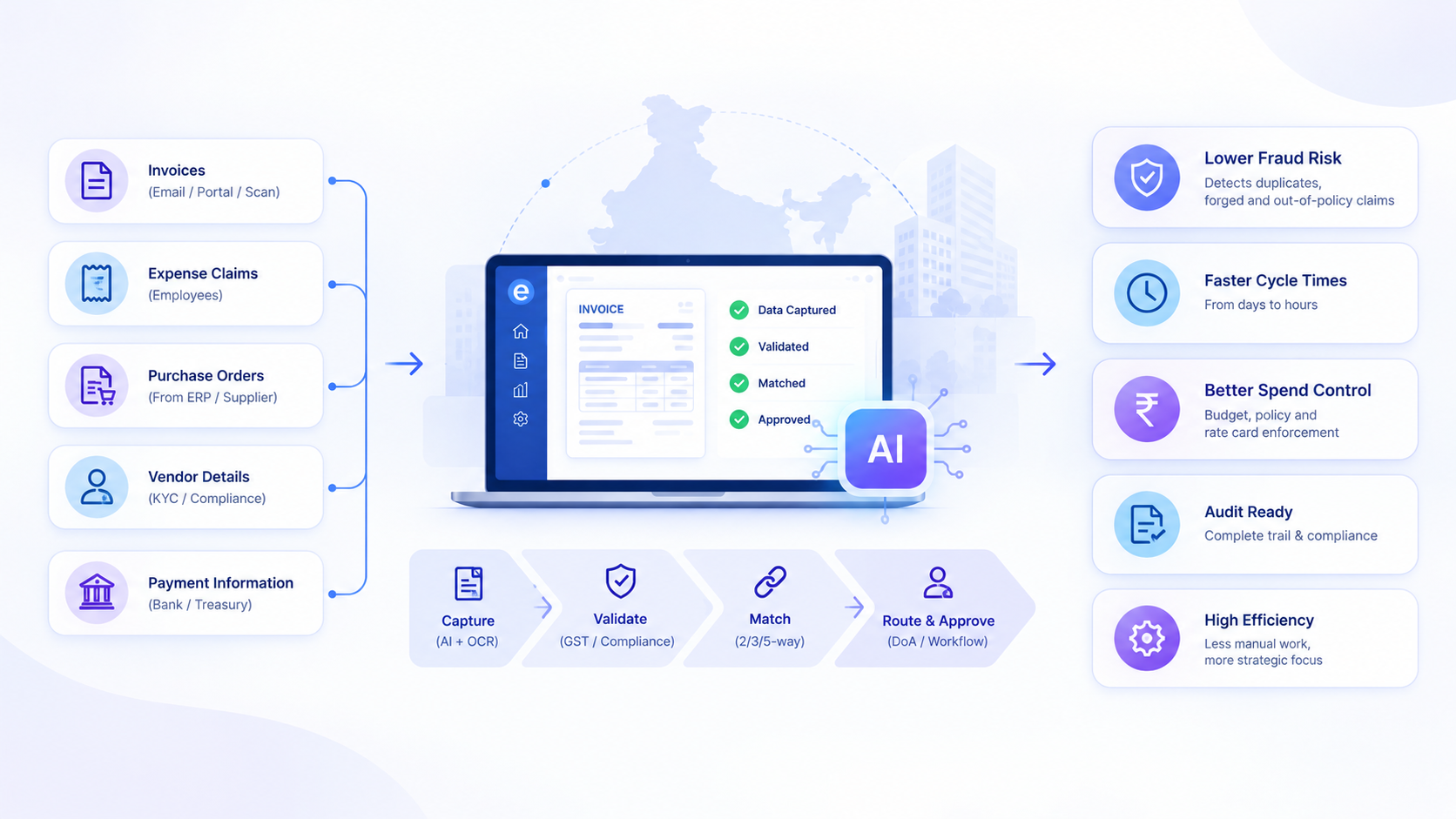
Accounts payable automation uses software to capture invoices, match them against purchase orders and receipts, route them for approval and post them to the ERP, with little manual entry. In India, it should also validate GST and TDS details before an invoice is approved.
Can AP automation integrate with SAP and Oracle?
Yes, but integration depth varies. A strong AP software integration reads purchase orders, goods receipts and vendor master data from the ERP and posts approved invoices back with the correct GL, cost centre and tax codes. Ask to see this running in an environment like yours, not only a demo setup.
How does AP automation help with GST compliance?
It checks the supplier’s GSTIN, confirms e-invoice details where applicable, and flags mismatches before the invoice is approved. This reduces the risk of input tax credit problems that otherwise surface later during reconciliation or a notice.
Is AP automation suitable for NBFCs and other regulated entities?
It can be, provided the platform meets your security and governance requirements. Check where data is stored, how user access is controlled and logged, and whether the vendor’s practices fit your IT and outsourcing obligations under RBI expectations. Involve your compliance and information security teams early.
How does automation prevent duplicate invoices and payment fraud?
Good platforms detect duplicates even when invoice numbers or formats differ slightly, flag changes to vendor bank details, and enforce approvals aligned to your Delegation of Authority. The aim is to stop the problem before payment, not find it afterwards.