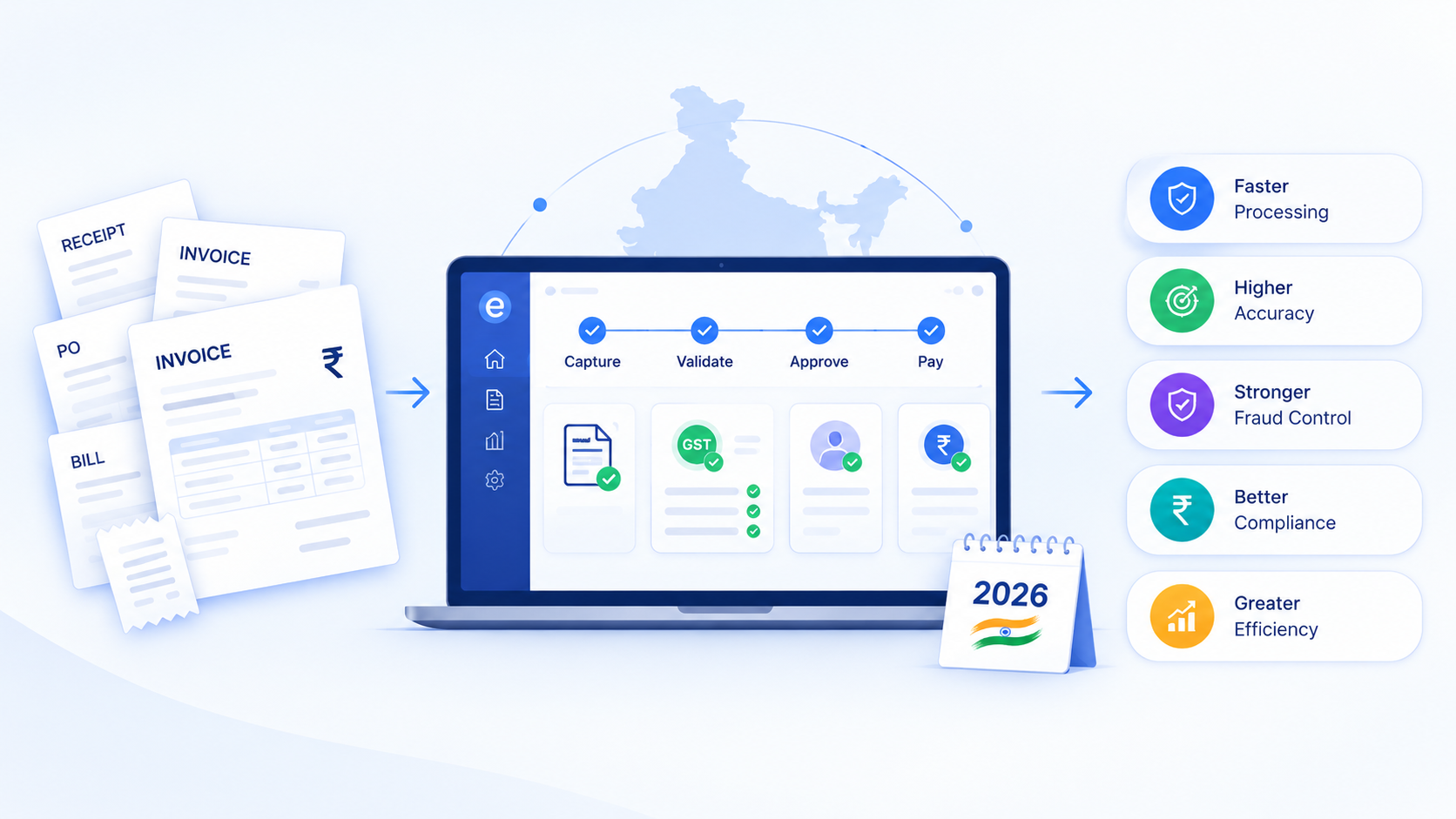
I get asked to walk prospects through “what AP automation actually looks like” almost every week, and the honest starting point is that the term means something different in India than it does anywhere else. Most global AP platforms were built around invoice matching and approval routing. In India, that’s maybe 40% of the job, the rest is GST validation, e-invoicing, MSME payment deadlines, and TDS categorization, all of which have to happen inside the same workflow, not bolted on afterward. This guide is the version of that conversation I wish I could hand every finance leader before their first vendor call.
Why AP automation looks different in India
Three regulatory realities shape everything else in this guide, and they’re worth understanding before you evaluate a single platform.
- E-invoicing is now the entry point, not an add-on. For any business above the mandated turnover threshold, an invoice without a valid IRN (invoice registration number) can’t be used to claim input tax credit at all. That means invoice validation in India isn’t just “does the total match the PO”, it”‘s “does this invoice legally exist for tax purposes yet?”
- MSME payment timelines carry a tax consequence, not just a relationship one. Section 43B(h) ties timely payment to MSME vendors to the buyer’s own tax deductibility. A payment that runs past the statutory window doesn’t just annoy a supplier, it becomes a deduction problem in the buyer’s own return.
- Multi-state operations mean multi-GSTIN complexity. One PAN, but a separate GSTIN for every state where a business holds a registration. An invoice has to be matched to the correct state entity, not just the correct vendor, get that wrong and you’re looking at an ITC denial, not a minor coding error.
Any AP automation conversation that doesn’t start from these three realities is really a global platform conversation with an India label on it.
What the market actually looks like right now
This isn’t a niche upgrade path anymore. The global AP automation market is valued at roughly $6.94 billion in 2026 and is projected to nearly double to $12.46 billion by 2031. Asia-Pacific is the fastest-growing region globally, and within that, India specifically is projected to grow faster than any other country in the category through the next decade, largely because GST e-invoicing has structurally forced invoice data into a format automation can actually work with. That’s a useful thing to know walking into a budget conversation: this isn’t a bet on an emerging category, it’s catching up to where the regulatory environment has already pushed the data.
The core capabilities to evaluate
Strip away the marketing language, and there are six things a platform genuinely needs to do well in the Indian market.
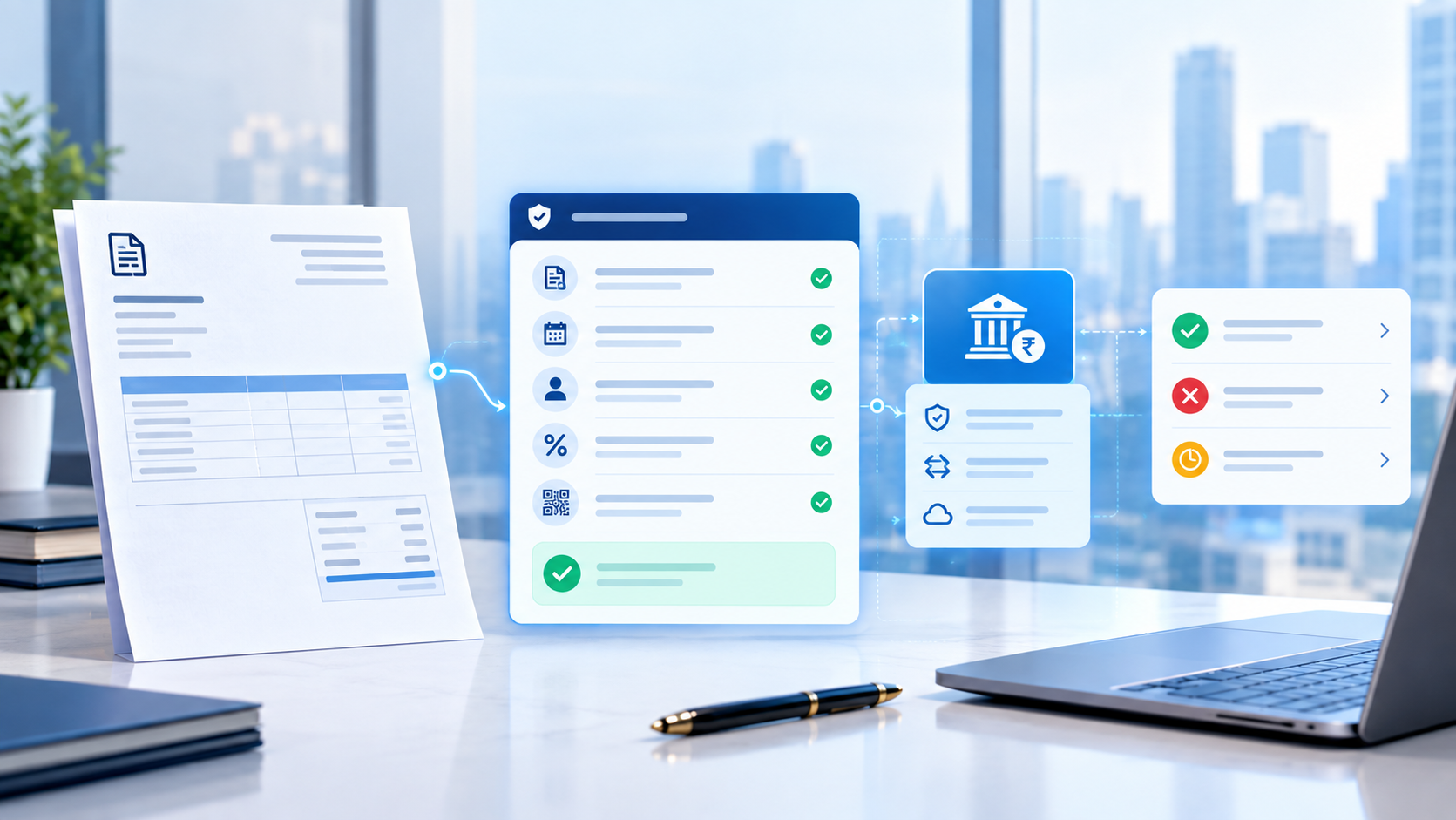
- Invoice capture that goes beyond OCR. Reading fields off a PDF is table stakes. What matters is whether the system can match the extracted GSTIN to the correct state registration when a vendor has invoiced against the wrong entity and whether it validates the IRN before treating the invoice as usable.
- Real GST and compliance checks, not a one-time onboarding tick. Has the vendor filed their GST returns recently? Is their GSTIN still active? This needs to run continuously, not just at the point the vendor was first added to your master file.
- Three-way matching with sensible thresholds. PO, goods receipt, and invoice should reconcile automatically wherever a PO exists, with a clear, configurable threshold for what’s close enough to auto-approve versus what needs a person.
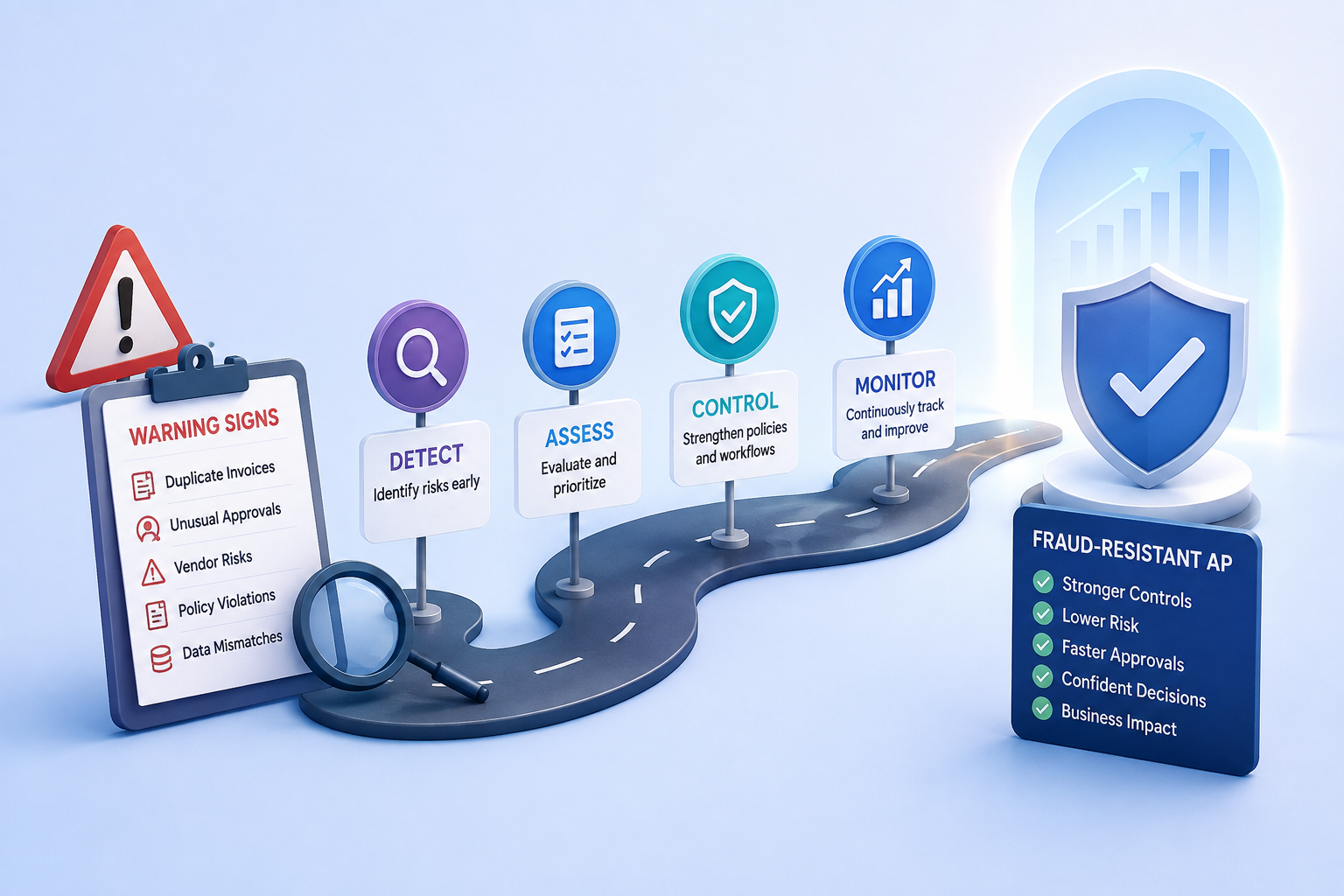
- Fraud and anomaly detection that reasons across signals, not one rule at a time. A GST filing lapse alone might mean nothing. A bank detail change alone might be legitimate. The two together, on the same vendor, close to a payment date, are a different risk profile, and that’s the kind of judgment a modern platform should be making, not something buried in a spreadsheet somebody has to build manually.
- Vendor master data hygiene as an ongoing control. Deduplication on PAN and GSTIN together, not vendor name. A visible audit trail on any bank detail change. Continuous compliance monitoring rather than a snapshot from onboarding day.
- MSME and TDS logic built into the workflow. The system should know a vendor’s Udyam status and flag the 45-day payment window before it lapses, and it should apply the correct TDS section, the gap between 194J(a) at 2% and 194J(b) at 10% is eight percentage points on professional services spend, and that’s a classification decision that shouldn’t be sitting static in a master record nobody revisits.
What implementation actually takes
This is the part vendors gloss over in the sales deck, and I’d rather be upfront about it, a platform with real depth on GST, MSME, and vendor governance takes longer to configure than a bare-bones invoice-matching tool. That’s not a flaw, it’s the honest cost of the compliance depth doing real work later. Budget for vendor master cleanup before go-live, deduplicating and re-verifying GSTINs on an existing vendor file is usually the single biggest time sink in any implementation, and skipping it just moves the problem into your new system instead of solving it.
How to measure ROI
Three numbers matter more than the generic “invoices processed per FTE” metric most vendors lead with:
- Straight-through processing rate — the percentage of invoices that clear every check and reach payment with zero human touch. This is the number that actually reflects whether the automation is working, not just installed.
- ITC at risk, recovered — how much input tax credit that would otherwise have been blocked or delayed by a GSTR-2B mismatch is being caught and corrected before filing.
- MSME payment compliance rate — the share of MSME invoices paid inside the statutory window, since this converts directly into tax exposure avoided, not just a vendor-relations metric.
Frequently Asked Questions (FAQs)
Is AP automation only relevant for large enterprises in India?
No, the same GST and MSME compliance pressures apply regardless of size, and cloud-based platforms have made deployment realistic for mid-market companies, not just large enterprises with dedicated IT teams.
Does AP automation replace the finance team or change what they do?
It changes the shape of the work. Most invoices should clear without anyone touching them, the invoices that do reach a person are the ones that genuinely need judgment, not the routine majority that used to consume most of a team’s time.
How long does a typical implementation take?
It depends heavily on the state of your existing vendor master data going in, a clean, deduplicated vendor file with verified GSTINs can go live faster than a platform migration burdened by years of duplicate records and stale bank details.
What's the single biggest mistake companies make when evaluating AP automation platforms?
Judging the platform on invoice-matching speed alone and treating GST validation, MSME tracking, and fraud detection as secondary features, when in the Indian regulatory environment those are the actual core of the job.