Most NBFC finance teams I speak with don’t have an invoice problem. They have a proof problem. Every payment has to stand up to an auditor, a GST officer and sometimes a regulator, and the evidence for it sits across email, an ERP and a few spreadsheets. Accounts payable automation is worth buying only if it fixes that.
Key takeaways
- The best accounts payable software for an NBFC is the one that validates an invoice before approval, not the one with the longest feature list.
- Judge any platform on five criteria: invoice validation depth, compliance controls, approval workflow, ERP integration, and pricing fit.
- Check GSTIN, IRN and ITC eligibility at the point of entry. Catching a bad invoice at payment is too late.
- Ask for pricing in writing across all four heads: licence, volume, implementation and integration. Per-invoice and per-entity models behave very differently as you scale.
- Run a pilot on your messiest vendor invoices before you sign. A demo on clean sample data tells you nothing.
What is accounts payable automation for an NBFC?
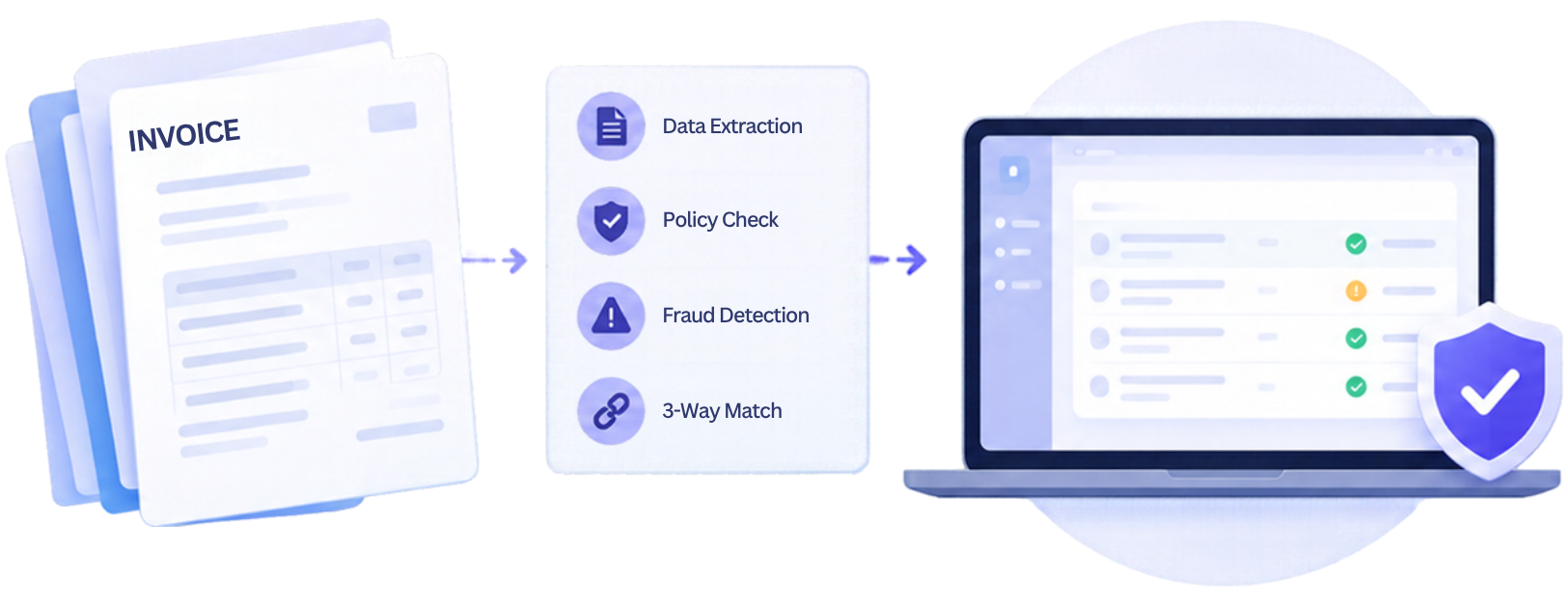
Accounts payable automation is software that captures vendor invoices, validates them against tax and purchase records, routes them for approval and prepares payment, with minimal manual handling. For an NBFC, the useful version also leaves an audit trail for every decision.
The NBFC context matters. Your vendor base is not a single manufacturer’s supplier list. It spans technology partners, collection agencies, legal and valuation professionals, branch rentals, and a long tail of small suppliers. The invoice formats vary, the GST profiles vary, and the approval chains are layered. A tool built for a simple three-way match will struggle here.
Which compliance rules should AP automation cover?
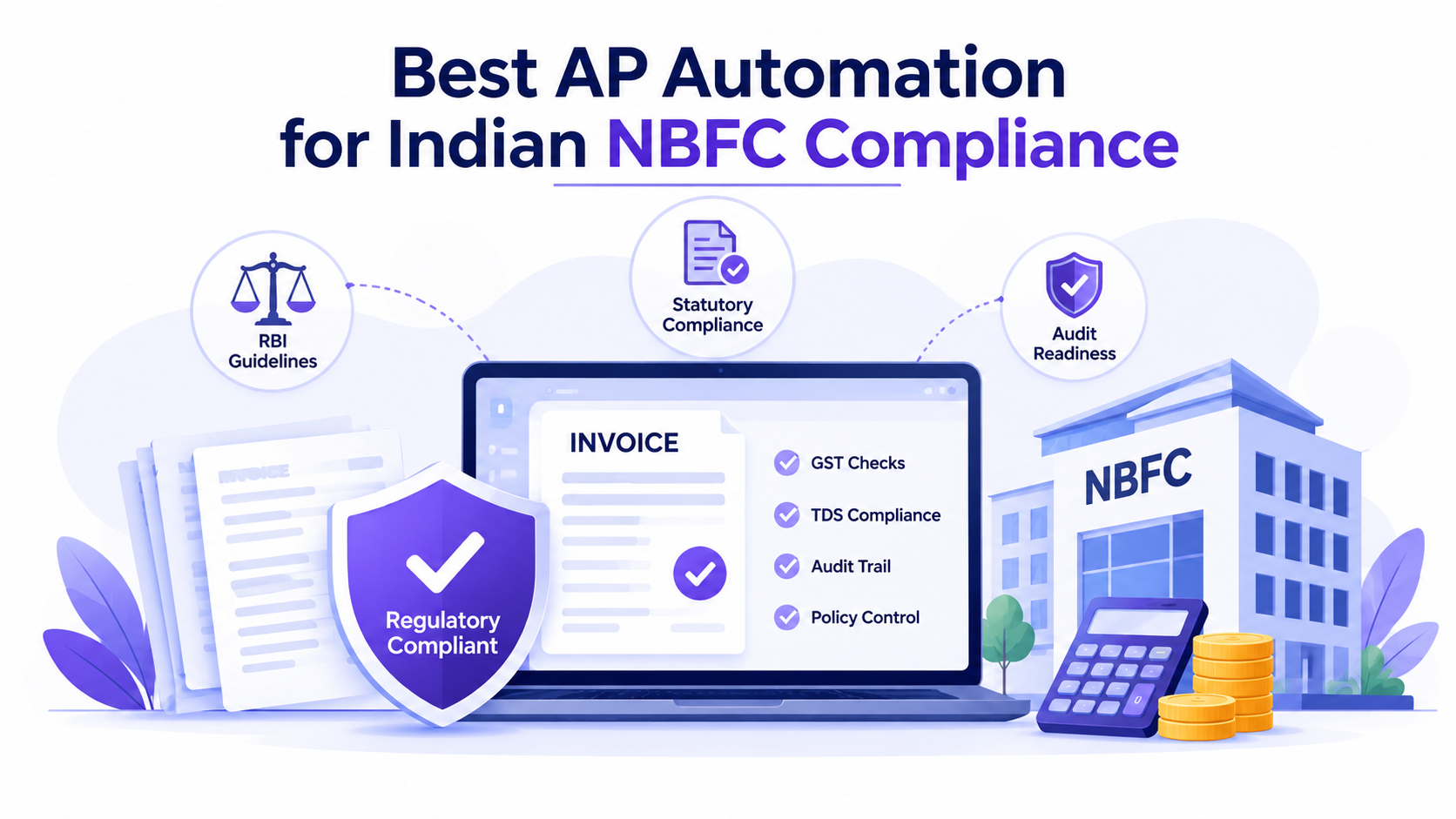
Ask any vendor to show you, live, how the product handles these:
- GST e-invoicing. E-invoicing is mandatory for businesses whose aggregate annual turnover crossed ₹5 crore in any financial year since 2017-18, a threshold in force since 1 August 2023. Your suppliers above that line must send invoices carrying a valid IRN. Your system should verify it, not just read it off the PDF.
- GSTIN validation. The platform should confirm the supplier’s GSTIN is active and matches the invoice details.
- ITC eligibility. NBFCs have specific input tax credit treatment under GST. Your team’s reconciliation logic should be configurable, not hard-coded to a manufacturing company’s assumptions. Confirm the exact treatment with your tax advisor.
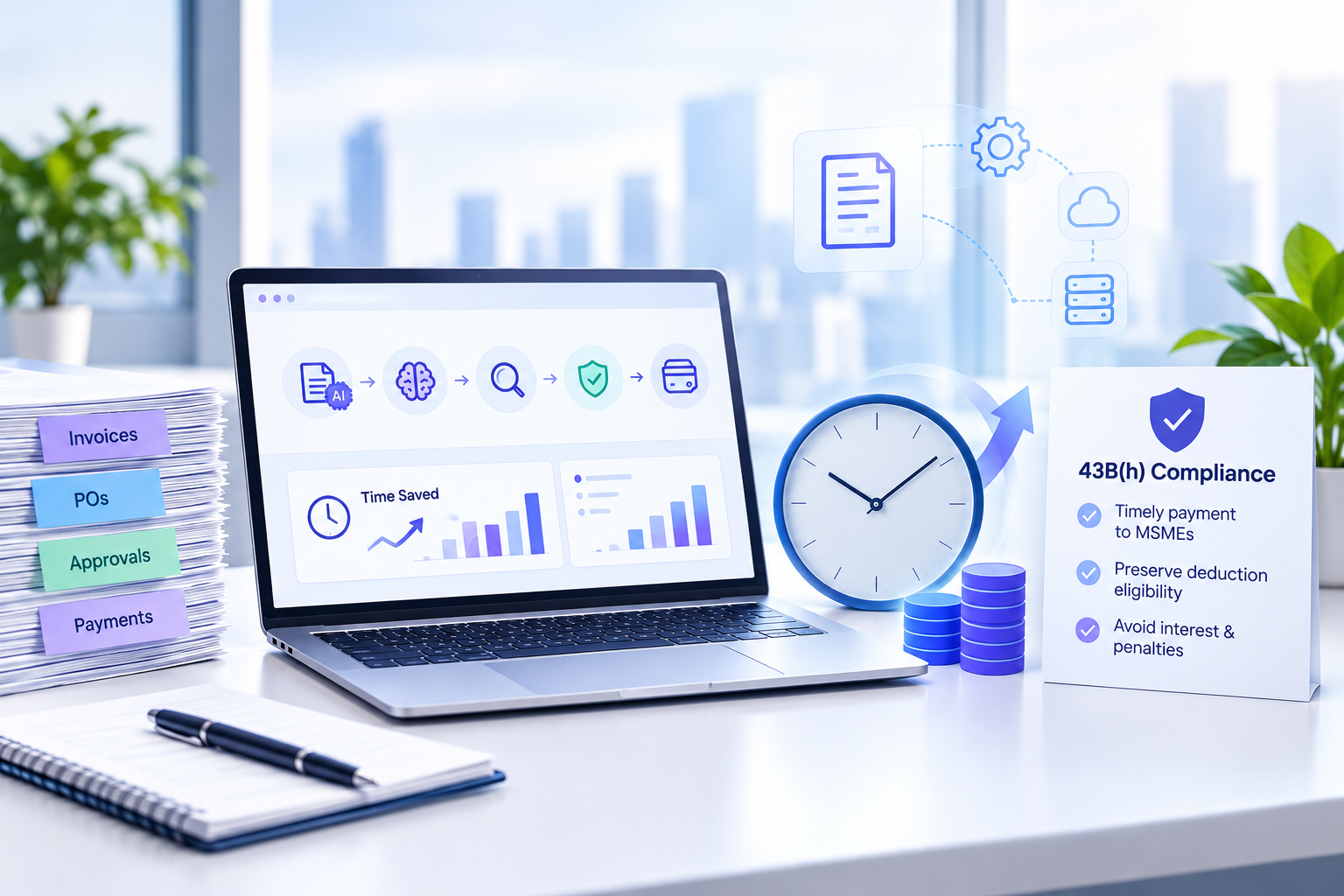
- MSME payment timelines. Section 43B(h) of the Income Tax Act ties the deduction for payments to micro and small enterprises to payment within the prescribed period. The system should flag due dates before they pass.
- TDS. Correct section, correct rate, correct deduction, every time.
- IT governance. RBI’s directions on IT governance and outsourcing of IT services apply to NBFCs, so vendor security, data location and access controls are part of the buying decision. Have your compliance and information security heads review these early.
How do you evaluate invoice validation?
Start with what happens in the first minute after an invoice arrives. Weak tools extract data and hand it over. Strong ones check it.
Test these on your own documents:
- Extraction accuracy on bad inputs. Scanned copies, handwritten stamps, multi-page annexures, regional-language elements.
- Matching logic. Can it match against purchase orders, goods receipt notes and contracts, and does it handle service invoices that have no GRN at all? Services dominate NBFC spend.
- Duplicate detection. Same invoice, slightly altered number, different date. Ask the vendor to show you how it catches this.
- Exception handling. When validation fails, who sees it, and how fast can they fix it?
If a vendor’s answer to every question is “that’s configurable,” ask them to configure it in front of you.
What workflow features does an enterprise NBFC need?
An NBFC runs on authority limits. A branch-level expense and a head-office technology contract should not follow the same route.
Look for a delegation of authority matrix you can maintain yourself, parallel and conditional approvals, delegation during leave, and an immutable log of who approved what and when. Then check the integration side. Your ERP and general ledger are not going away, so ask which connectors are standard, which need custom work, and who pays for that work.
What questions should be on your shortlist scorecard?
I would score every vendor out of five on each of these and force a conversation about any score below three:
- Does it verify IRN and GSTIN at entry?
- Can it handle service invoices without a GRN?
- Can finance, not IT, change approval rules?
- Is the audit trail complete and exportable?
- Is the ERP integration proven with a similar NBFC?
- Is pricing transparent across all four heads?
- Where is the data stored, and who can access it?
A vendor that can’t answer the data and security questions clearly should not reach the pilot stage.
Frequently Asked Questions (FAQs)
What is the best accounts payable automation for Indian NBFCs?
There is no single best product. The right choice is the platform that validates invoices against GST data, supports your authority matrix and integrates with your ERP at a price that holds as your volume grows.
Is accounts payable automation mandatory for NBFCs?
No. But e-invoicing and GST reconciliation have made manual processing risky and slow, and the cost of an error is now higher.
How long does implementation take?
It depends on your ERP, the number of entities and how clean your vendor master data is. Ask each vendor for a timeline based on your specifics and for the assumptions behind it.
Can AP automation reduce fraud?
Validation at entry, duplicate detection and enforced approvals reduce the openings for invoice fraud. They don’t replace sound internal controls.