Enough years working with enterprise finance teams across India has taught me one thing about invoice fraud, the losses that make headlines are rarely the ones that hurt most. Real damage tends to come from hundreds of small fudges that slip through overburdened AP departments, month after month, until someone finally notices the numbers don’t add up.
This piece looks at why AP departments are such an easy target for fraud, and how automated systems catch fraudulent invoices before payment ever leaves the account.
Key Takeaways
- Invoice fraud detection has to happen before payment, recovery rates fall below 22% once funds leave your account.
- AI-powered anomaly detection surfaces duplicate submissions, suspicious vendor patterns, and altered bank details instantly.
- Fictitious vendors, duplicate submissions, inflated amounts, and business email compromise are the four fraud patterns that slip through manual AP most often.
- Automated Know Your Vendor checks stop shell-company vendors from ever entering your system.
What Is Invoice Fraud and Why Does It Target AP Departments?
Invoice fraud happens when someone submits a fake, inflated, or duplicate invoice to extract unauthorized payments from your organization. AP departments make attractive targets because they process high volumes of transactions, often under time pressure, with limited staff reviewing each document.
For example take Meera from accounts payable at a manufacturing firm. She processes 800 invoices monthly with two colleagues. When a vendor invoice arrives with the correct PO number and reasonable amounts, she approves it. The vendor’s bank details changed last month, but the notification came via email, and who’s checking that closely when there’s a payment deadline?
That single invoice paid ₹4,50,000 to an account controlled by someone who’d intercepted the vendor’s email. The real vendor called three weeks later asking why payment hadn’t arrived. By then, the money had vanished.
How Does AP Automation Detect Invoice Fraud Before Payment?
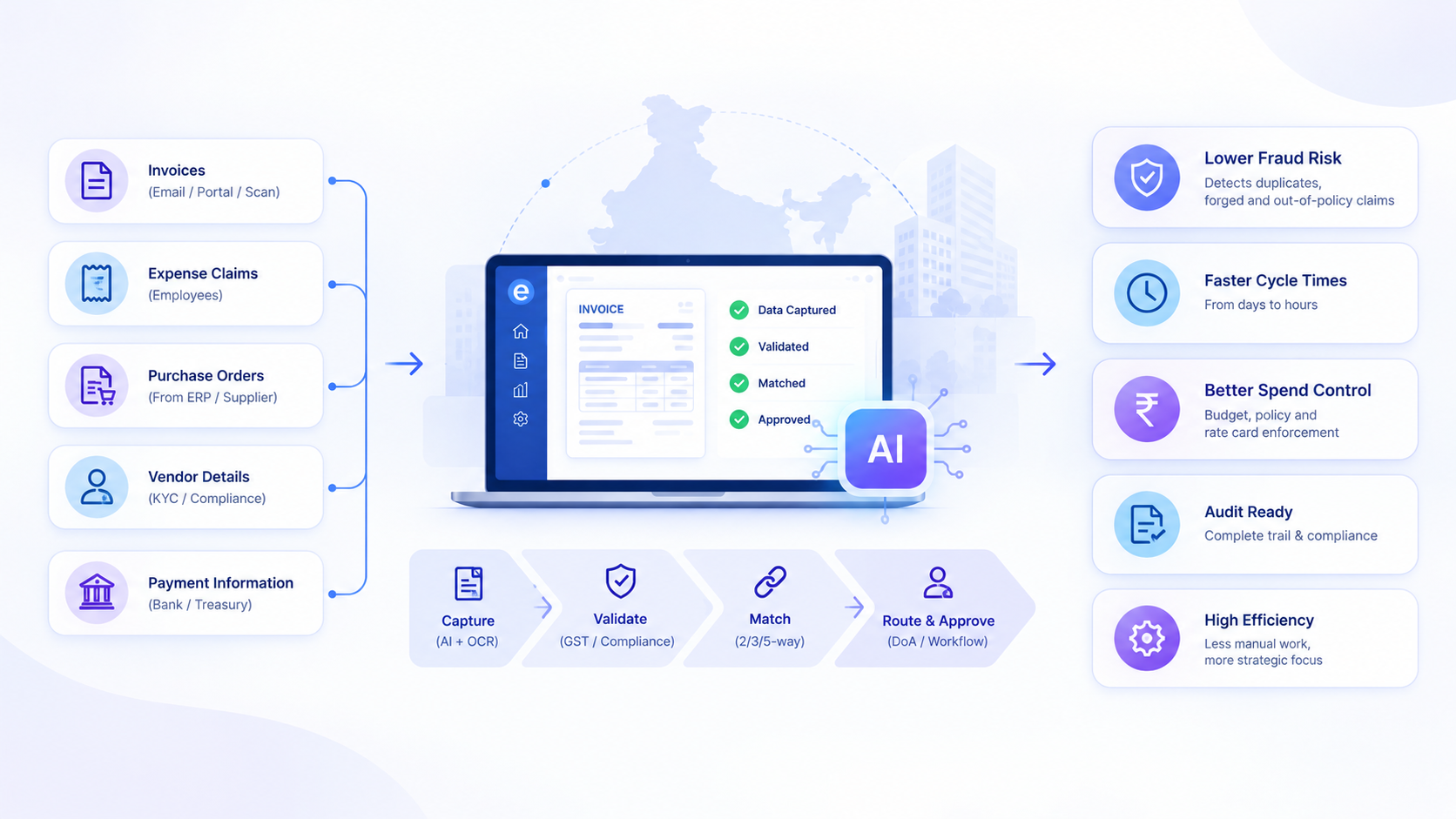
The critical difference between catching fraud and chasing it comes down to timing. Once payment leaves your account, recovery odds drop dramatically. Automated AP systems run validation checks before any invoice becomes eligible for payment, not after the money has moved.
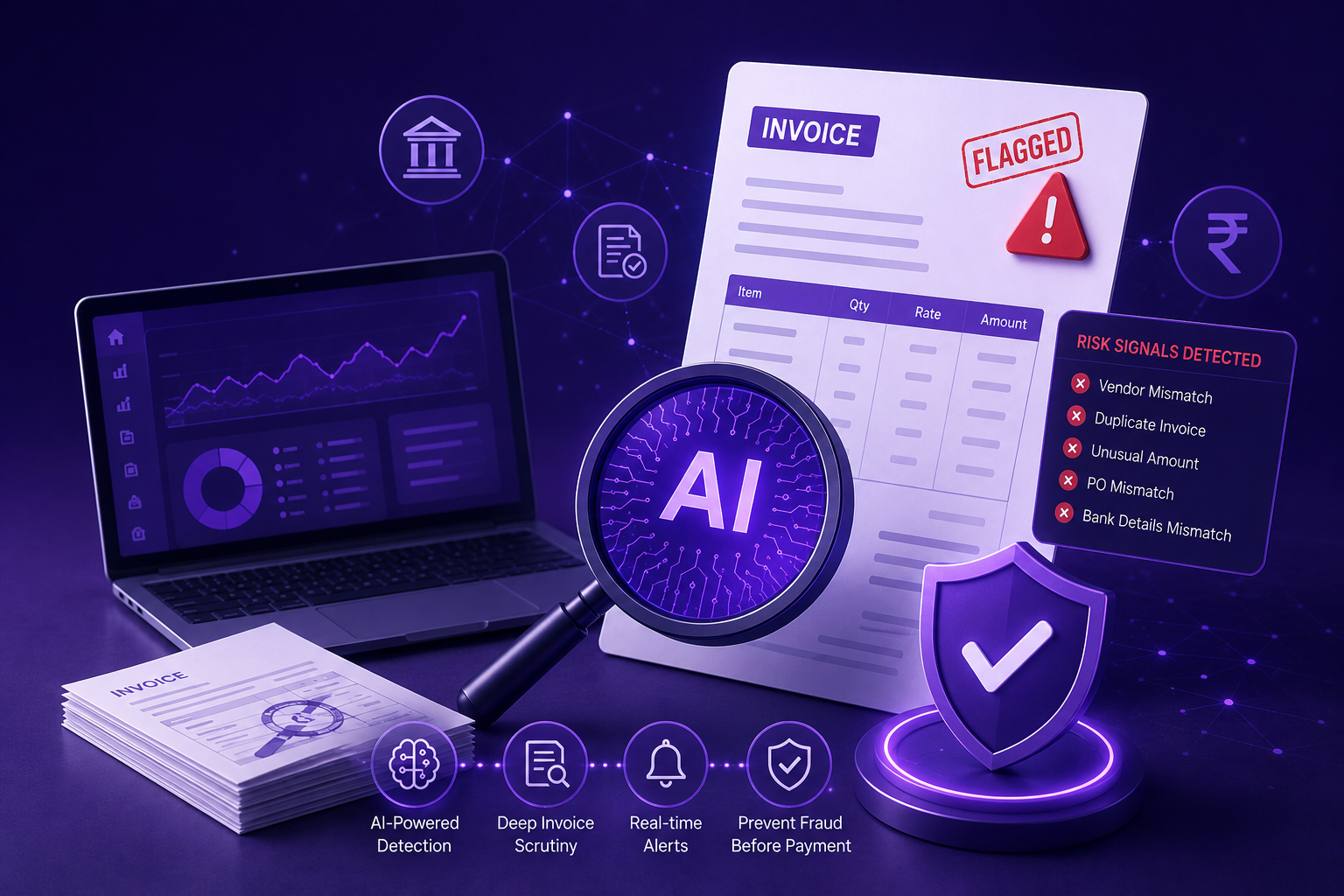
- Vendor legitimacy verification. Every invoice triggers automatic checks against the vendor’s GSTIN status. Is it active? Has the vendor filed recent returns, or have filings gone quiet? A vendor who’s stopped filing isn’t necessarily running a scam, but it’s exactly the signal that should surface automatically rather than slip past manual review. At Expenzing, the Invoice Scrutiniser validates GSTIN, PAN, and linked PAN-Aadhaar details in real time. If anything’s inconsistent, the invoice gets flagged before it reaches the approval queue.
- Bank detail change detection. A bank account that’s changed without independent verification is one of the strongest fraud indicators. Manual processes miss this because the change request often looks legitimate, arriving via email from what appears to be the vendor’s address. Automated systems compare payment details against verified records from vendor onboarding. Any mismatch triggers a hold and requires re-verification through a separate channel before payment can proceed.
- Duplication pattern recognition. Not just exact duplicates, but the subtle version, same vendor, same amount, slightly different invoice number, submitted days apart. When these patterns show up across hundreds of monthly invoices and manual checks are rushed, who’s looking that closely? AI-powered anomaly detection catches these patterns automatically, flagging suspicious clusters for review rather than letting them sail through to payment.
What Types of Invoice Fraud Does Automation Prevent?
Understanding the specific tactics helps explain why automated controls matter. Here are the schemes that slip through manual AP processes most often.
- Fictitious vendor invoices. For example take Pradeep, in procurement, who once got smart with a supplier relationship. He created a shell company, onboarded it as a vendor, and submitted invoices for services that never happened. The amounts were small enough not to trigger high-value reviews. Over eighteen months, ₹28 lakh vanished. Automated vendor onboarding requires comprehensive Know Your Vendor checks, validating business registrations, bank details, and statutory filings before any vendor can enter the system. Fictitious vendors can’t clear these hurdles.
- Duplicate invoice submissions. The same invoice was submitted twice with minor variations, a different date, a slightly modified invoice number. Manual reviewers miss these because the documents arrive weeks apart and the connection isn’t obvious without system-level tracking. Expenzing’s AI flags potential duplicates by analyzing vendor, amount, and submission timing patterns. Invoices with high similarity scores require explicit approval before proceeding.
- Inflated invoice amounts. For example there’s Kavitha in vendor management. Her preferred supplier knows just how to round up quantities on delivery notes. The GRN shows 98 units received, the invoice claims 105. Manual matching catches obvious mismatches, but small overages spread across many line items add up to substantial leakage over time. Five-way matching compares invoices against purchase orders, goods receipt notes, contracts, and advance payments, and stops the invoice for review when discrepancies show up at any level.
- Business email compromise. Scammers intercept vendor communications, then send payment redirection requests from what looks like the vendor’s actual email address, asking to update bank details for the next payment. Without automated verification, these requests often succeed. AP automation requires bank detail changes to follow a separate verification workflow, typically a phone confirmation to a number already on file, not one provided in the suspicious email.
Frequently Asked Questions (FAQs)
What is the most common type of invoice fraud in Indian enterprises?
Duplicate invoice submissions and fake vendor invoices account for the majority of AP fraud cases. These often involve small amounts that slip below review thresholds but accumulate significantly over time. Expenzing’s AI-powered detection catches these patterns by analyzing submission timing, amounts, and vendor behavior across your entire invoice history.
How does AP automation verify vendor legitimacy?
Automated systems validate GSTIN status, check recent GST return filings, verify bank details against onboarding records, and confirm PAN-Aadhaar linkages. Expenzing performs these checks in real time before any invoice reaches the approval queue, flagging inconsistencies for review rather than letting suspicious vendors pass unnoticed.
How quickly can AP automation detect a fraudulent invoice?
Detection happens in real time as invoices enter the system. Validation checks run within seconds, flagging suspicious invoices before they reach approvers. Expenzing surfaces high-risk invoices immediately, so human review focuses on genuinely questionable transactions rather than routine processing.
What makes Expenzing's AP Automation effective at catching fraud?
It’s less about any single feature and more about where the checks sit in the workflow. Expenzing validates GSTIN, PAN, and PAN-Aadhaar details, screens bank detail changes against verified onboarding records, and runs AI-based duplicate and anomaly detection, all before an invoice becomes eligible for payment, not after. That “verify before you pay” sequencing, combined with India-specific checks like GSTIN and IRN validation built for how Indian enterprises actually file and reconcile, is what closes the gaps that generic, ERP-native approval flows tend to leave open.