Blog

Beyond Basic OCR: The Rise of Touchless Invoice Processing for Multi-State Indian Enterprises

3 Jul 2026

Beyond Basic OCR: The Rise of Touchless Invoice Processing for Multi-State Indian Enterprises

Shabbir Imani , Founder Director , Expenzing

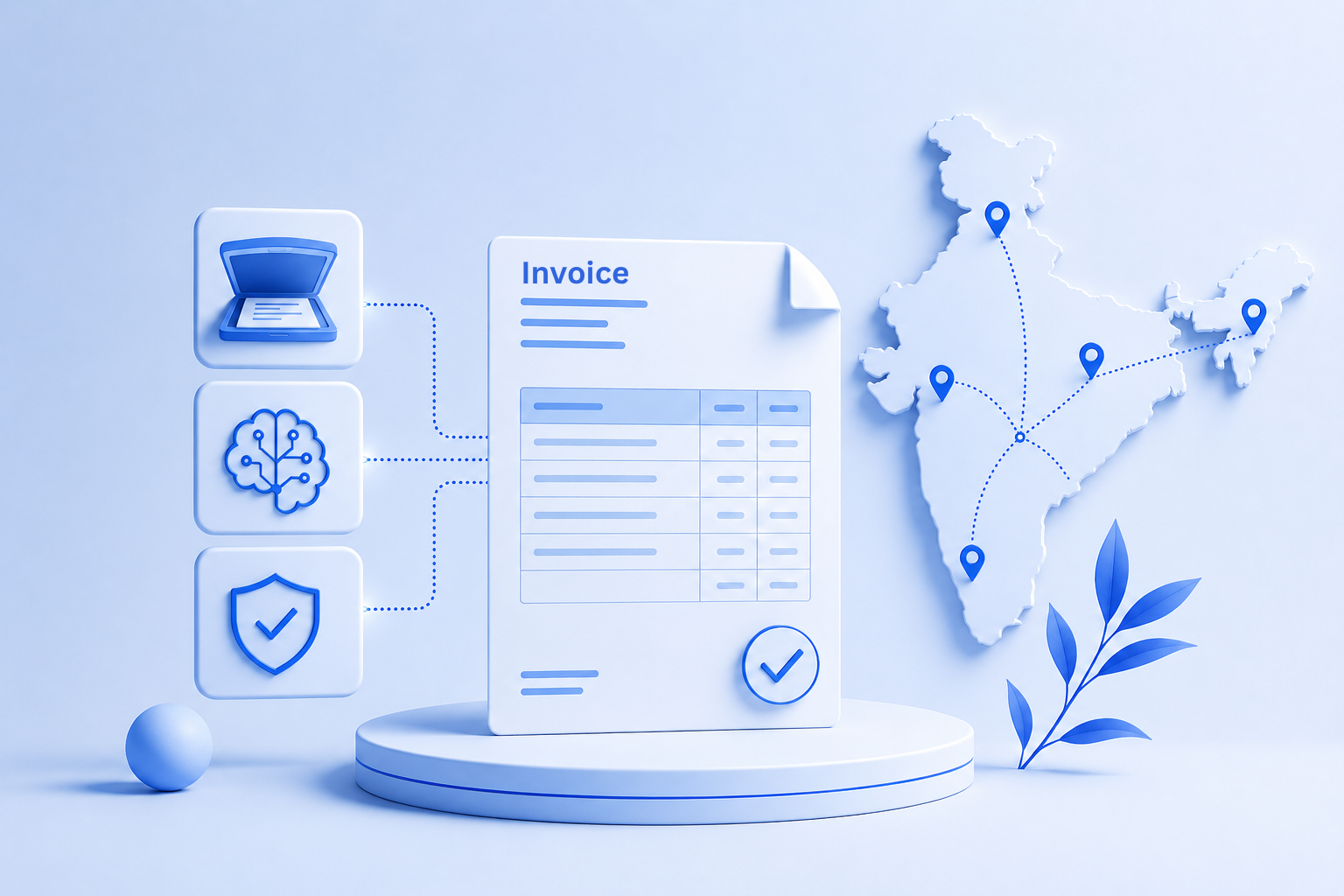
A manufacturer I worked with runs plants in four states. Every one of those plants holds its own GSTIN, because that’s how GST works,  one PAN, but a separate registration for every state where the business has a warehouse, office, or fixed place of operation. An invoice that lands in their AP inbox isn’t just a bill to be read and paid. It’s a document that has to be matched to the correct state registration, checked for the right place-of-supply treatment, and validated before it can ever touch their input tax credit.


OCR doesn’t know any of that. It reads text. It doesn’t know that using the wrong state’s GSTIN on an invoice risks penalties and denial of ITC, or that a transfer between two branches in different states is itself a taxable supply that needs its own invoice and IGST treatment. That’s the gap “touchless” processing is actually meant to close, and it’s also where a lot of AP automation quietly stops short.

Why OCR was never the hard part

Extracting a vendor name, an amount, and a GSTIN off a scanned invoice is table stakes at this point. The harder problem for a multi-state enterprise is context: which registration does this invoice belong to, is that GSTIN actually valid for the state the goods or services were supplied in, and does the invoice even qualify for straight-through processing once GST rules are applied, not just OCR confidence.


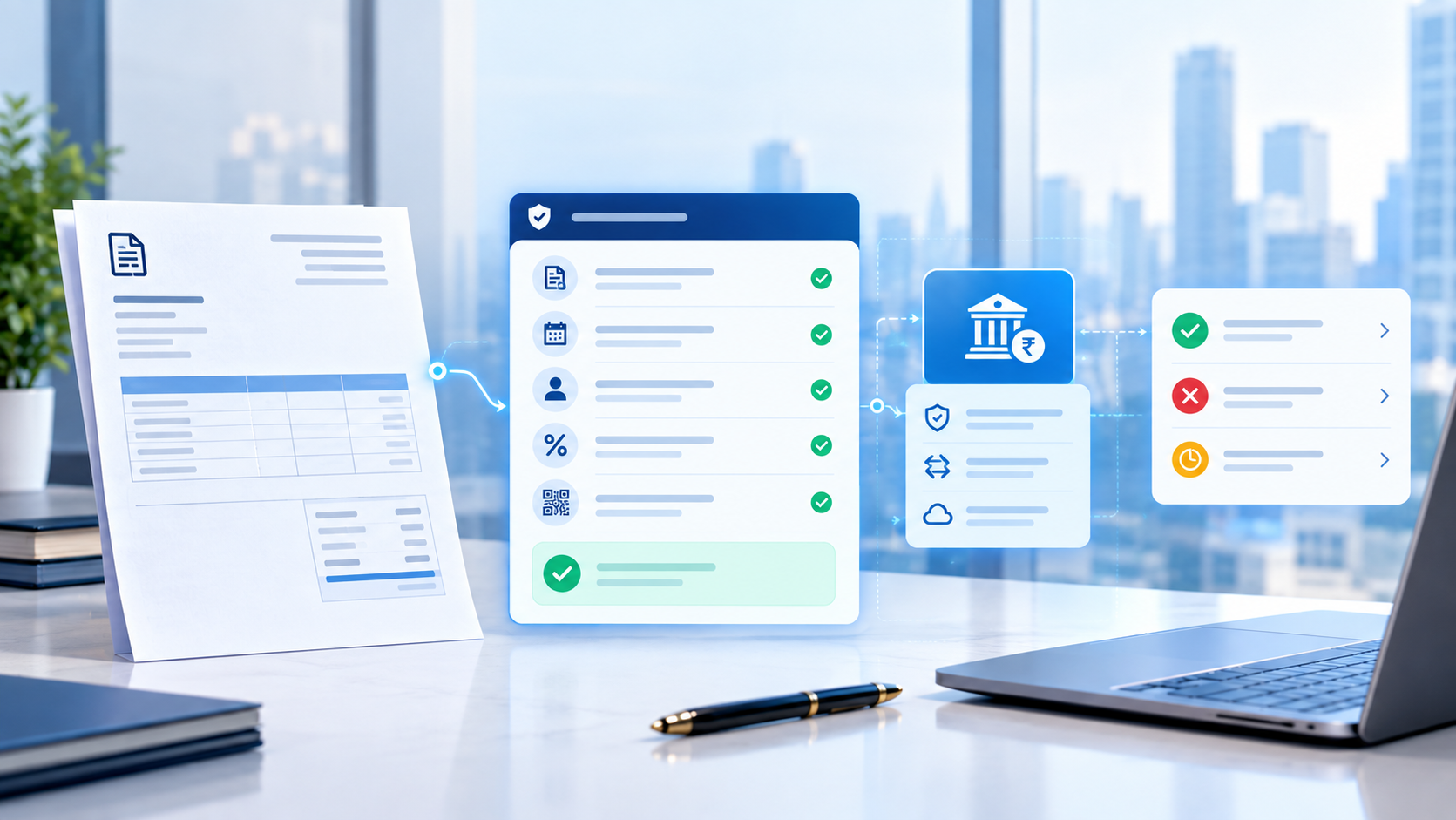
Since e-invoicing became mandatory for every business with turnover above ₹5 crore, that context has real teeth. An invoice without a valid IRN can’t be used to claim input tax credit at all. And on the IRP side, the validation isn’t cosmetic,  it checks the GSTIN, invoice uniqueness, HSN codes, and tax calculations before an IRN is even issued. A single mismatched digit in a supplier’s GSTIN, or an invoice logged against the wrong state entity, can silently break ITC eligibility for that transaction. Nobody catches that by reading the PDF faster.

What "touchless" actually has to check for a multi-state business

For a company holding GSTINs across several states, real touchless processing means the system is doing work no OCR tool was built to do:

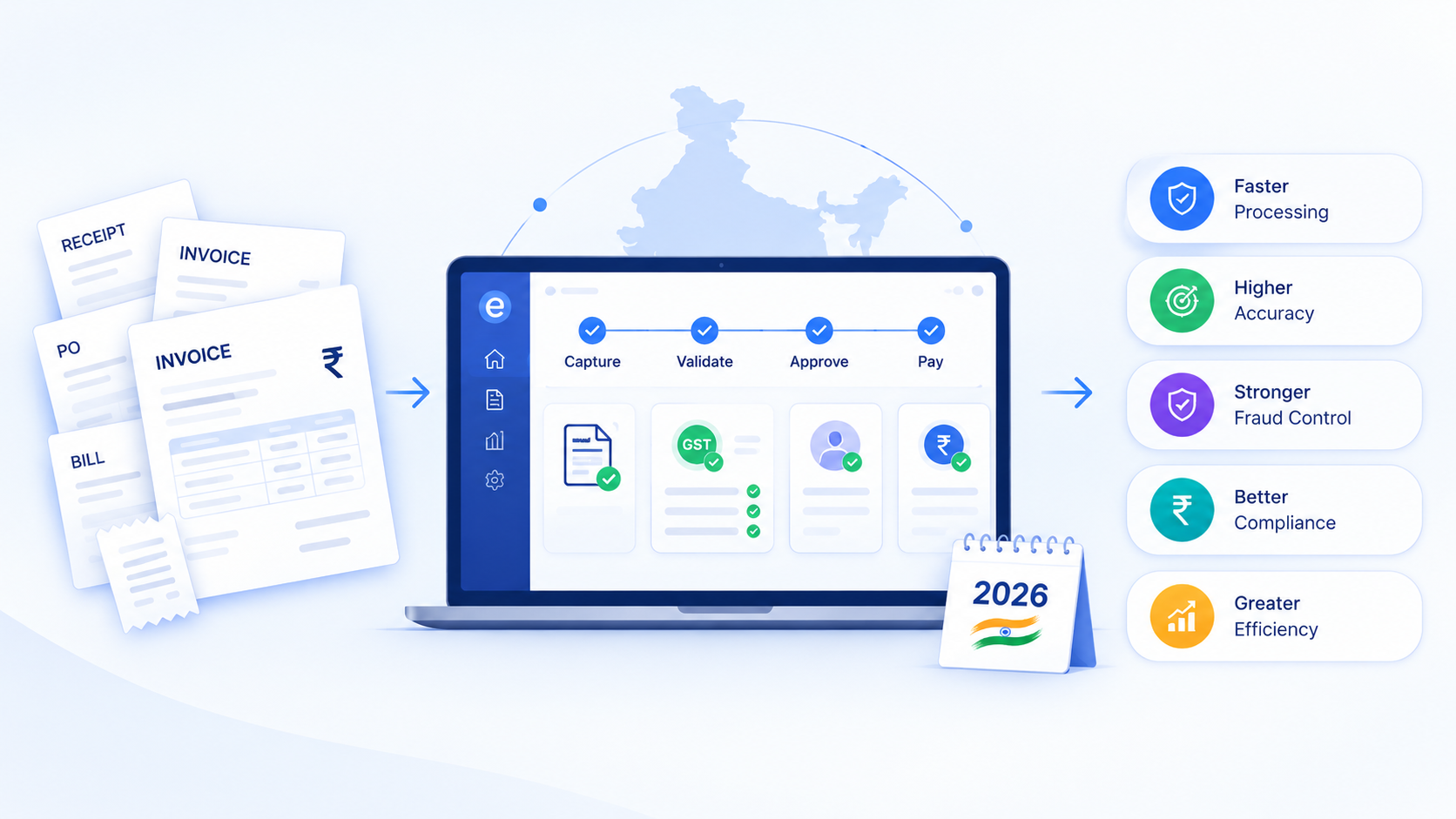
  • Matching each incoming invoice to the correct GSTIN and state registration, not just detecting that a GSTIN exists.

  • Flagging place-of-supply mismatches before they become ITC denials.

  • Recognising inter-branch transfers as taxable supplies requiring their own invoicing and IGST treatment, rather than processing them like a routine vendor bill.

  • Confirming the invoice carries a valid IRN before it’s eligible for autonomous processing at all

Each state registration also files its own returns. So the same invoice that gets processed touchless also has to land in the correct state-wise reconciliation, GSTR-1, GSTR-3B, ITC ledgers,  without someone manually sorting invoices by state after the fact.

The CFO question worth asking

If your AP platform can extract fields from an invoice but can’t tell you whether that invoice belongs against the Maharashtra registration or the Gujarat one, it isn’t touchless,  it’s fast data entry with an ITC risk built in. For a business with three GSTINs, that risk is manageable with a sharp finance team. For a business with fifteen, across a footprint most Indian enterprises are now operating at, it stops being something a human can catch invoice by invoice, and starts being something the system has to be built to catch by design.


That’s the actual bar for touchless processing in India: not whether it reads the invoice, but whether it understands which entity, which state, and which return that invoice belongs to before a human ever sees it.
Read Our Blogs

12 Jun 2026

The Ideal Accounts Payable Automation Framework: An 8-Step Blueprint for Smarter Finance

Accounts Payable has evolved far beyond invoice processing. Today’s finance teams are expected to process invoices faster, maintain complete compliance,

Ila Imani - Founder CEO, Expenzing

28 May 2026

Cracking the Code on Section 43B(h): Sustaining MSME Payment Compliance Without Compromising Working Capital

Most tax liabilities announce themselves. GST notices, TDS defaults, and assessment queries are visible the moment they arise. Section 43B(h)

Shabbir Imani , Founder Director , Expenzing

3 May 2026

Is Manual Invoice Matching Enough Under GSTN’s New IMS(Invoice Management System)? Why Your ITC(Input Tax Credit) Says No

One question keeps coming up in my discussions with CFOs and finance leaders: “How do we handle GSTN’s new Invoice

Ila Imani - Founder CEO, Expenzing

See the Possibilities. View our Demo.

satnam

Satnam Kaur

Co-Founder and CTO,
Expenzing

Satnam Kaur, Co-Founder and CTO of Expenzing, is a BITS Pilani alumna with deep expertise in information security, engineering management, and enterprise solution delivery. Beginning her career as a software developer and system analyst, she went on to lead product roadmaps, implementations, and large-scale technology teams. At Expenzing, Satnam heads technology, product development, and Infosec, playing a pivotal role in building secure, enterprise-grade SaaS solutions that balance innovation, precision, and client-centric delivery. A compassionate yet driven leader, she ensures that customer success remains central to every implementation, while also championing process excellence and automation. Beyond work, she enjoys travelling, singing, and contributing to social causes.

shabbir imani

Shabbir Imani

Founder Director,
Expenzing

Shabbir Imani, Co-Founder and Sales Director of Expenzing, holds a PGDM from IIM Calcutta (1985) with a specialization in Finance and Marketing. With over three decades of experience in enterprise solutions, he has a proven track record of scaling software products and driving business growth across industries. At Expenzing, Shabbir leads Sales and Strategy, shaping the company’s go-to-market approach and expanding its reach among large enterprises. A thought leader in spend management and a regular speaker at industry forums, he combines strategic vision with strong execution to deliver measurable business impact for clients, while also nurturing his personal passions for travel, music, and fitness.

illa imani

Ila Imani

Founder CEO,
Expenzing

Ila Imani, Founder CEO, and Product Owner of Expenzing, is an IIM Calcutta alumna (PGDM, 1986) with a specialization in Systems. She began her career as a systems analyst and programmer, gaining first-hand insights into the challenges of fragmented procurement and finance processes. Ila is the visionary behind Expenzing’s Spend Management Suite, guiding its evolution into a leading SaaS platform used by over 100 CFOs and hundreds of thousands of enterprise users. She drives the product roadmap with a strong focus on precision, compliance, and measurable client outcomes. Known for nurturing teams and building lasting client relationships, she drives the product roadmap with a focus on precision, compliance, and measurable outcomes, ensuring Expenzing consistently delivers value while redefining how enterprises control spend and manage compliance.

this for check box

Expenzing: Sourcing, Procurement and Accounts Payable Software
Privacy Overview

This website uses cookies so that we can provide you with the best user experience possible. Cookie information is stored in your browser and performs functions such as recognising you when you return to our website and helping our team to understand which sections of the website you find most interesting and useful.