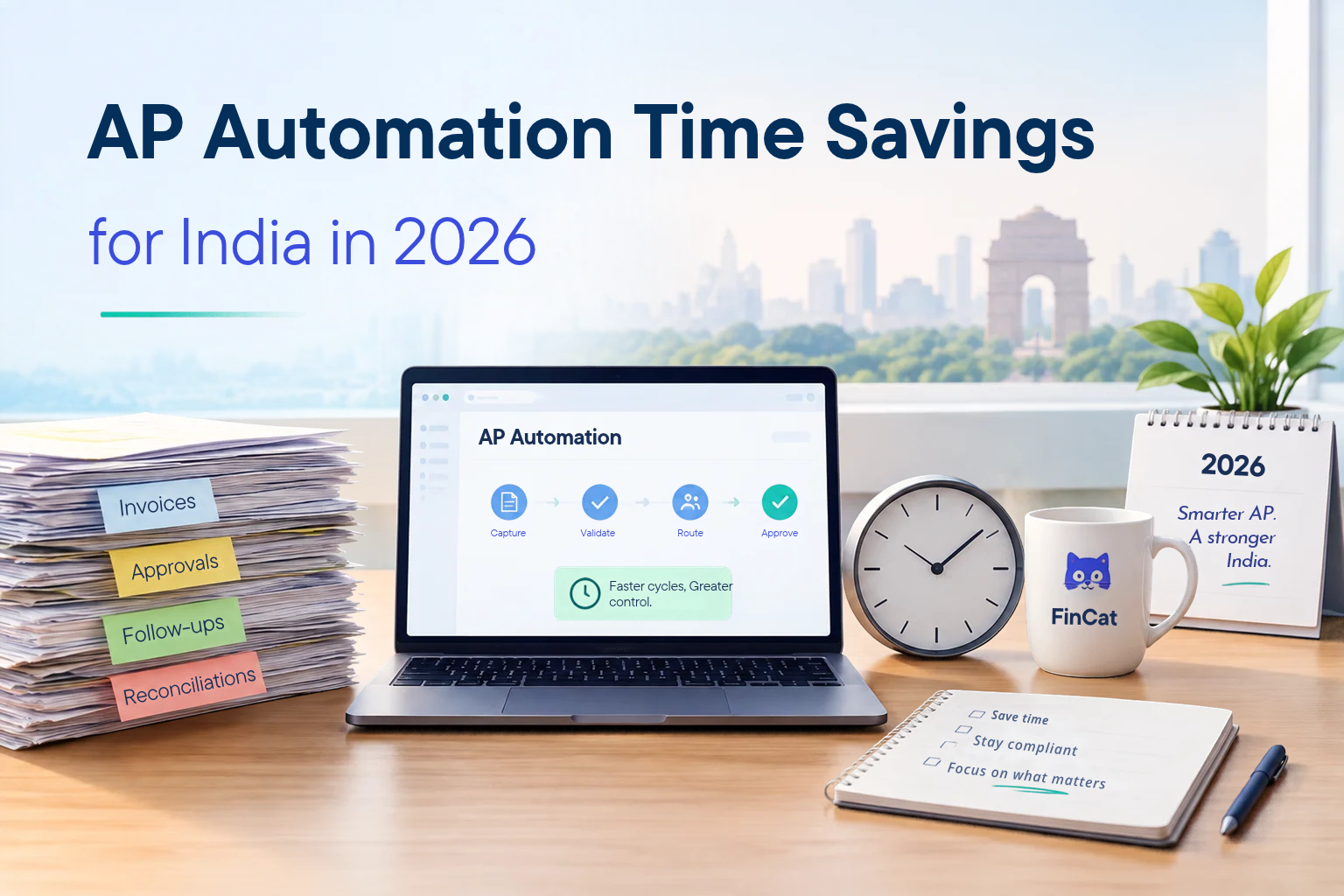
Indian invoice volumes keep doubling, and the time drain isn’t where most finance leaders expect it. It’s in the hundreds of small touches spread across approval queues, manual validations and compliance checks. GST reconciliation deadlines don’t move, and Section 43B(h) has real tax consequences. Here is how to calculate what AP automation will actually save you.
Key takeaways:
- .Manual invoice processing in India takes 15-25 minutes per invoice. Automation brings it down to 2-4 minutes.
- GST reconciliation, TDS and MSME 43B(h) tracking add 3-7 minutes per invoice in manual setups.
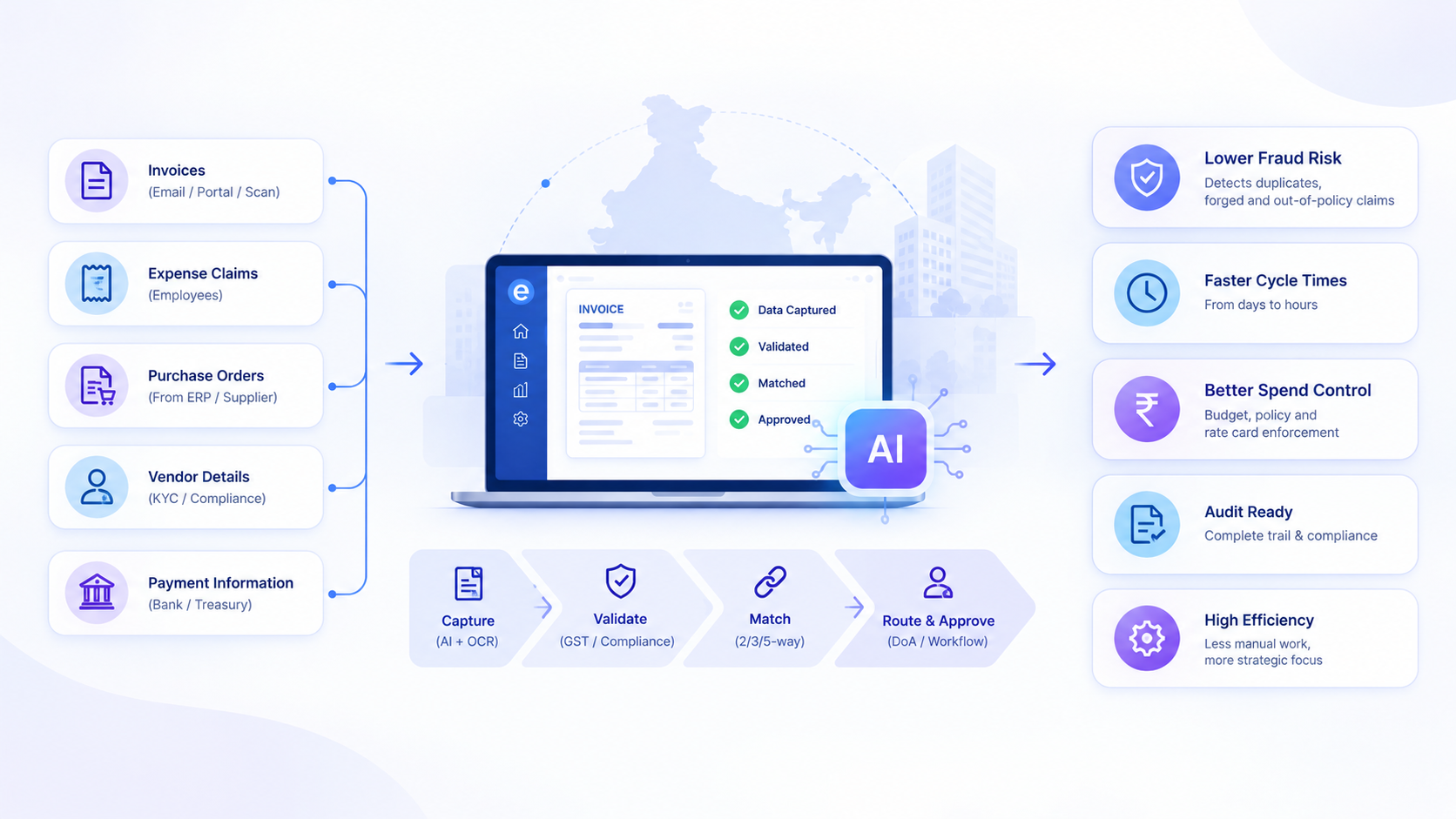
- Expenzing’s AI-powered AP automation cuts processing time by up to 70% and handles statutory validations natively.
- Count hidden time too: exception handling, vendor follow-ups and month-end GSTR-2B reconciliation.
- At 6,000 invoices a month, automation can recover roughly 1,675 hours monthly.
How do you calculate AP automation time savings?
Use four steps:
- Baseline hours = (Monthly invoices × Minutes per invoice) ÷ 60
- Touchless rate: 75-85% with strong PO coverage and clean vendor master data, 60-70% otherwise. Be conservative and validate with a proof of concept on your own invoices.
- Post-automation hours = (Invoices × (1 − Touchless rate) × Manual exception minutes) ÷ 60
- Time savings = Baseline − Post-automation
For 6,000 invoices at 18 minutes each, the baseline is 1,800 hours a month. At a 75% touchless rate and 5 minutes per exception, post-automation drops to 125 hours. That is 1,675 hours saved, or about 10.5 FTEs redirected to higher-value work.
Why does automation save more time in India?
Every Indian invoice carries GSTIN validation, TDS calculation and MSME vendor identification on top of the usual matching and approvals. Expenzing builds GST, TDS and IRN validation into the invoice workflow itself, cutting compliance-related processing time by up to 90%.
How does MSME 43B(h) affect AP time?
Payments beyond 45 days without a written agreement (15 days with one) lose their tax deduction. Tracking this by hand means a separate vendor register, manual deadline calculations and constant aging-report checks. Expenzing identifies MSME vendors at onboarding through Udyam validation, flags invoices nearing the deadline and escalates at-risk payments automatically.
Which features save the most time?
- AI Smart Scan captures GSTIN, HSN codes and tax breakdowns across varied Indian invoice formats.
- Five-way matching (quantity, rate, order value, GRN, advances) prevents the exceptions that cause rework.
- Native GST/TDS compliance removes the sync delays of middleware.
- Agentic workflows handle reminders and escalations, so your team stops chasing approvers.
Where does the saved time go?
Redirect it on purpose: vendor spend analysis instead of data entry, early-payment discount capture instead of approval chasing, and control design instead of month-end compliance firefighting.
How fast will you see results?
Basic invoice processing typically goes live in 4-8 weeks, with 2-4 more for multi-GSTIN or legacy ERP setups. Track cycle time, touchless rate and exceptions per invoice monthly, and compare actual hours saved against projection every quarter.
In Conclusion
Measure your baseline, estimate a realistic touchless rate, and decide where the recovered hours will go. Teams that do this turn AP automation from a cost-saving project into a competitive advantage.
Frequently Asked Questions (FAQs)
How much time can Indian enterprises save with AP automation?
Most save 70-80% of invoice processing time. Expenzing reduces it by up to 70% while handling GST, TDS and MSME compliance automatically.
What touchless rate should we target?
75-85%, validated through a proof of concept on your actual invoices.
How does AP automation help with GST compliance?
It checks the supplier’s GSTIN, confirms e-invoice details where applicable, and flags mismatches before the invoice is approved. This reduces the risk of input tax credit problems that otherwise surface later during reconciliation or a notice.
How soon will we see savings?
Measurable savings usually appear within 30-60 days of go-live, and full realization by the end of the first quarter.