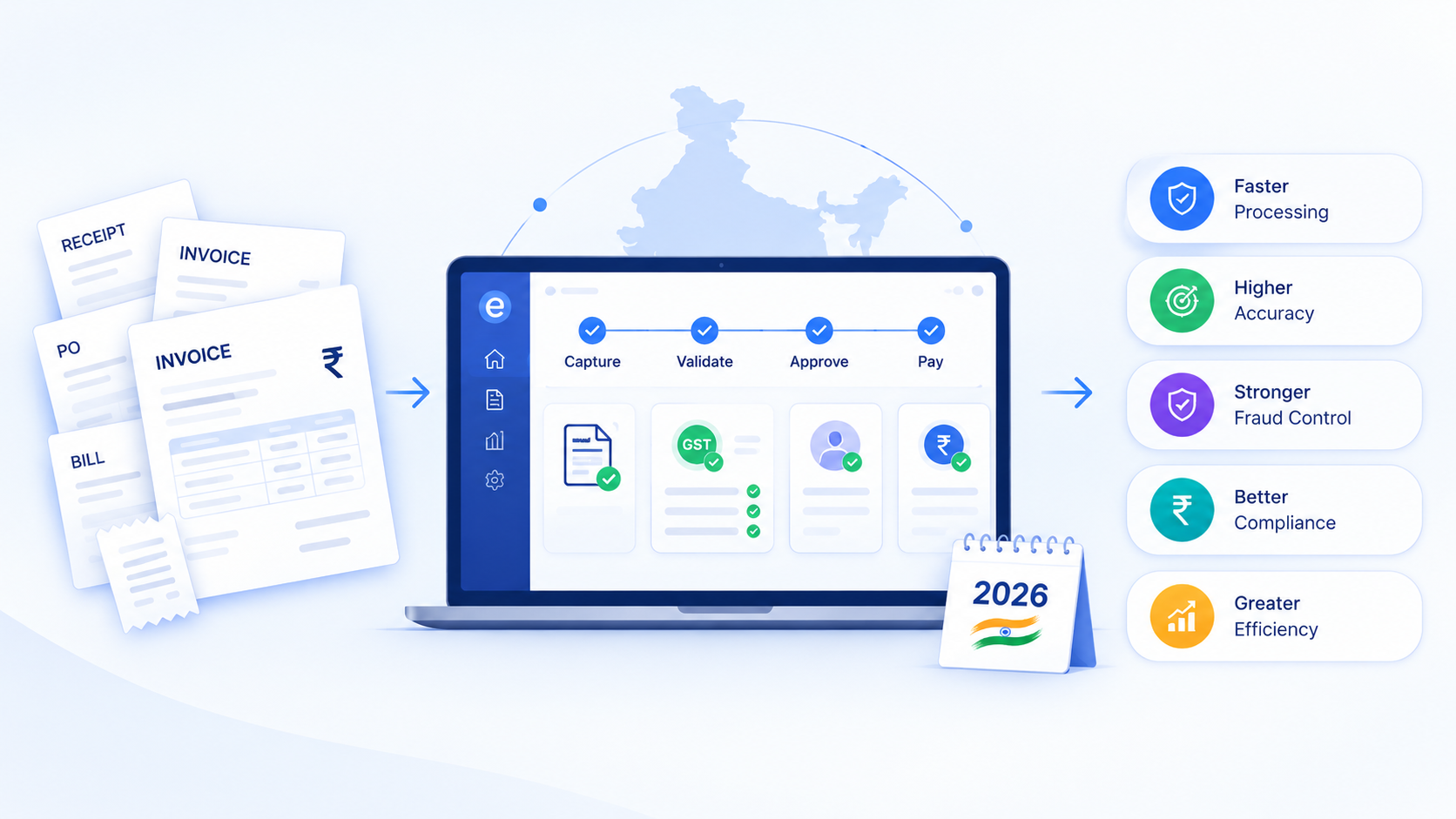

Ask most AP software vendors whether they do fraud detection, and almost all of them will say yes. Ask what that actually means, and most of the time you’ll get the same answer: duplicate invoice checking. Same invoice number, same vendor, same amount, flagged, blocked, done. That’s a real control. It’s also roughly a decade behind where the fraud actually is now.
Why rules stopped being enough
A duplicate check is a rule: if X matches Y, flag it. Rules are good at catching fraud that repeats a pattern someone already coded for. They’re structurally blind to anything that doesn’t. A fabricated invoice from a vendor whose GST filing lapsed two years ago isn’t a duplicate of anything, it’s a new, clean-looking document that happens to be sitting on top of a compliance problem no duplicate-check rule was ever built to look for. Experian’s 2026 fraud research found that nearly 60% of companies saw their fraud losses rise over the past year, and that’s happening while most AP systems have never been better at catching duplicates. The fraud moved. The control didn’t.
What "agentic" actually means here, concretely
The word gets used loosely, so it’s worth being precise. A rules engine checks a fixed list of conditions. An agentic system reasons through a sequence of checks the way an investigator would, reading a vendor’s GST filing status, cross-referencing whether the bank details on this invoice match what was verified at onboarding, checking whether an MSME payment deadline has quietly lapsed, weighing all of that together into a single risk judgment, and then deciding whether the invoice needs a human or can proceed. That’s not a longer rulebook. It’s a system that can handle the fact that fraud doesn’t always look like fraud from any single angle, only when you connect several unrelated details does the picture change.
This matters more in India specifically, not less. Between fabricated GST documentation, vendor mailbox takeovers, and now the early wave of deepfake-assisted business email compromise we’re starting to see target CFOs directly, the fraud a finance team is up against in 2026 is coordinated and multi-step. A defense built entirely on single-condition rules is defending against last decade’s version of the problem.
This isn't a hypothetical shift, it's already underway
A 2026 Cambridge Centre for Alternative Finance survey found 21% of financial-services respondents had already deployed AI agents into production, with a further 52% piloting or further along. The global market for agentic AI in fraud detection and prevention grew from $7.73 billion in 2025 to $11.53 billion in 2026, a 49.1% annual growth rate. That’s not vendors inventing a buzzword to sell against, that’s finance and risk teams voting with budget because the older approach is visibly not holding.
The question worth asking your AP vendor
Not “do you detect fraud.” Ask instead: does your system connect a GST filing lapse, a bank detail change, and an MSME payment deadline into one judgment about a single invoice, or does it check each of those in isolation, and only flag the ones that trip an individual rule? The difference sounds small in a sales conversation and shows up as the entire gap between catching fraud and explaining, after the fact, why the system that was “checking for fraud” the whole time never actually caught it.
Duplicate checking isn’t wrong. It’s just not the job anymore. The job now is reasoning across everything AP already knows about a vendor and an invoice, before the payment goes out, not after an auditor asks why it didn’t.