A Smarter Way to Stay Compliant
The Continuous Nature of Compliance in India
Statutory compliance in India is not periodic, it is continuous. Between monthly GST filings like GSTR-1 and GSTR-3B, quarterly TDS returns such as 24Q and 26Q, PF and ESI obligations, advance tax payments, and annual ROC filings like AOC-4 and MGT-7, finance teams operate in a constant cycle of deadlines. Despite this, many organizations still rely on spreadsheets, emails, and individual ownership to manage compliance.
The issue is not a lack of awareness. Finance teams clearly understand what needs to be done. The real challenge lies in tracking, coordination, and control.
The Real Problem: Fragmented Tracking
Most compliance failures do not happen because teams misunderstand regulations. They happen because tracking is fragmented. Different filings are owned by different individuals, deadlines are scattered across spreadsheets and calendars, and dependencies between tasks are rarely visible.
Over time, this creates operational gaps. Deadlines get missed or overlooked due to manual tracking. Filings are pushed to the last minute, increasing the risk of errors. Organizations become overly dependent on individuals rather than systems, and there is little to no real-time visibility into compliance status across entities.
Consider a delayed GSTR-3B filing. It is not just a missed deadline, it can lead to penalties, interest, and disruptions in input tax credit reconciliation. Similarly, delays in TDS filings can trigger notices and strain vendor relationships. As regulatory requirements become more complex, this fragmented approach becomes increasingly unsustainable.
How AI Transforms Compliance Management
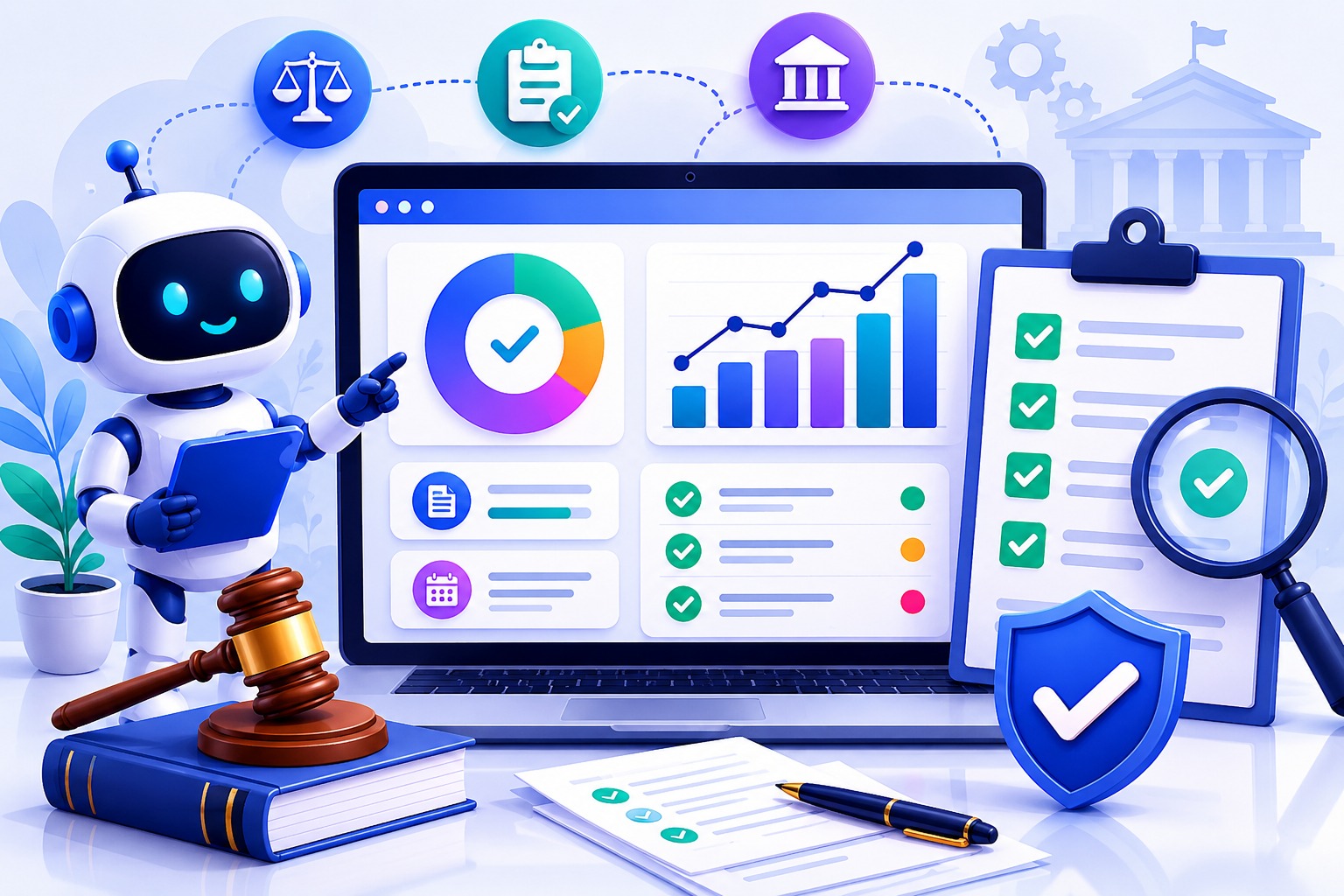
This is where AI changes the equation. It does not simply automate reminders, it introduces a system-driven approach to compliance management. AI can automatically map applicable statutory requirements based on business structure, industry, and geography, ensuring that obligations across GST, TDS, PF, ESI, and ROC are identified and consistently tracked.
Instead of maintaining manual trackers, AI enables a dynamic compliance calendar that builds in dependencies, ownership, and timelines. It brings structure to what is otherwise a scattered process. Alerts are no longer reactive. They become proactive, notifying teams in advance, highlighting delays, and flagging at-risk filings before issues escalate.
Real-Time Visibility and Stronger Control
At a leadership level, this creates real-time visibility. CFOs and finance heads can clearly see what has been completed, what is pending, what is delayed, and what is at risk, all from a centralized view. This eliminates blind spots and supports better, faster decision-making.
By reducing manual intervention, AI also minimizes errors and improves consistency across filings. Compliance data is automatically documented and organized, making it easily accessible. As a result, organizations are always audit-ready, with minimal disruption when audits occur.
From Tracking to Control: A Mindset Shift
What this ultimately enables is a shift in mindset. Compliance moves from being a deadline-driven activity to a system-driven process. Many organizations today are still operating in tracking mode, reacting to deadlines as they approach.
AI enables continuous monitoring, centralized accountability, and early risk detection instead of late-stage corrections. This is not just about efficiency, it is about establishing control.
Why This Matters More Than Ever
For today’s CFO, compliance is no longer limited to avoiding penalties. It has a direct impact on financial accuracy, cash flow through tax credits and payments, audit readiness, and overall organizational credibility.
At the same time, finance teams are expected to manage increasing complexity with limited bandwidth. Without a system-driven approach, this gap will only continue to widen.
Conclusion: The Future of Compliance
Manual compliance tracking may have worked in a simpler regulatory environment. Today, with multiple laws, frequent filings, and heightened scrutiny, it is no longer sufficient.
The future of compliance is not about adding more reminders or improving spreadsheets. It lies in intelligent, system-driven tracking powered by AI.
Now that the requirements are clear and the risks are visible, Expenzing AI helps organizations move from fragmented tracking to complete compliance control.