Every finance leader I speak to these days is asking some version of the same question: “Should we be using AI?” And almost always, my answer is: you’re asking the wrong question. The better question is: does your AI actually understand finance?
Because there’s a meaningful difference between the AI that can process data and an AI Agent that knows what to do with it in the context of your business rules, your controls, your compliance obligations, and your audit trail.
AI Is a Foundation, Not a Solution
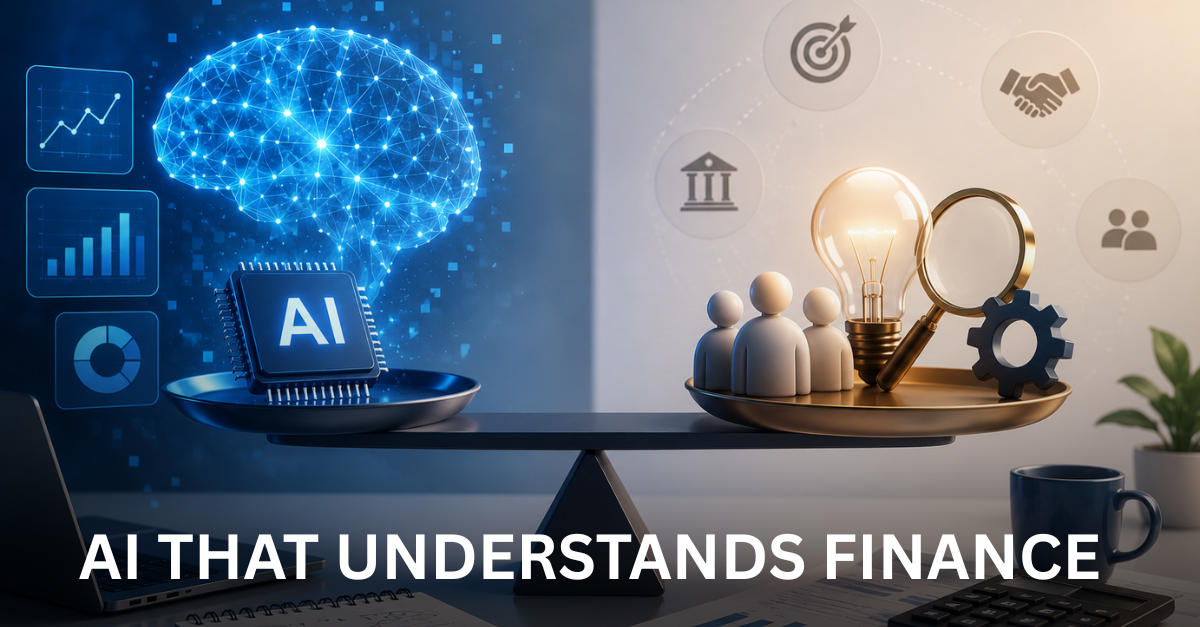
Let’s be direct: AI alone is not a solution for finance. It is a powerful foundational layer. The real value, the kind that actually moves the needle on risk, compliance, and efficiency, comes when AI is combined with deep domain expertise, well-defined business rules, and practical experience from years in the field.
At Expenzing, we’ve spent 17+ years building finance automation for some of India’s most complex organisations. That accumulated understanding of how finance teams think, where fraud hides, and what auditors look for, is baked into how our AI works. It’s not a generic intelligence layer; it’s a finance-specific one.
What Purpose-Built AI for Finance Actually Does
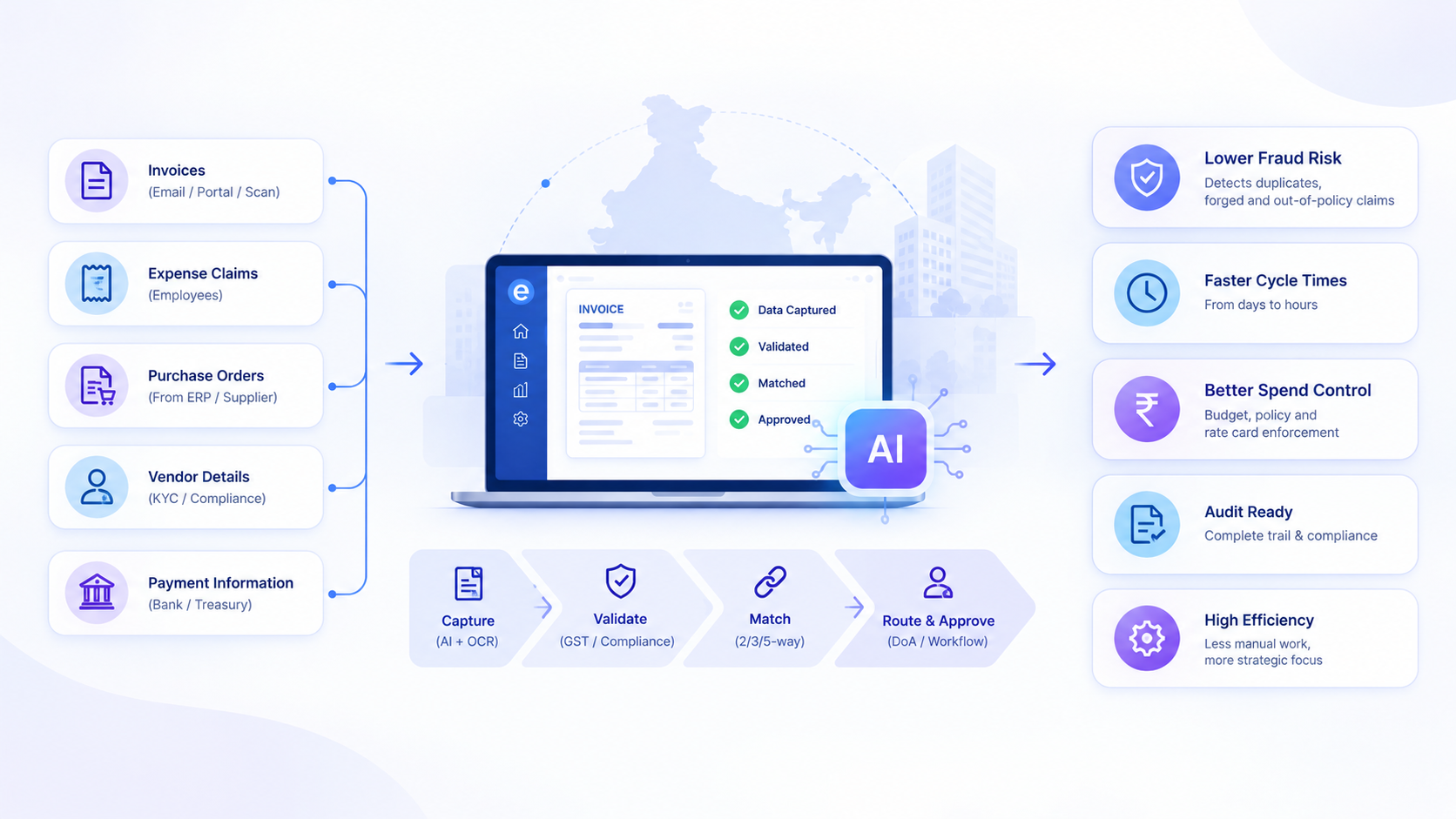
When I talk to CFOs and finance heads about what they actually need from AI in Accounts Payable, four things consistently come up:
• Catching what slips through the cracks. Duplicate invoices, tampered documents, inflated claims, these are not hypothetical risks. They happen. AI that flags these before payment isn’t just smart; it’s essential.
• Intelligent due diligence, not just data matching. Checking an invoice isn’t just about whether the numbers add up. It’s about whether the invoice aligns with your procurement policy, approval hierarchy, contract terms, and vendor history.
• Continuous vendor risk monitoring. Vendor risk doesn’t end at onboarding. Compliance indicators change. Ownership changes. Relationships evolve.
• Smart automation that knows when to stop. Auto-approving low-risk, routine invoices frees up your team for exceptions that matter.
The Trust Factor: Auditors, Controls, and Accountability
One thing that doesn’t get talked about enough in AI conversations, is auditability. It’s not enough for AI to make the right call, it needs to show its work. When something gets flagged as a risk, your team and your auditors need to see the evidence, the reasoning, and the trail.
Expenzing’s AI doesn’t just escalate exceptions, it escalates them with evidence. That’s what builds auditor trust. And in regulated sectors like BFSI, that trust is not a nice-to-have; it’s a compliance requirement.
So, Is AI Enough?
No. AI by itself is not enough. But AI built on a foundation of deep finance expertise, encoded with your business rules, and designed to work within your compliance framework? That’s a different story.
That’s the standard we hold Expenzing’s AP intelligence to, not just processing speed, but process integrity.