
Let me share a pattern I have seen far too often: a finance team proud of their lean AP process, only to discover later that manual checks let through duplicates, fraud, or compliance gaps. In today’s environment, AP automation is not about trimming costs — it is about building a protective layer around your cash and compliance.
From my vantage point at Expenzing, the shift is clear. As per the SSON report 58% report increased invoice fraud attempts in the past year; data duplication affects 81%. Fraud attempts are up, GST scrutiny is intensifying, and manual processes are the weak link. With DGGI busting scams like the ₹217 crore fake ITC racket in Andhra Pradesh and Telangana, or ₹410 crore networks in Bengaluru, CFOs cannot afford to treat AP as a transactional chore. It is now a frontline risk control.
I recall a manufacturing client who prided themselves on quick invoice approvals. But their manual process allowed duplicate payments to slip through repeatedly — small amounts at first, then larger ones. Once we automated with real-time duplicate detection and vendor validation, those leaks stopped cold. The CFO told me it felt like adding a safety net they did not know they needed.
The risks manual AP ignores
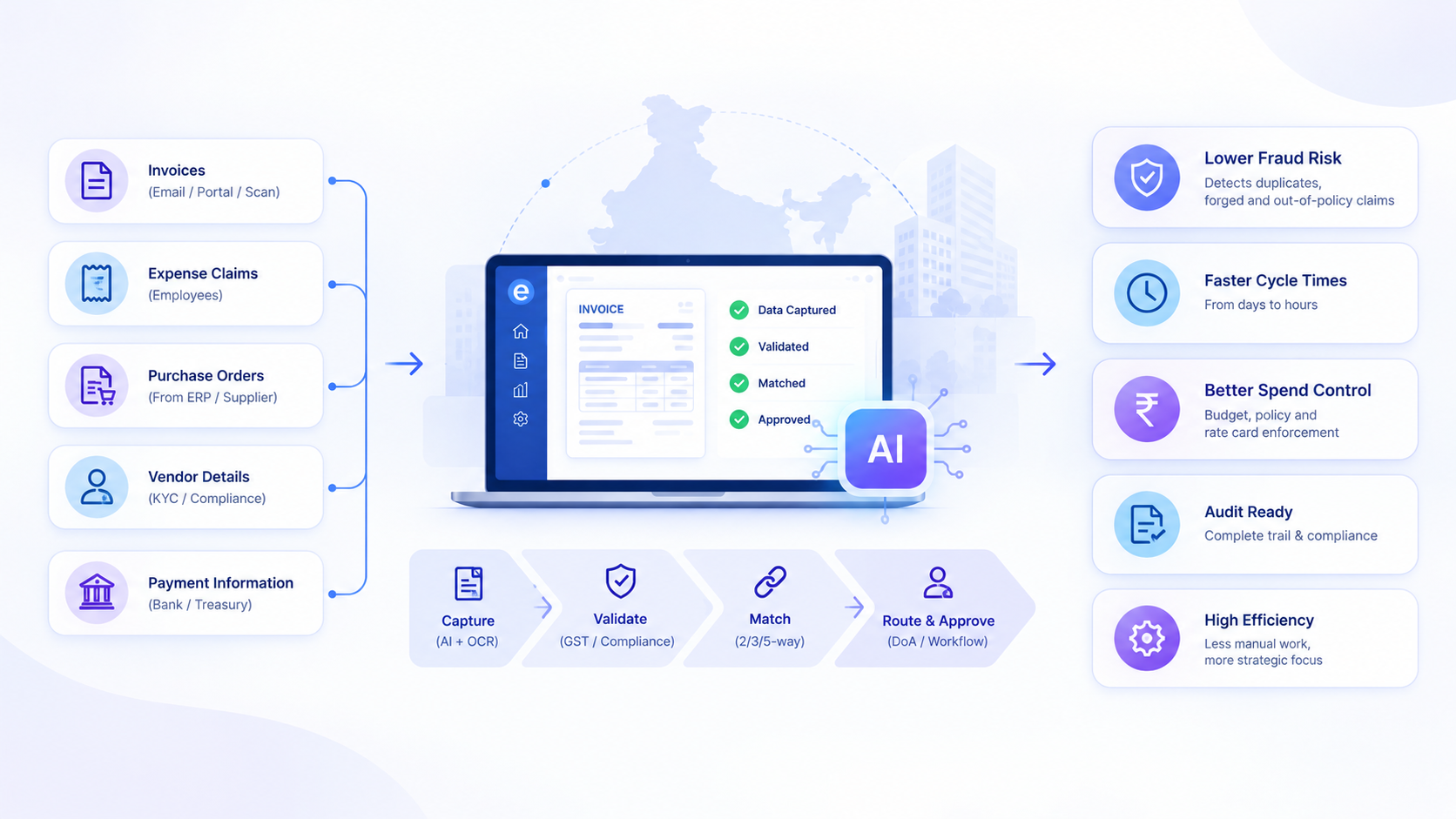
Manual AP creates blind spots that fraudsters love: duplicate invoices, fake vendors, manipulated bank details, and unreconciled data leading to ITC leakage. In India, these risks are amplified by GST complexities — think fake ITC claims, bogus shell entities, and invoice mismatches that trigger audits or penalties.
Modern AP platforms increasingly use AI-driven decision intelligence and lightweight agents to continuously monitor invoices, vendor behaviour, and approval anomalies in real time. It is not perfect, but it catches 90% of issues that humans miss under volume pressure.
Another client, a services firm, faced a classic email spoofing scam — a “vendor” emailed updated bank details for a large payment. Their old process would have paid it. Automation flagged the mismatch, pulled the verified contact from the vendor master, and prompted a quick call. Fraud averted, and trust restored.
CFO perspective: control over speed
As a CFO, you know speed without control is reckless. Automation gives you both: faster processing with embedded safeguards like segregation of duties, audit trails, and real-time dashboards. In India, this means better GST reconciliation, TDS accuracy, and protection from rising fraud — 58% of organizations report more attempts, per recent analysis.
The payoff is strategic. Automated AP reduces not just processing costs, but also exposure to fines, reputational hits, and cash leaks. It turns your team from processors into guardians of financial health.
I have seen this transform teams. A logistics client cut fraud incidents by automating vendor onboarding and payment validation. Their CFO gained confidence to approve larger volumes without extra headcount.
Building the right safeguards
Start simple: automate duplicate checks, vendor validation, and 3-way matching first. Layer in AI for anomaly detection and policy enforcement. Measure success by risk metrics — fraud prevented, duplicates caught, audit readiness — not just cycle time.
Choose solutions that understand India: GST-native, TDS-aware, and scalable for your ERP.
The new AP reality
AP automation is evolving into risk intelligence. For Indian CFOs facing GST fraud waves and compliance heat, this is your edge. Do not wait for the next scam headline. Build the controls now, and watch AP become a value protector, not a vulnerability.