When I sit down with a CFO or a procurement head to talk about travel, the conversation rarely starts with software. It starts with a number they don’t trust, a policy people ignore, or a month-end close that stalls on expense claims. This guide is for that conversation. It explains what travel and expense management software does, how enterprises use it, and how to choose one without getting lost in feature lists.
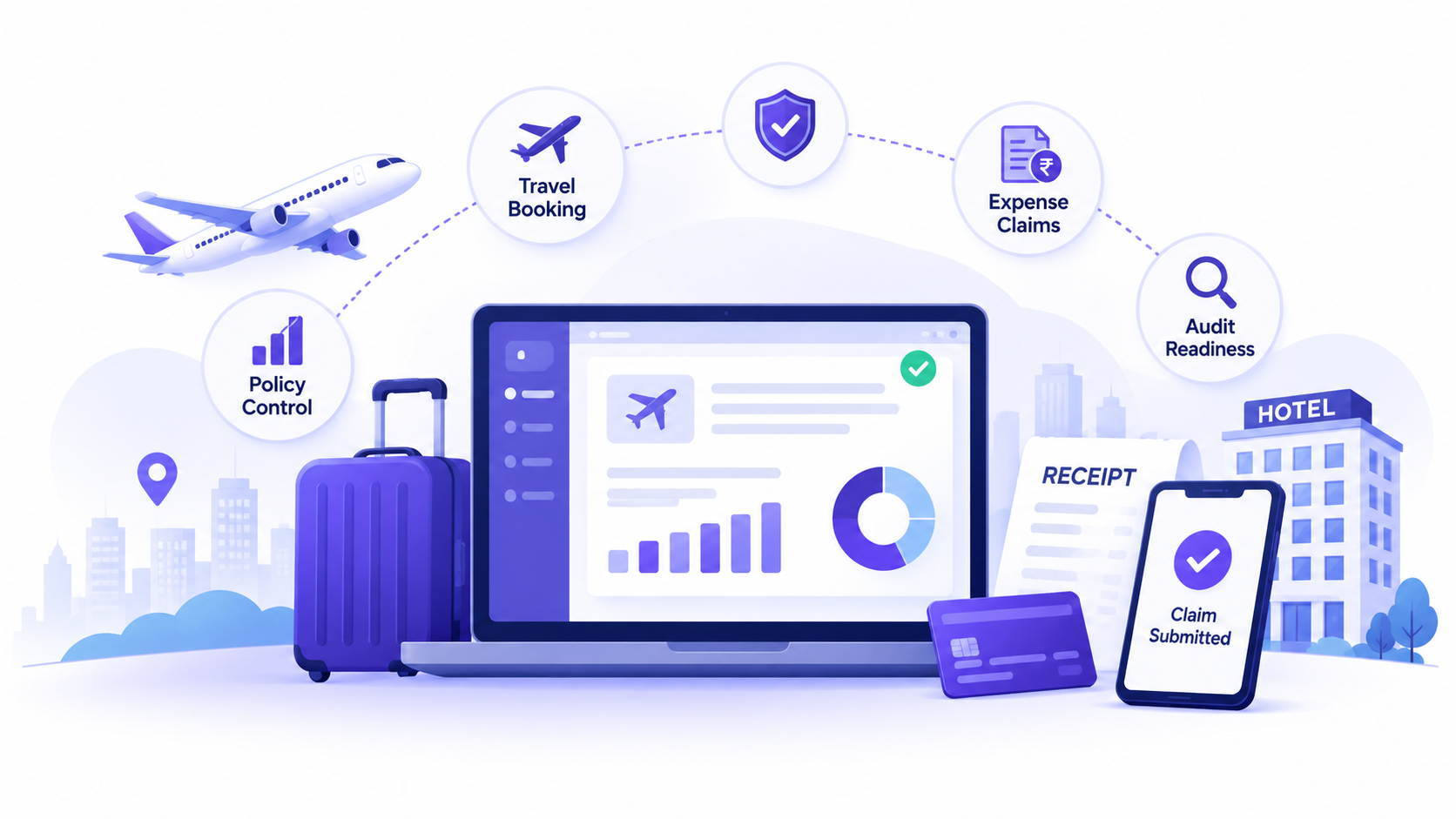
Travel spend control comes from four mechanisms working together.
Key takeaways
- Travel and expense management software (TEM) puts booking, expense capture, policy checks, approvals and reporting on one platform, so travel spend is governed while it happens.
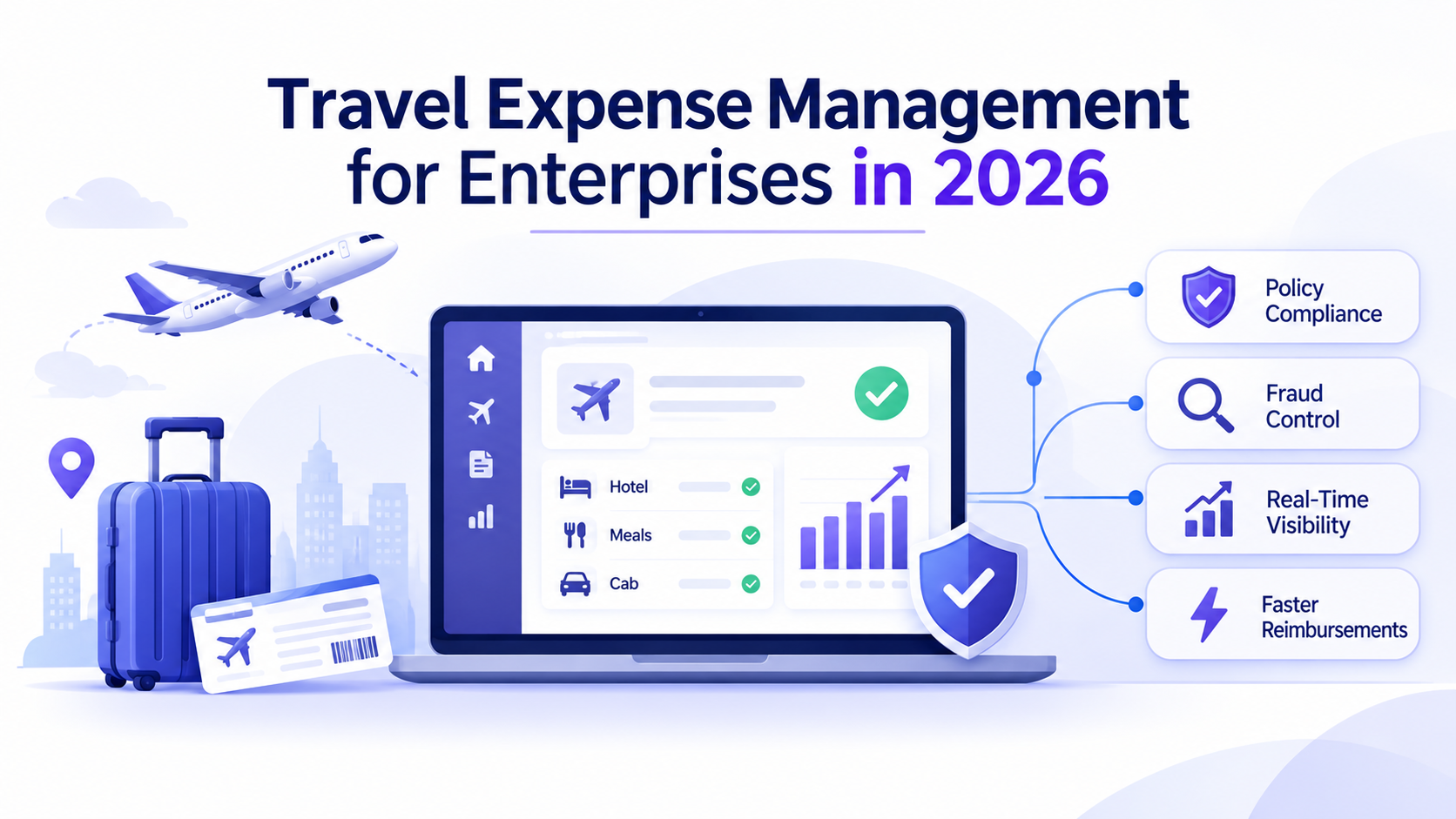
- Four things should decide your shortlist: policy enforcement, spend visibility, approval automation and fraud controls.
- Control works best before the money is spent. Pre-trip approvals and in-booking policy checks matter more than post-trip audits.
- Visibility has to include committed spend, meaning approved trips and open bookings, not only reimbursed claims.
- Fraud controls should cover duplicate claims, split transactions, altered receipts and approver collusion, and not just obvious personal spend.
- Integration with your ERP and tax workflows decides whether finance saves time or just moves the manual work somewhere else.
- Test any platform on your own policy and your own messy receipts before you buy.
What is travel and expense management software?
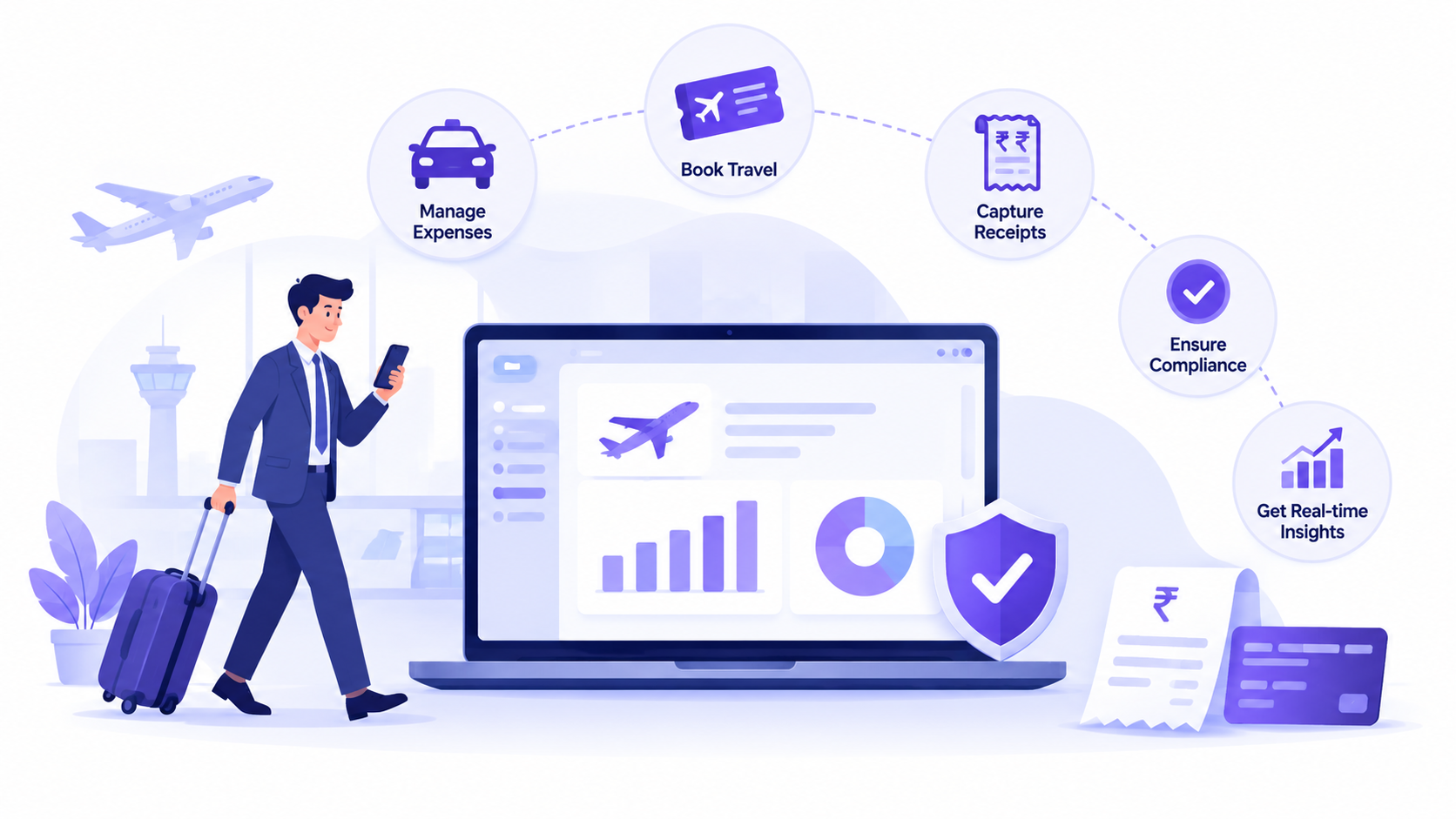
Travel and expense management software is a platform that handles how employees plan and book business travel, spend company money, submit claims and get reimbursed, while enforcing company policy and giving finance a live view of the spend.
The definition matters less than the shift it represents. In a manual set-up, policy is a document, approvals happen over email or chat, and finance learns what was spent after the fact. In a TEM platform, policy is configured rules, approvals follow a defined route, and finance sees spend as it is committed.
Two older terms still come up in vendor conversations. Corporate travel management refers to the planning, booking and supplier side. Corporate expense management refers to capture, claims, approvals and reimbursement. A modern TEM platform joins them, so a booking, its approval and the later expense claim sit in a single record.
Why are enterprises rethinking travel and expense management in 2026?
Three pressures keep surfacing in the conversations I have.
-
Scrutiny of discretionary spend. Finance leaders are being asked to explain spend categories line by line. Travel is large, spread out and easy to question, so a vague answer no longer works.
-
Compliance expectations. Tax authorities and auditors expect evidence: who approved a spend, under what policy, with what supporting document. Capturing supplier tax details correctly on hotel and service invoices is now part of the job.
-
Fraud has become easier to attempt. Editing or generating a convincing receipt takes minutes with widely available tools. Controls that depended on a human spotting an odd-looking bill are not enough on their own.
None of these is new. What has changed is the cost of ignoring them.
How does TEM software control corporate travel spend?
Travel spend control comes from four mechanisms working together.
Policy enforcement
The platform applies your rules at the moment of booking or claim. A hotel above the city cap is blocked or sent for justification. A class-of-travel exception requires a second approver. Rules vary by grade, department, geography and trip type.
The test is who maintains these rules. If every change needs a vendor ticket, your policy will drift out of date. Finance should be able to edit it directly.
Spend visibility
Visibility means more than a report of reimbursed claims. You need to see:
- Spend by employee, team, cost centre, city and supplier
- Committed spend: approved trips and bookings not yet billed
- Policy exceptions and how often they occur
- Open claims and ageing
Procurement gets a second benefit. Actual volumes by route and hotel give you the data to negotiate rates, and the leverage to steer bookings towards preferred suppliers.
Approval automation
Approvals should follow your delegation of authority matrix. A manager approves a standard trip, a department head approves an exception, and finance approves above a threshold. Good platforms allow mobile approval, delegation during leave and reminders for stalled requests. Every action is logged with a time and a name.
Fraud and leakage controls
Covered in detail below, because this is where platforms differ most.
What fraud controls should enterprise travel software have?
Most expense fraud is small and repeated, not dramatic. That is why it survives manual review. When you evaluate a platform, ask how it handles each of these:
|
Risk |
What a good control looks like |
|
Duplicate claims |
Detects the same receipt, amount or booking submitted twice, including across employees |
|
Split transactions |
Flags several small spends that together exceed a limit |
|
Altered or fabricated receipts |
Checks document integrity and cross-references against card, booking or supplier data |
|
Personal spend |
Flags out-of-pattern merchants, weekends, and locations that don’t match the trip |
|
Inflated distance or per diem |
Compares claims to trip records and defined rates |
|
Approver collusion |
Surfaces repeated approval patterns and unusual exception volumes |
|
Tax detail errors |
Validates supplier tax identifiers where required |
Be sceptical of any vendor that answers all of this with “AI-powered.” Ask to see a flagged item, the reason the system gave, and what the reviewer does next. A control without a clear review workflow just creates a pile of alerts.
How should finance and procurement divide the decision?
Both teams want the platform, but for different reasons. Agree the criteria together, early.
- Finance cares about policy enforcement, audit evidence, ERP integration, close speed and fraud controls.
- Procurement cares about supplier consolidation, rate compliance, spend data for negotiation and booking leakage.
- HR and operations care about the employee experience. If the tool is painful, people book outside it, and your visibility disappears.
A platform that satisfies finance but frustrates travellers will be bypassed. One that delights travellers but can’t enforce policy gives you a nice interface and the same old problem.
A platform that satisfies finance but frustrates travellers will be bypassed. One that delights travellers but can’t enforce policy gives you a nice interface and the same old problem.
How should you evaluate pricing for TEM software?
Ask every vendor to quote the same scenario: your number of employees who travel, claims per month, entities, ERP and card programme. Then separate the cost heads.
- Licence: per user, per entity or platform fee
- Usage charges: per claim, per booking or per active traveller
- Implementation: what is included and what is billed as a change request
- Integration: ERP connectors, card feeds and who owns the maintenance
- Support and training: what is included after year one
How should you evaluate pricing for TEM software?
I have seen good platforms fail because of a poor rollout. A few principles help:
- Start with the policy. If the policy is unclear, the software will only make the confusion visible. Clean it up first.
- Pilot with one or two business units. Choose a team with real travel volume and a few sceptics.
- Keep the traveller’s path short. Every extra step is a reason to book outside the system.
- Brief approvers first. Slow approvers are the most common cause of employee frustration.
- Review exceptions monthly. If one rule is broken constantly, the rule may be wrong.
What questions should be on your scorecard?
Before you shortlist, score each vendor on these:
- Can finance change policy without vendor help?
- Does it support pre-trip approval and committed-spend visibility?
- Can it follow our delegation of authority matrix?
- How does it detect duplicates, split spends and altered receipts?
- Does it capture supplier tax details accurately?
- Is the ERP integration proven in a similar environment?
- Is pricing clear across licence, usage, implementation and integration?
- Can we pilot on our own data?
Frequently Asked Questions (FAQs)
What is travel and expense management software?
It is a platform that manages business travel booking, expense claims, policy checks and approvals, and gives finance visibility of travel spend.
What does TEM stand for?
TEM stands for travel and expense management.
Is TEM software suitable for mid-market companies?
Yes. Mid-market firms often outgrow spreadsheets before they have a large finance team, so automation pays back early.
Can TEM software stop expense fraud completely?
No. It reduces the openings and makes patterns visible. You still need sound internal controls and a review process.