
Blog

The Story Of The Unhappy Vendor And The Professional Client

3 Dec 2015

The Story Of The Unhappy Vendor And The Professional Client

Anjali Desai

blogs 47 header
I met a highly respected and progressive organization last week that was trying to get over a vendor relationship problem. Some of their vendors were unhappy in spite of the company placing a lot of importance on their vendor relationships, treating them as partners, and investing in training their Accounts Payable teams on interpersonal skills and sensitizing them to the importance of collaborative relationships.
In their recent feedback meetings, five of their vendors said that they were not happy. The cause of dissatisfaction was frequent delay in their payments inspite of the company being given the best rates and service levels.So the A/P team analyzed the data and was surprised to find that there were delays indeed. Over the past 3 months, they had paid invoices to these 5 vendors, with an average turnaround time (TAT) of 15 days beyond the agreed credit period. They investigated further into the causes of these delays and this is what they discovered.A year ago, the A/P team had projected that the invoice volumes would go up to the current volume, and asked for an A/P automation or a Procure-to-Pay software system. They knew that such a system would ensure that invoices are processed efficiently, and on time. The decision to implement the software took time, and for various reasons, it was decided not to go for any software.So A/P made a request to augment their team size, but that too, was not approved of by the CEO, due to budgetary pressures. As a result, the old practices in the payment processing continued, while the company attempted to use relationship management and soft skills to smooth things over.The old practices and processes however perpetuated the delays and lack of process visibility.Suppliers continued to give their invoices to their respective user-department owners (namely, IT, Marketing, HR, etc), who would be busy, lose the invoices, or forget to forward them to A/P in time.Some invoices got forwarded to A/P without the right approvals from the heads of depts. A/P had to check the rules of the ‘D of A’ to know whether the right approvers had approved or not. Often it was discovered that a key person had skipped the approval process, and the invoice had to be sent back for approval, this again resulting in loss of precious days.It was discovered that for 4-5 of the invoices, it had so happened that A/P noticed that the projects team had not attached the sign off report indicating that the services had been successfully delivered. Since it had already been a few weeks, they were unable to find the sign off documents, and that again had delayed the whole process.For one vendor they discovered that the Rate Contract had expired a month earlier, and no one had remembered to renew it on time. Hence 3 invoices had got stuck. By the time they got the rate contract approved again, they had lost 2 weeks.The A/P head also realized that a few invoices had got stuck since the person processing them fell ill, was on leave for a few days, and there was no one who had visibility to those invoices.Hence there was no progress till he returned to work.Since in many cases, the A/P team did not know the statuses of approvals from user-department heads, they did not inform the suppliers proactively, and neither did the department heads. So the suppliers were unaware of how their invoices were moving along the cycle towards payment.It was also discovered that for one of the vendors, two advances were given earlier, and in the previous invoice the advance settlement was overlooked, and hence, not adjusted. The advance now needed to be adjusted in this invoice, and that took longer, since it required pulling out earlier information.All in all, the A/P team felt that they were completely overworked, very dependent on the skills and knowledge of a few key people, and that department heads were being lax about timely approvals, and at the end of all of this, suppliers were not happy.We demonstrated our Expenzing Invoice Manager solution to the CFO and Finance team at the above organization. They realized that the first decision not to automate was costly and will soon have our Procure-to-Pay software implemented. Their decision was based on the system capabilities to streamline the entire process of receiving the supplier invoices, online authorizations as per ‘D of A’, back and forth recorded trails of questions across departments, skillful due diligence and even automated due diligence. And to top it all, smooth MIS and Accounting.How does Expenzing Invoice Manage do this? It’s an online cloud based software solution, wherein all department heads and A/P team members log on to the same platform, interact, approve, and get work done. Your suppliers respect the transparent process, and finally, the invoices are not only paid on time, but are also scrutinized properly to eliminate mistakes. Auditors are happy because important info is recorded for their reference.If you found this post useful, and would like to sign up for using our A/P automation solutions, or to see a demo of our Supplier management or Procure-to-Pay solutions, contact us now. Click here to ask for a demo.
I met a highly respected and progressive organization last week that was trying to get over a vendor relationship problem. Some of their vendors were unhappy in spite of the company placing a lot of importance on their vendor relationships, treating them as partners, and investing in training their Accounts Payable teams on interpersonal skills and sensitizing them to the importance of collaborative relationships.

In their recent feedback meetings, five of their vendors said that they were not happy. The cause of dissatisfaction was frequent delay in their payments inspite of the company being given the best rates and service levels.

So the A/P team analyzed the data and was surprised to find that there were delays indeed. Over the past 3 months, they had paid invoices to these 5 vendors, with an average turnaround time (TAT) of 15 days beyond the agreed credit period. They investigated further into the causes of these delays and this is what they discovered.

A year ago, the A/P team had projected that the invoice volumes would go up to the current volume, and asked for an A/P automation or a Procure-to-Pay software system. They knew that such a system would ensure that invoices are processed efficiently, and on time. The decision to implement the software took time, and for various reasons, it was decided not to go for any software.

So A/P made a request to augment their team size, but that too, was not approved of by the CEO, due to budgetary pressures. As a result, the old practices in the payment processing continued, while the company attempted to use relationship management and soft skills to smooth things over.

The old practices and processes however perpetuated the delays and lack of process visibility.

Suppliers continued to give their invoices to their respective user-department owners (namely, IT, Marketing, HR, etc), who would be busy, lose the invoices, or forget to forward them to A/P in time.

Some invoices got forwarded to A/P without the right approvals from the heads of depts. A/P had to check the rules of the ‘D of A’ to know whether the right approvers had approved or not. Often it was discovered that a key person had skipped the approval process, and the invoice had to be sent back for approval, this again resulting in loss of precious days.

It was discovered that for 4-5 of the invoices, it had so happened that A/P noticed that the projects team had not attached the sign off report indicating that the services had been successfully delivered. Since it had already been a few weeks, they were unable to find the sign off documents, and that again had delayed the whole process.

For one vendor they discovered that the Rate Contract had expired a month earlier, and no one had remembered to renew it on time. Hence 3 invoices had got stuck. By the time they got the rate contract approved again, they had lost 2 weeks.

The A/P head also realized that a few invoices had got stuck since the person processing them fell ill, was on leave for a few days, and there was no one who had visibility to those invoices. Hence there was no progress till he returned to work.

Since in many cases, the A/P team did not know the statuses of approvals from user-department heads, they did not inform the suppliers proactively, and neither did the department heads. So the suppliers were unaware of how their invoices were moving along the cycle towards payment.

It was also discovered that for one of the vendors, two advances were given earlier, and in the previous invoice the advance settlement was overlooked, and hence, not adjusted. The advance now needed to be adjusted in this invoice, and that took longer, since it required pulling out earlier information.

All in all, the A/P team felt that they were completely overworked, very dependent on the skills and knowledge of a few key people, and that department heads were being lax about timely approvals, and at the end of all of this, suppliers were not happy.

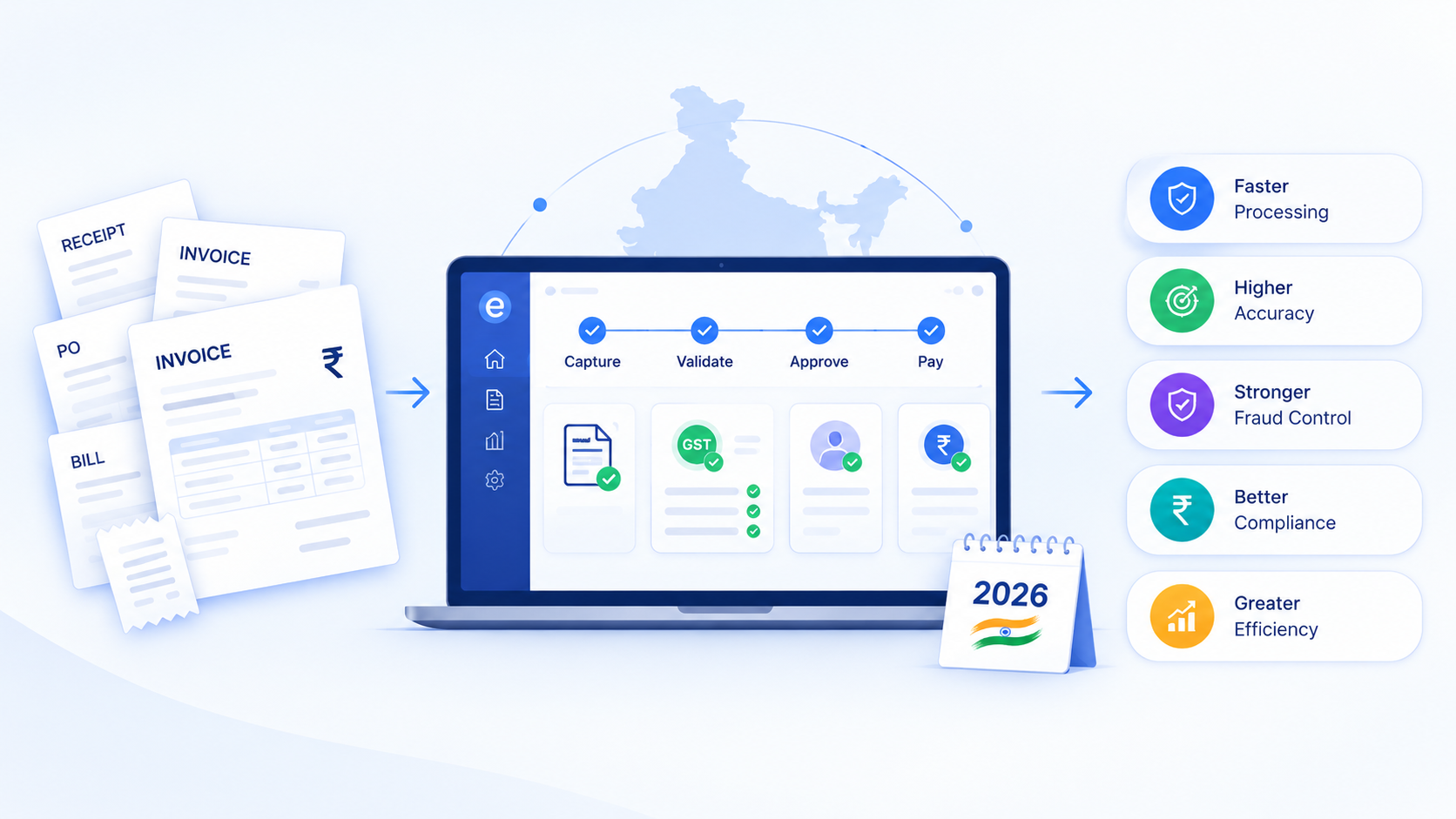
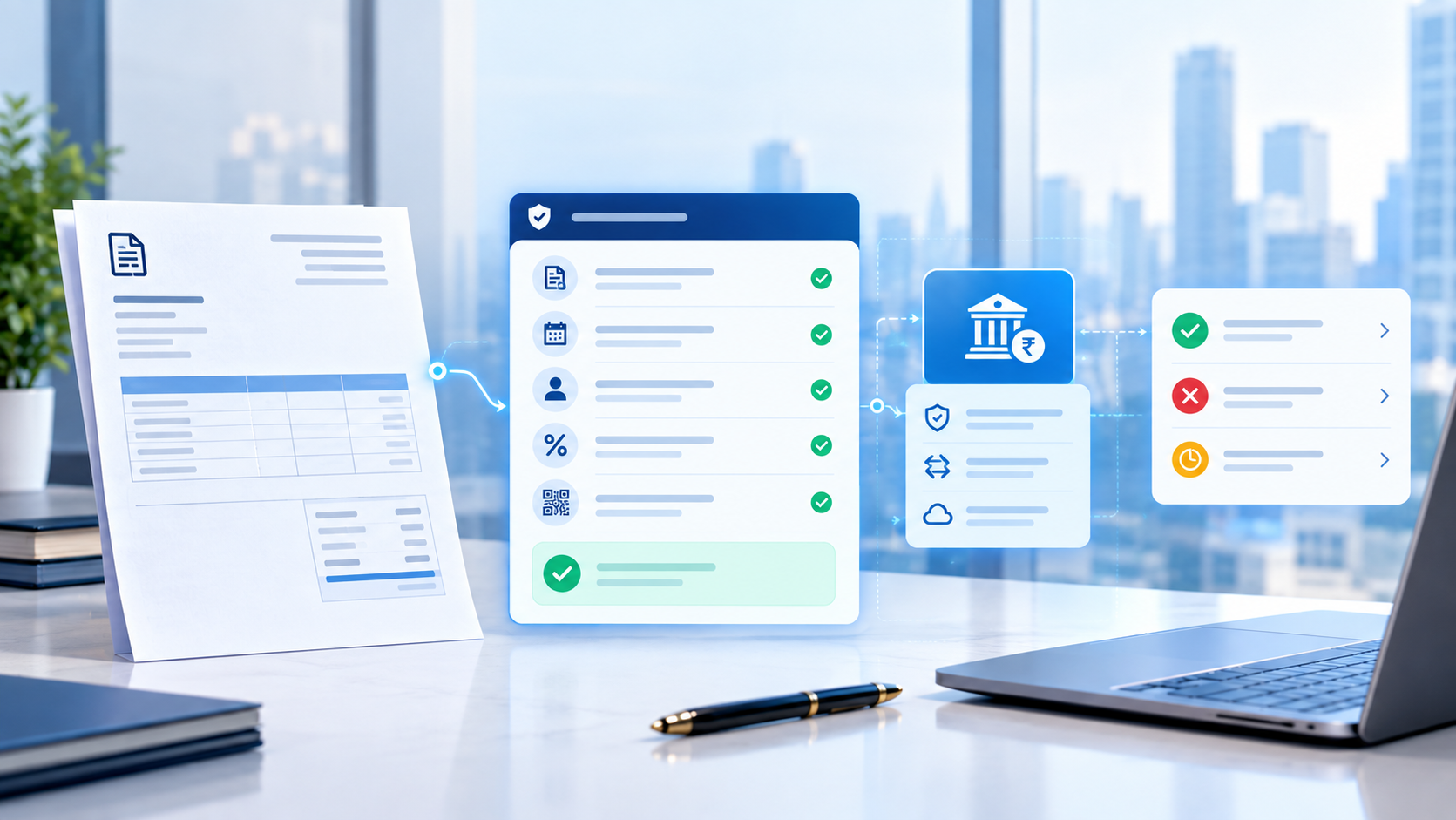
We demonstrated our Expenzing Invoice Manager solution to the CFO and Finance team at the above organization. They realized that the first decision not to automate was costly and will soon have our Procure-to-Pay software implemented. Their decision was based on the system capabilities to streamline the entire process of receiving the supplier invoices, online authorizations as per ‘D of A’, back and forth recorded trails of questions across departments, skillful due diligence and even automated due diligence. And to top it all, smooth MIS and Accounting.

How does Expenzing Invoice Manage do this? It’s an online cloud based software solution, wherein all department heads and A/P team members log on to the same platform, interact, approve, and get work done. Your suppliers respect the transparent process, and finally, the invoices are not only paid on time, but are also scrutinized properly to eliminate mistakes. Auditors are happy because important info is recorded for their reference.

If you found this post useful, and would like to sign up for using our A/P automation solutions, or to see a demo of our Supplier management or Procure-to-Pay solutions, contact us now. Click here to ask for a demo.

Read Our Blogs

blog expenzing

27 Nov 2025

Expenzing Infosecurity: The Backbone of Trust in EnterpriseSaaS Spend Management

In an era where data breaches and cyber threats dominate headlines and regulatory landscapes evolve rapidly, information security (infosec) stands

Satnam Kaur - Co-Founder and CTO, Expenzing

blog_feature_image

11 Nov 2025

The Fudge Factor in Indian business

I’ve been around enough Indian boardrooms, travel desks, and vendor meetings to see a pattern: it’s rarely the big heists

Ila Imani - Founder CEO, Expenzing

blog

21 Aug 2025

Why Organisations Are Automating Contract Management

Vendor contract management is no longer just paperwork,it’s a compliance and risk management necessity. As regulations tighten and vendor ecosystems

Dipti Mhatre

See the Possibilities. View our Demo.

satnam

Satnam Kaur

Co-Founder and CTO,
Expenzing

Satnam Kaur, Co-Founder and CTO of Expenzing, is a BITS Pilani alumna with deep expertise in information security, engineering management, and enterprise solution delivery. Beginning her career as a software developer and system analyst, she went on to lead product roadmaps, implementations, and large-scale technology teams. At Expenzing, Satnam heads technology, product development, and Infosec, playing a pivotal role in building secure, enterprise-grade SaaS solutions that balance innovation, precision, and client-centric delivery. A compassionate yet driven leader, she ensures that customer success remains central to every implementation, while also championing process excellence and automation. Beyond work, she enjoys travelling, singing, and contributing to social causes.

shabbir imani

Shabbir Imani

Founder Director,
Expenzing

Shabbir Imani, Co-Founder and Sales Director of Expenzing, holds a PGDM from IIM Calcutta (1985) with a specialization in Finance and Marketing. With over three decades of experience in enterprise solutions, he has a proven track record of scaling software products and driving business growth across industries. At Expenzing, Shabbir leads Sales and Strategy, shaping the company’s go-to-market approach and expanding its reach among large enterprises. A thought leader in spend management and a regular speaker at industry forums, he combines strategic vision with strong execution to deliver measurable business impact for clients, while also nurturing his personal passions for travel, music, and fitness.

illa imani

Ila Imani

Founder CEO,
Expenzing

Ila Imani, Founder CEO, and Product Owner of Expenzing, is an IIM Calcutta alumna (PGDM, 1986) with a specialization in Systems. She began her career as a systems analyst and programmer, gaining first-hand insights into the challenges of fragmented procurement and finance processes. Ila is the visionary behind Expenzing’s Spend Management Suite, guiding its evolution into a leading SaaS platform used by over 100 CFOs and hundreds of thousands of enterprise users. She drives the product roadmap with a strong focus on precision, compliance, and measurable client outcomes. Known for nurturing teams and building lasting client relationships, she drives the product roadmap with a focus on precision, compliance, and measurable outcomes, ensuring Expenzing consistently delivers value while redefining how enterprises control spend and manage compliance.

this for check box

Expenzing: Sourcing, Procurement and Accounts Payable Software
Privacy Overview

This website uses cookies so that we can provide you with the best user experience possible. Cookie information is stored in your browser and performs functions such as recognising you when you return to our website and helping our team to understand which sections of the website you find most interesting and useful.