Every month I sit in evaluation calls where a finance team has a shortlist of accounts payable automation vendors and no clear way to separate them. Every demo looks good. Every deck promises straight-through processing. The difference only shows up six months after go-live, when the SAP posting fails, the NBFC auditor asks for an approval trail, or the invoice volume bill arrives. This guide is how I would shortlist if I were sitting on your side of the table.
Key takeaways
- The best accounts payable automation software in India is the one that fits your ERP version, your compliance load and your invoice volume. It is not the one with the longest feature list.
- ERP automation is the first filter. Ask whether the integration with SAP (ECC or S/4HANA) or Oracle (EBS or Fusion) is a tested connector or a custom project, and ask to speak to a customer on your exact version.
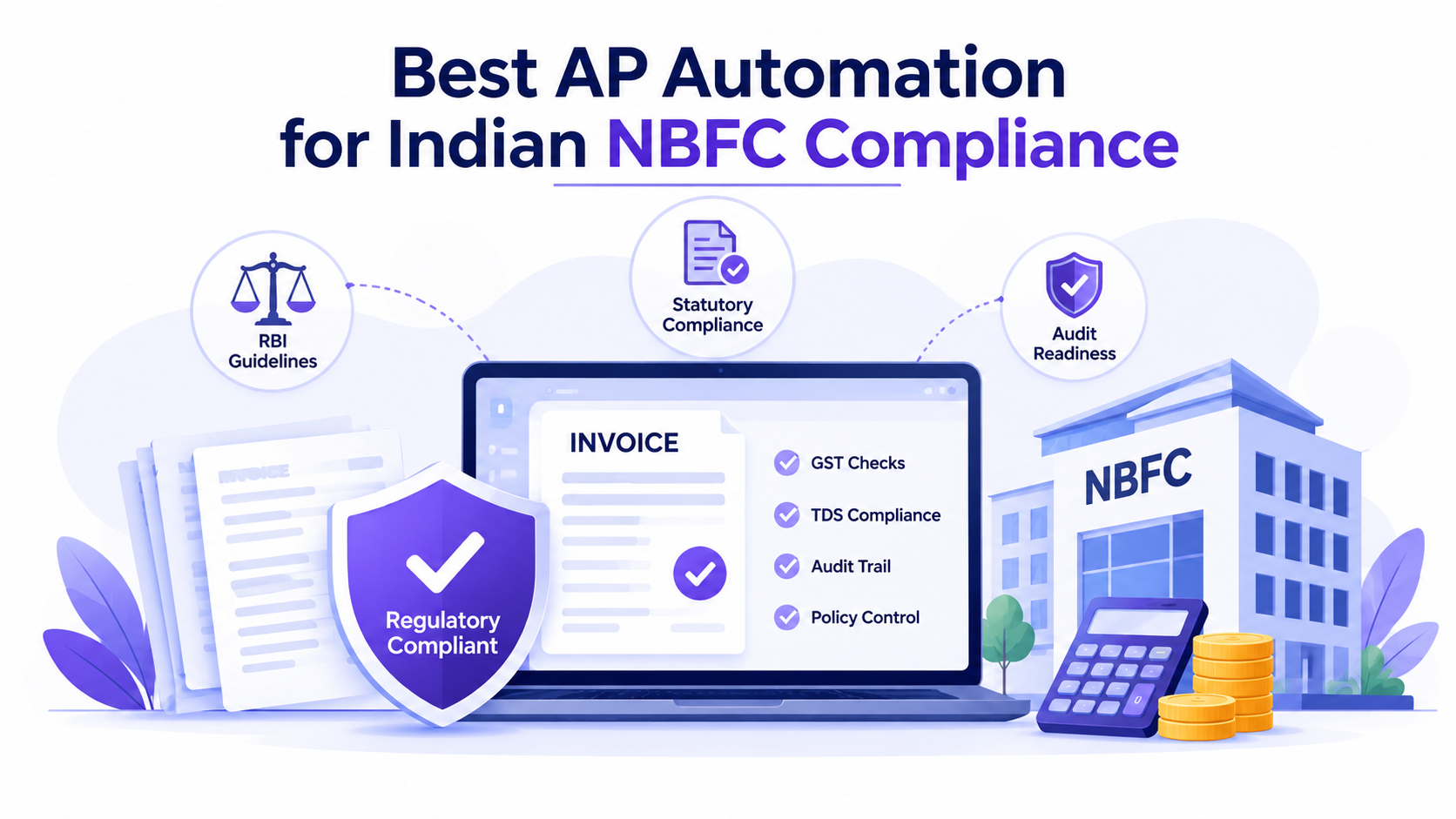
- NBFC finance tools must show maker-checker controls, Delegation of Authority enforcement, full audit trails and clear data residency terms before anything else.
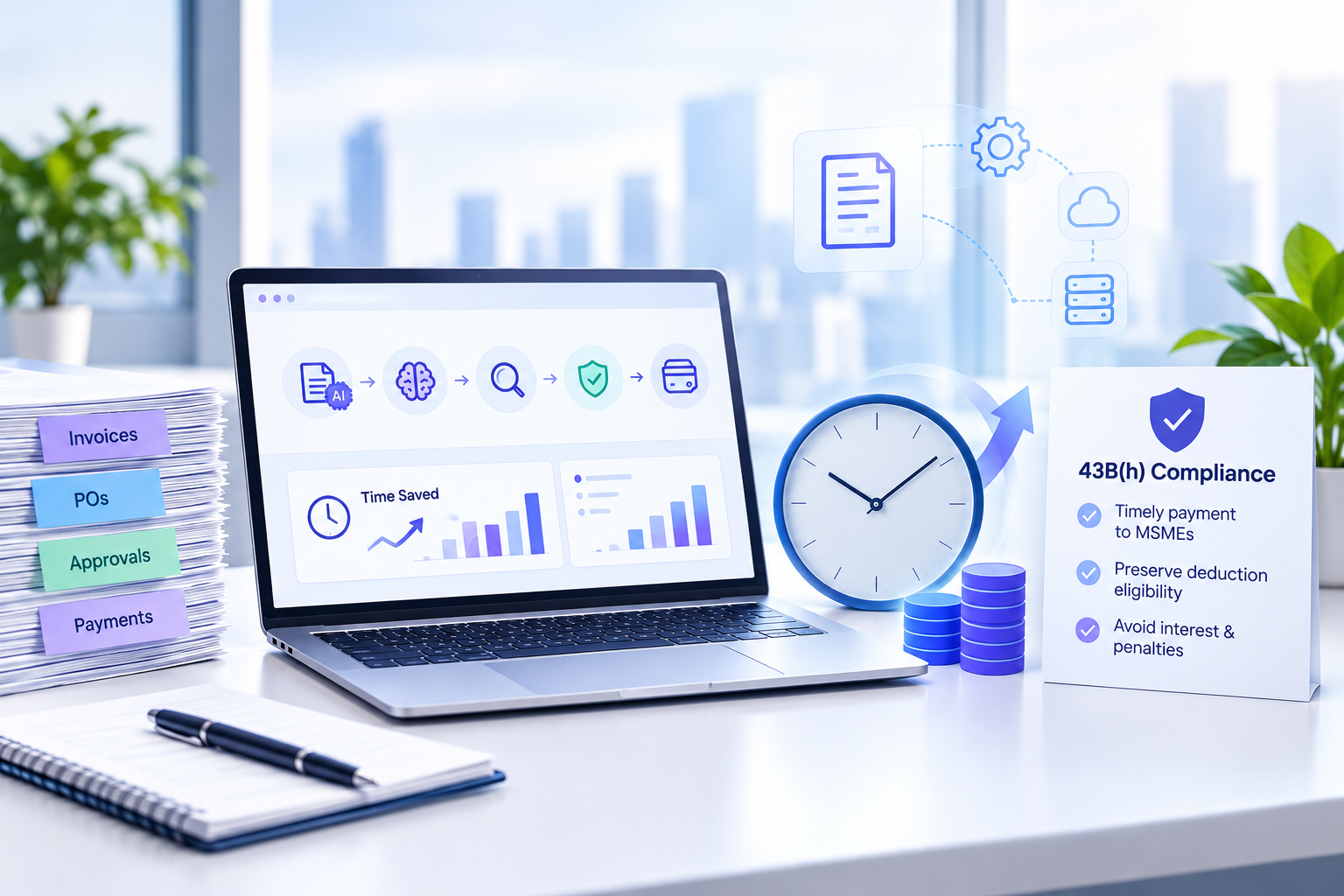
- Indian invoice processing means GSTIN validation, IRN checks, GSTR-2B reconciliation and MSME 43B(h) payment tracking. Generic global tools often treat these as add-ons.
- Pricing is rarely a single number. Compare the three-year total cost, including implementation, integration, OCR volume tiers and support.
- Your questions should change by stage: awareness, consideration and decision each need a different test.
What is accounts payable automation software?
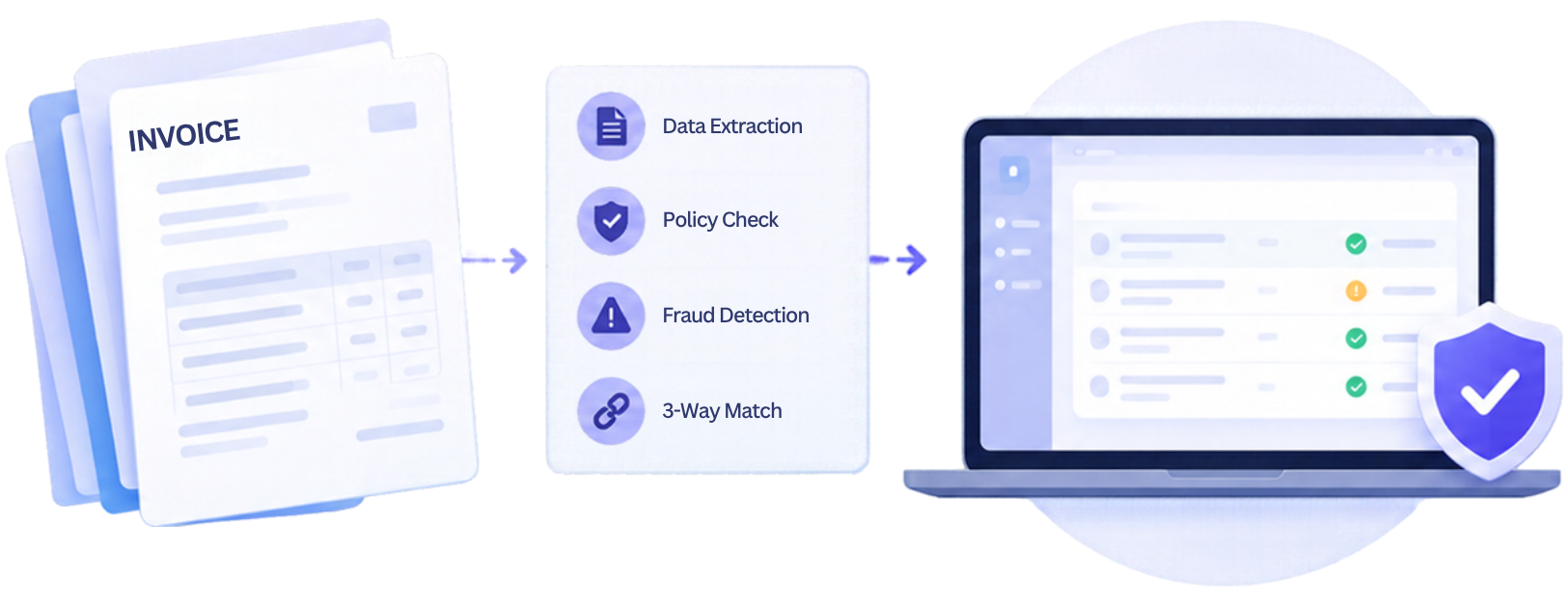
Accounts payable automation software captures supplier invoices, extracts and validates the data, matches it against purchase orders and goods receipts, routes it for approval, and posts it to your ERP for payment. The goal is to remove manual keying, cut approval delays and make every payable traceable. In India, a serious tool also has to handle GST and TDS rules as part of the workflow, not outside it.
What should the best AP automation software in India do in 2026?
It should do six things well, and you should test each one with your own invoices rather than the vendor’s sample set.
- Invoice processing accuracy on Indian formats. Handwritten stamps, multi-page tax invoices, regional vendor layouts and scanned PDFs are normal here. Ask for accuracy on a sample of your real invoices.
- GST-aware validation. GSTIN checks, IRN and e-invoice verification, and ITC reconciliation against GSTR-2B should happen before an invoice reaches approval.
- Flexible matching. Two-way, three-way and, where your policy needs it, five-way matching, with tolerance rules you control.
- Approval workflows that mirror your Delegation of Authority. Not a generic approval chain.
- Deep ERP integration. Covered in the next section.
- Visibility. Ageing, cash-flow forecasting, MSME payment deadlines and exception dashboards your CFO can read without asking AP for a report.
How well should AP software integrate with SAP and Oracle?
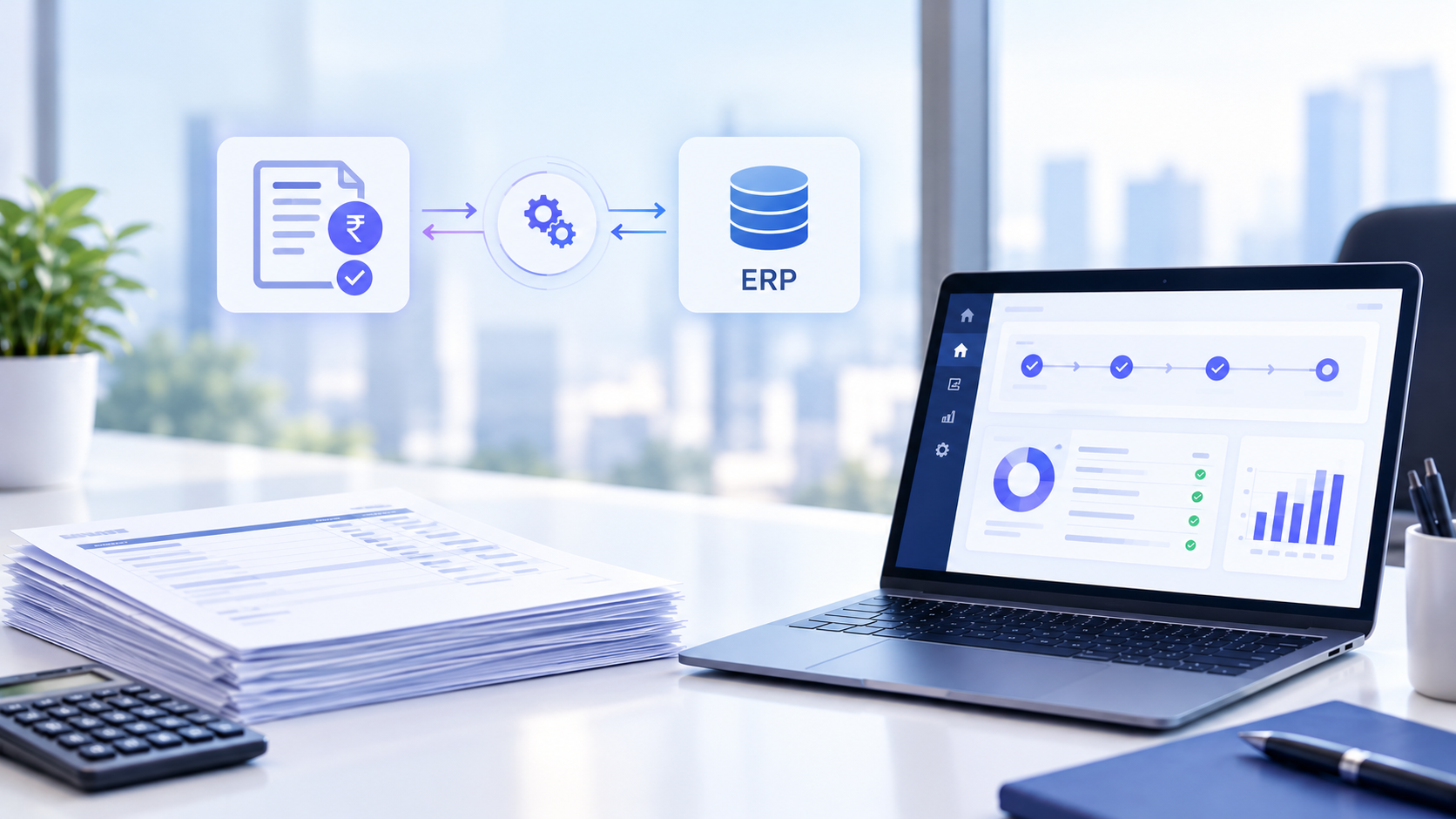
AP software integration should be bidirectional, tested on your ERP version and monitored. A one-way upload of approved invoices is not integration. It is a file transfer.
Here is what I would ask every vendor:
- Which versions are supported: SAP ECC, SAP S/4HANA (on-premise or cloud), Oracle E-Business Suite, Oracle Fusion?
- Is the connector a standard product, or is it built per customer? Who maintains it after go-live?
- Does the tool pull vendor master, PO and GRN data from the ERP, and write back postings, payment status and document numbers?
- What happens when a posting fails? Is the error visible to AP in plain language, and can it be retried without engineering help?
- How are ERP upgrades handled? An S/4HANA migration should not break your AP workflow.
- Can I speak to a customer running the same ERP and version as mine?
If the answer to the last question is vague, treat that as information.
What do NBFCs need from AP automation software?
NBFC finance tools carry a heavier control burden than a typical enterprise, because auditors and regulators look closely at who approved what, when, and with which authority. I would check these before looking at features:
- Maker-checker and segregation of duties enforced by the system, not by convention.
- Delegation of Authority rules that update when roles or limits change, with a record of every change.
- Immutable audit trails for every invoice, approval, edit and payment.
- Data residency and security. Where is data stored, who can access it, and what certifications (ISO 27001, SOC 2) does the vendor hold? Review these against the RBI’s IT governance and outsourcing expectations that apply to your entity, and confirm the details with your compliance team.
- High-volume, multi-branch handling. Branch-level invoices, cost-centre allocation and vendor onboarding that scales without a bigger AP team.
- Fraud controls. Duplicate invoice detection, vendor bank account change alerts and GST validation as a standard step.
BFSI and insurance teams should apply the same checklist.
What types of AP automation tools can you choose from in India?
I group the market into four types. The right one depends on your ERP, your compliance load and how much configuration your team can absorb.
Type | Where it is strong | What to watch | Usually best for |
ERP-native AP modules | Tight fit with the ERP, one vendor to manage | Limited OCR and workflow flexibility, Indian GST features may need add-ons | Teams on a single ERP with simple approval needs |
Global enterprise AP suites | Mature features, global ERP coverage | Higher cost, India compliance sometimes handled through partners | Multinationals with cross-border AP |
India-built AP and spend platforms | Native GST, IRN, 2B and 43B(h) handling, local support, INR pricing | Check ERP connector depth and scale proof | Indian mid-market and enterprise, BFSI, NBFCs, manufacturing |
Standalone OCR or capture tools | Fast to start, low initial cost | Capture only, so approvals, matching and posting stay manual | Teams fixing one bottleneck first |
No single type wins for everyone. Be wary of any vendor who says otherwise.
How should your evaluation change at each decision stage?
The questions that matter shift as you move from research to signing. Most teams ask decision-stage questions too early, or awareness-stage questions too late.
Stage | What you are trying to learn | What to do |
Awareness | What is the real cost of our manual AP process, and where does it break? | Map invoice volume, cycle time, exception rate, late-payment penalties and ITC leakage. |
Consideration | Which type of tool fits our ERP and compliance profile? | Shortlist three to four vendors. Compare ERP connectors, GST handling, DoA support and pricing structure using the checklists above. |
Decision | Will this work on our data, with our ERP, in our environment? | Run a paid or structured pilot on real invoices. Speak to reference customers on your ERP version. Get security documentation reviewed. Lock down three-year pricing. |
The pilot is where I see most good decisions made. Real invoices expose more than any demo.
Where does Expenzing fit?
I am biased, so here is how I would weigh it. Expenzing is an AI-powered spend management and AP automation platform built for Indian enterprises, including BFSI, NBFCs, insurance and manufacturing. We built around the compliance realities this article describes: GST and e-invoice validation, ITC reconciliation, MSME 43B(h) tracking and Delegation of Authority workflows.
If you are a small team on a simple ERP setup with low invoice volume, an ERP-native module may be enough, and I would tell you that on a call. If you are a mid-market or enterprise finance team with SAP or Oracle, multiple approval layers and audit pressure, we are worth a place on your shortlist. Test us the same way you would test anyone else: on your invoices, on your ERP, with a reference customer.
Frequently Asked Questions (FAQs)
What is the best AP automation software in India?
There is no single best. The right choice depends on your ERP, invoice volume, compliance needs and budget. Shortlist by ERP fit and GST handling first, then compare pricing and run a pilot.
Does AP automation work with SAP and Oracle?
Yes, but depth varies. Ask whether the connector is standard or custom, which versions it supports, and whether it writes back postings and payment status.
Is AP automation suitable for NBFCs?
Yes, provided the tool enforces maker-checker, Delegation of Authority and audit trails, and meets your data security and residency requirements.