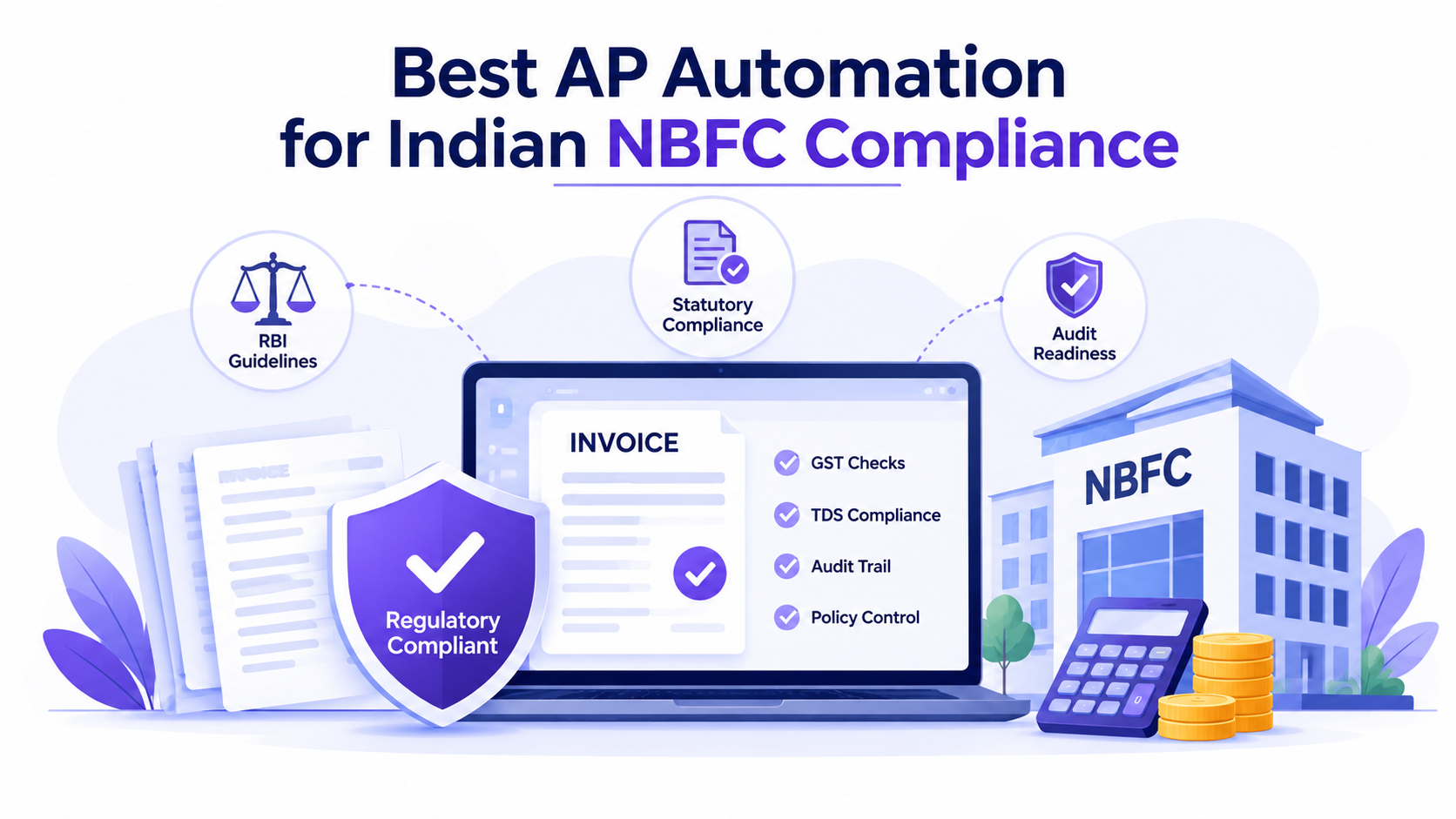
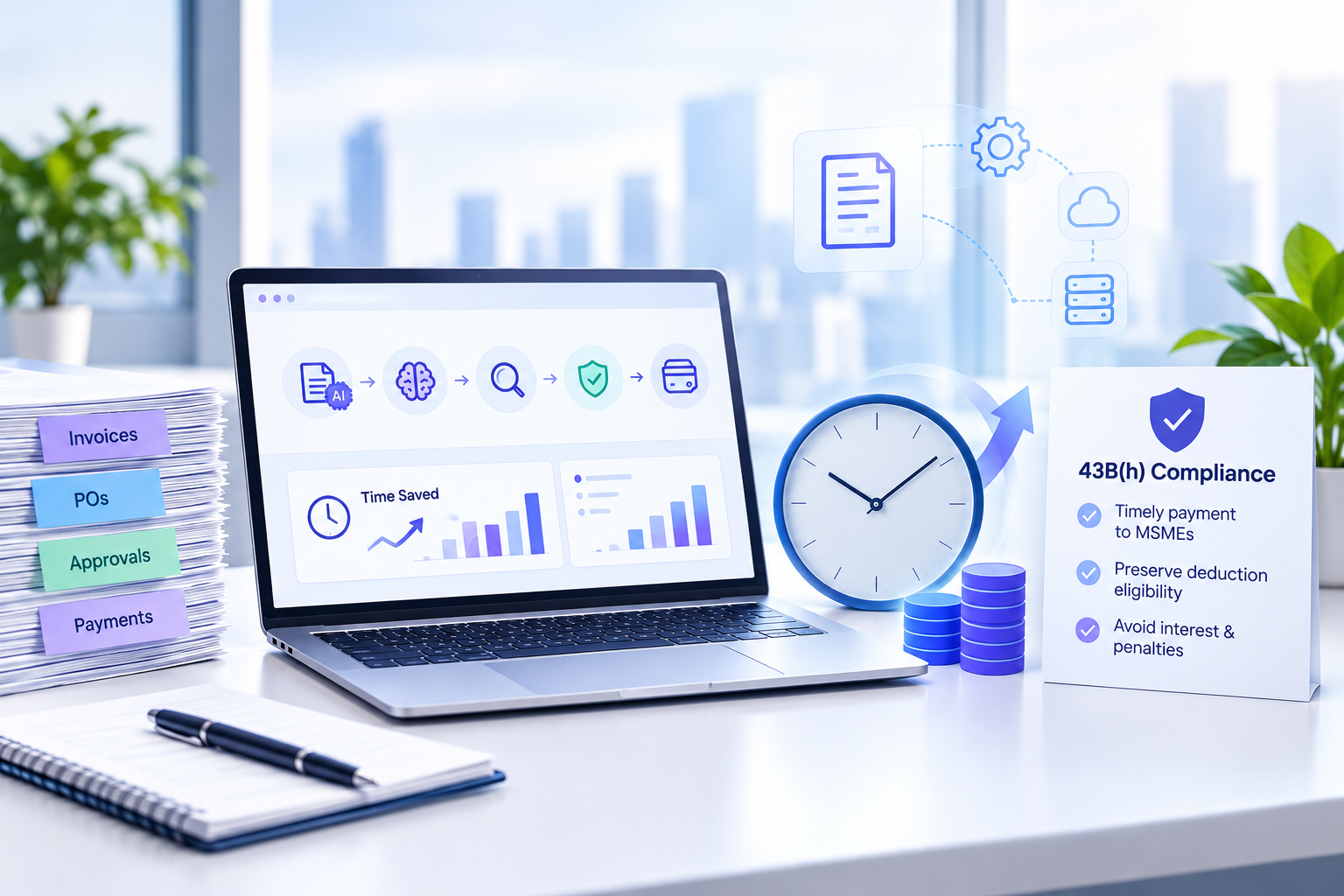
AP automation shrinks the time an invoice spends in your accounts payable queue from days to hours, and for Indian enterprises it also protects tax deductions under Section 43B(h) of the Income Tax Act. To calculate the savings, multiply your monthly invoice volume by the minutes saved per invoice, then convert the hours into full-time-equivalent (FTE) capacity and rupees. This guide gives you the formula, a worked example for a high-volume team, and the MSME payment rules that make speed a compliance issue, not just an efficiency goal.
Key takeaways
- The core formula: (manual minutes − automated minutes) × monthly invoices ÷ 60 = hours saved per month.
- Volume compounds savings. A team processing 10,000 invoices a month can free up capacity equal to roughly 12 full-time employees, based on the illustrative assumptions below.
- 43B(h) makes delay expensive. Payments to micro and small enterprises beyond the statutory limit can lead to the expense being disallowed as a deduction in the year it was incurred.
- Cycle time matters as much as touch time. Approval waits and vendor queries often cost more than data entry.
- Good accounts payable software tags MSME vendors, tracks due dates and escalates approvals so payments go out before the deadline.
- Measure before you buy. Baseline your own invoice volume, exception rate and cycle time first.
What is AP automation?
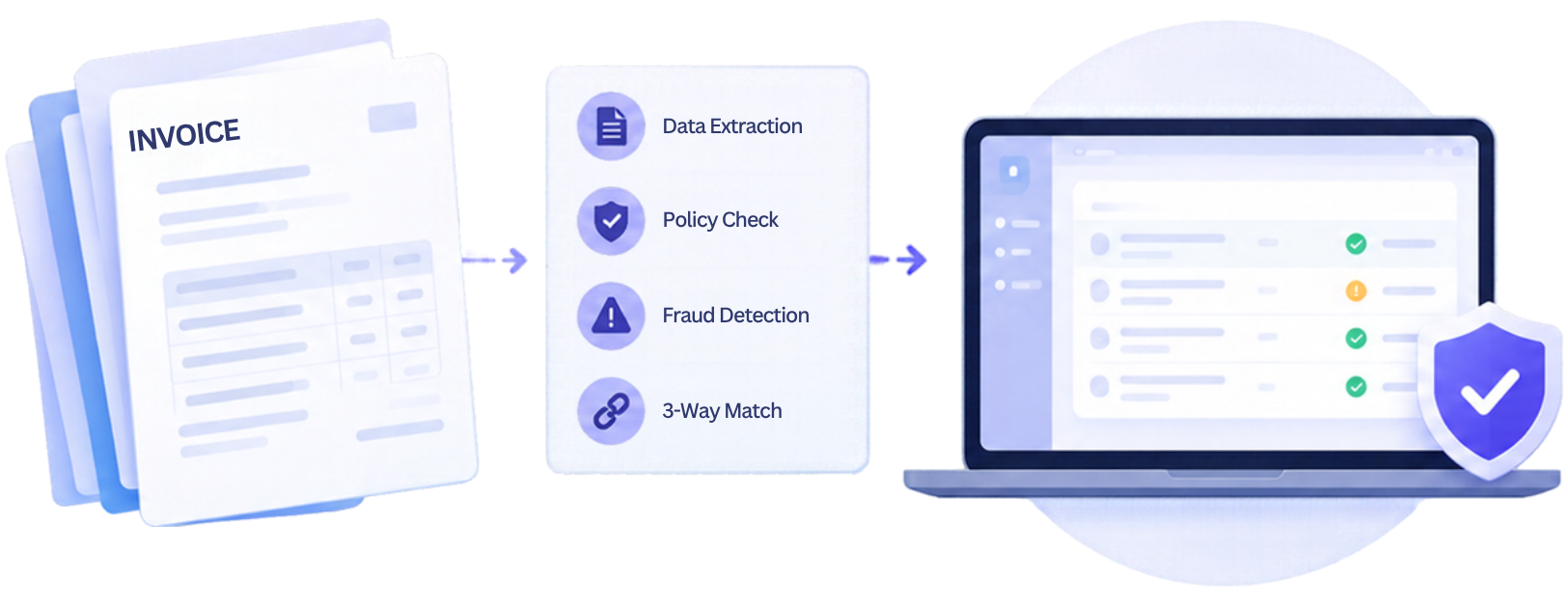
AP automation is the use of software to handle the accounts payable lifecycle with minimal manual effort: capturing invoices, extracting data, validating it, matching it to purchase orders, routing approvals, posting to the ERP and scheduling payment. Modern platforms use AI-based extraction instead of fixed templates, which matters in India, where invoice formats vary widely across vendors, states and industries.
For enterprise automation programmes, AP is one of the highest-return starting points because the work is repetitive, rules-driven and high in volume.
How do you calculate AP automation time savings?
Use a simple five-step model. Replace every assumption with your own numbers.
- Count monthly invoices. Include all channels: email, vendor portals, paper and courier.
- Measure manual handling time per invoice. This is hands-on time across capture, entry, GST checks, matching, coding and follow-ups, not elapsed days.
- Estimate automated handling time per invoice. This is the exception-handling and review time that remains after automation.
- Calculate hours saved. (Manual minutes − automated minutes) × invoices ÷ 60.
- Convert to FTE and rupees. Divide hours saved by productive hours per employee per month (about 160 to 170), then multiply by loaded cost per employee.
Where does time go in Indian invoice processing?
Indian AP teams face steps that generic global workflows do not always account for:
- Multi-channel capture: invoices arrive by email, WhatsApp, portals and paper from vendors of every size.
- GST validation: checking GSTIN, tax rates, place of supply and, where applicable, e-invoice details such as the IRN.
- TDS determination: applying the right section and rate for each vendor and expense type.
- Three-way matching: reconciling invoice, purchase order and goods receipt, especially in manufacturing.
- Multi-level approvals: delegation-of-authority matrices across branches, plants and business units. This is common in BFSI, NBFC and insurance organisations.
- Vendor follow-ups: chasing missing documents and answering payment-status queries.
Each step is a place where automation can remove either effort or waiting time.
Why does Section 43B(h) change the math?
Section 43B(h) was introduced by the Finance Act, 2023 and applies from FY 2023-24. In simple terms, if a buyer owes money to a micro or small enterprise for goods or services and does not pay within the time allowed under the MSMED Act, 2006, the expense is not deductible in the year it was incurred. It becomes deductible only in the year it is actually paid.
The key points for AP teams:
- Time limit: payment is due within the period agreed in writing, which cannot exceed 45 days from the day of acceptance. Where there is no written agreement, the limit is 15 days.
- Who is covered: suppliers that are micro or small enterprises registered on Udyam. Medium enterprises are not covered by this section.
- Tax effect: the disallowance increases taxable income for the year, which can create an avoidable cash outflow.
- Other consequences: the MSMED Act also provides for interest on delayed payments, and companies with MSME dues outstanding beyond 45 days must report them through the MSME Form 1 filing with the Ministry of Corporate Affairs.
This means a delayed invoice is no longer just a late payment. It can affect your tax computation, so finance leaders need real-time visibility into MSME dues. Always confirm applicability and year-end treatment with your tax advisor.
How does AP automation support MSME compliance?
Manual processes struggle with 43B(h) because the deadline clock starts at acceptance of goods or services, while invoices may sit in inboxes or approval queues. Automation helps in four ways:
- Vendor tagging: flag micro and small vendors using Udyam details so they are treated differently from the first invoice.
- Due-date calculation: compute the payment deadline from the acceptance date and the agreed terms, with the 15-day and 45-day rules built in.
- Priority routing and escalation: push MSME invoices to the front of approval queues and escalate before the deadline, not after it.
- Reporting: produce ageing reports of MSME dues, which support year-end tax planning and MSME Form 1 preparation.
The time you save on processing is what creates room to pay inside the window. Faster capture and approval means more of the 45 days is left for payment scheduling.
What should you look for in accounts payable software?
When evaluating accounts payable software for an Indian enterprise, check for:
- AI-based invoice processing that handles varied formats without template setup
- GST, e-invoice and TDS validation built for Indian rules
- Configurable two-way and three-way matching
- Flexible approval workflows that mirror your delegation of authority
- MSME vendor tagging and 43B(h) due-date tracking
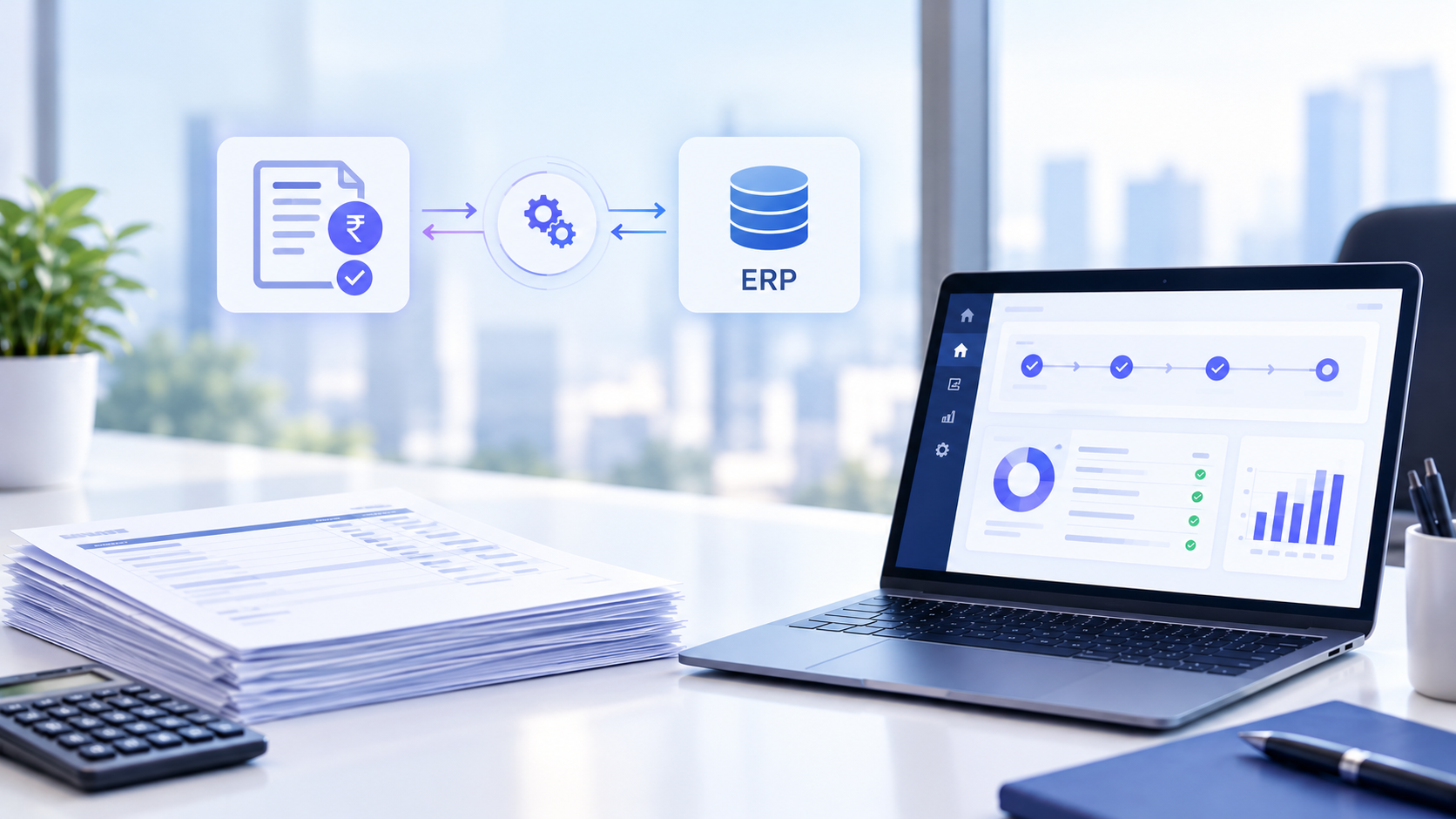
- ERP integration with the systems you already run, such as SAP, Oracle, Tally or Microsoft Dynamics
- Audit trails and role-based access suited to regulated sectors
- Analytics on cycle time, exception rates and straight-through processing
Platforms such as Expenzing, an AI-powered spend management and AP automation platform built for Indian enterprises, are designed around these requirements.
How to build the business case in five steps
- Baseline: pull 3 to 6 months of invoice volume, exception rates and cycle times.
- Time a sample: have team members log actual handling time on 50 to 100 invoices.
- Run the formula: calculate hours, FTE capacity and rupee value.
- Add risk and upside: estimate 43B(h) exposure on delayed MSME payments, late-payment interest, and early-payment discounts you could capture.
- Pilot: start with one entity or invoice category, measure results and then scale.
Frequently Asked Questions (FAQs)
How much time can AP automation save?
It depends on your starting point, invoice mix and exception rate. Teams with heavy manual entry and multi-level approvals usually see the largest gains. Calculate your own figure using the formula above rather than relying on generic percentages.
What is the 43B(h) payment deadline for MSMEs?
Payment must be made within the agreed period, capped at 45 days from acceptance, or within 15 days if there is no written agreement. Missing it can make the expense deductible only when paid.
Does 43B(h) apply to medium enterprises?
No. It applies to micro and small enterprise suppliers registered under Udyam. Medium enterprises are outside this section.
What is the difference between invoice processing time and cycle time?
Processing (touch) time is the hands-on effort per invoice. Cycle time is the total elapsed time from receipt to payment, including waiting. Both matter, and automation improves both.