
Most finance teams don’t pick travel and expense management software because they love software. They pick it because an auditor asked for the approval trail on a hundred claims, and it took three weeks to assemble. I’ve heard some version of that story from BFSI and NBFC finance heads more times than I can count.
Key takeaways
- The best travel and expense management software for BFSI enforces policy before spend happens, not after the claim lands.
- Audit readiness means every claim carries its receipt, approver, policy check, and timestamp, retrievable in minutes.
- Faster reimbursement comes from fewer manual touchpoints, not from pushing approvers harder.
- Integration with your ERP, HRMS, and GST workflows matters more than the length of the feature list.
What should BFSI teams look for in travel and expense management software?
Test whether the platform blocks or flags a non-compliant expense at the moment of submission, using your actual policy. In the demo, ask the vendor to configure:
- Grade-wise and city-tier limits for hotels and daily allowances
- Pre-approval for travel, with the approved amount carried into the claim
- Exception handling that captures justification and routes it to the right approver
- Approval chains that follow your delegation of authority matrix, including when an approver is on leave
If the vendor has to hard-code these rules or can’t show them live, treat that as a warning sign.
What makes T&E software audit-ready for NBFCs and banks?
Audit-ready software links every claim to its evidence and approval history, and lets you pull that record on demand. Check for:
- Receipt capture with duplicate detection
- Timestamped, tamper-proof approval logs
- Policy-check history for each claim
- Searchable records by employee, branch, vendor, or date
- Clear GSTIN and tax capture on eligible expenses
The question I ask in every evaluation: show me how I’d answer an auditor’s sample request in under ten minutes.
How can software speed up expense reimbursements?
Reimbursements get faster when you remove manual steps. The delay is rarely in the payout. It’s in the claim sitting in an inbox, or in finance re-keying data from a photo of a bill. Look for mobile receipt capture with automatic data extraction, approval routing with auto-escalation, and direct links to your payment and accounting systems. Ask any vendor for the average submission-to-payout time at a customer with a similar structure to yours, and how they measured it.
What integrations should T&E software have for Indian finance teams?
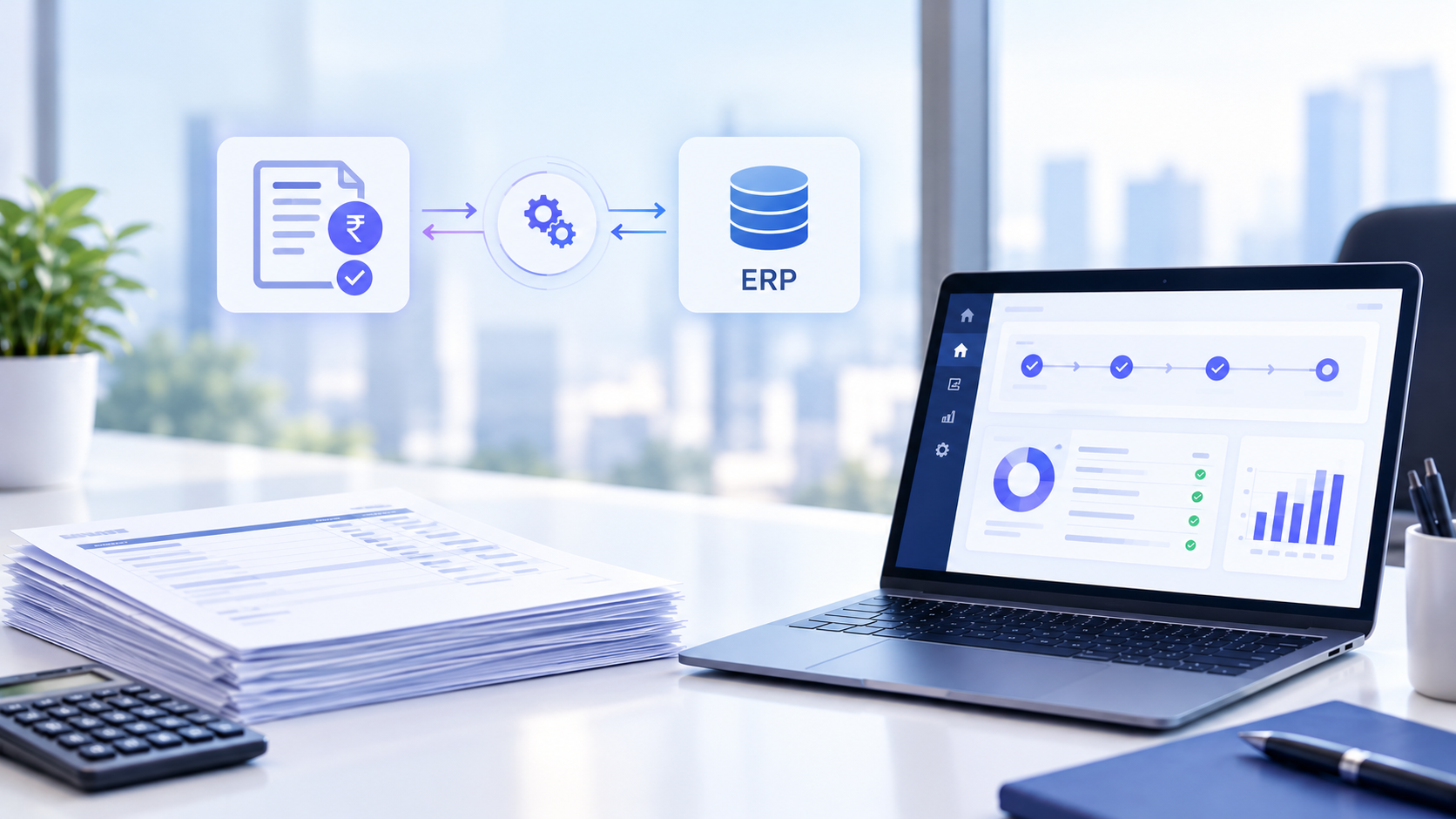
At minimum, it should connect to your ERP, your HRMS, and your payment workflows, and handle Indian tax requirements natively. A platform that can’t sync employee hierarchies from your HRMS or push approved expenses to your ERP just moves the manual work around. Ask for a reference customer on the same ERP and what the integration took to build.
How do you choose between corporate travel software and expense tracking tools?
Decide whether your problem sits before the trip, after it, or both. If booking and business expense tracking run as separate tools, the approved trip and the submitted claim never talk to each other, and finance reconciles by hand. Ask whether a platform’s booking and expense modules share one data model or are two products stitched together.
The bottom line
three tests. Does it enforce your policy automatically? Can it prove every claim to an auditor quickly? Does it reimburse employees without finance chasing anyone? Run every vendor through your own scenarios, us included.
At Expenzing, we built our platform around these requirements for Indian enterprises.